New faces, old slogans: Will the country change?
Following the Election Commission’s announcement of the official campaigning period, electoral activity has surged nationwide.

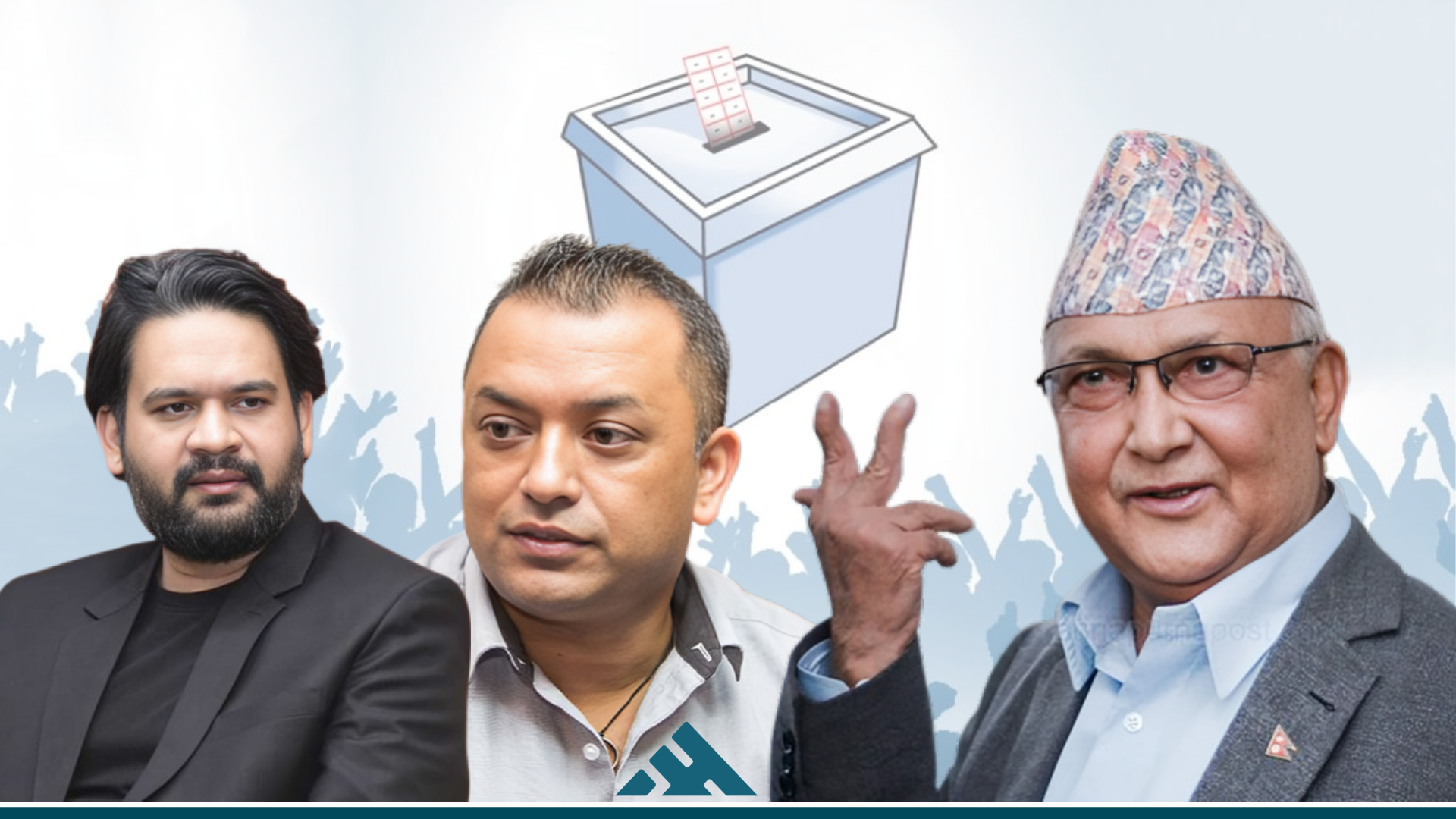
KATHMANDU: With the upcoming House of Representatives election scheduled for March 5, political parties and candidates across Nepal have intensified their campaigns.
Following the Election Commission’s announcement of the official campaigning period, electoral activity has surged nationwide.
Parties are reaching voters’ doorsteps, promoting development and good governance as their central promises.
However, both newly emerging parties like the Rastriya Swatantra Party (RSP) and forces that surfaced after the ‘Gen Z’ movement in Bhadra have yet to present any substantial or fresh agendas to the electorate. Candidates from both established and new parties are mainly promising local-level infrastructure, such as roads, drinking water, and temple construction, to win votes.
UML’s 30-Point Agenda and Oli’s Frustration
In Jhapa-5, the CPN-UML unveiled a 30-point agenda to support party chairman KP Sharma Oli. The agenda covers issues from national politics to local development. During door-to-door campaigning, Oli expressed disappointment over the mocking of his work style, saying, “It seems I cannot do patriotic work here; everything is ridiculed. Even serious matters are dismissed as jokes.” He further claimed that obstacles from both domestic and international actors hindered his efforts to implement positive changes.
Gagan’s IT Vision and Dahal’s Claim
Nepali Congress president Gagan Thapa is campaigning in Sarlahi-4, positioning himself as a future prime minister. He outlined a plan to transform Nepal into a “Digital Hub” over the next five years. Clarifying earlier remarks about earning millions through laptops, he stated, “This is not wishful thinking. From 2024 to 2034, Nepal can advance as an IT decade, potentially generating 400 billion in service exports.”
Meanwhile, Pushpa Kamal Dahal ‘Prachanda’, contesting from Rukum East, claimed that the Gen Z generation has accepted him as the country’s guardian. “Gen Z leaders have said that Prachanda should become the prime minister. I am not hungry for power, but understanding the people’s desires is necessary,” he said.
Questions for Rabi and Allegations Against Balen
Rastriya Swatantra Party president Rabi Lamichhane, campaigning in Chitwan-2, faced questions from voters about his release from jail during the Gen Z movement. Lamichhane stated that the Election Commission has cleared him of wrongdoing. Despite ongoing court cases related to cooperative fraud and organized crime, he is campaigning on good governance.
In Jhapa-5, Balen Shah, running against Oli, faced questions about Kathmandu’s waste management. The former mayor, who resigned to contest the election, alleged foreign interference in the city’s garbage management, claiming, “There was international manipulation, and even pressure from the prime minister, which prevented me from achieving the success I envisioned.”
Congress Promises Governance Reforms
Nepali Congress vice-president Bishwoprakash Sharma declared that the party would improve “seat, speech, and governance.” Speaking in Lamjung, he announced plans to constitutionally bar any prime minister or chief minister from serving more than two terms. “The transformed Congress will end the tradition of any individual staying in power continuously. We will enshrine the 1-2-3-4 policy in the constitution,” he said.