Iran ordered to leave US hours after World Cup match
According to U.S. officials, the policy applies to matches held in Los Angeles and Seattle during the group stage.

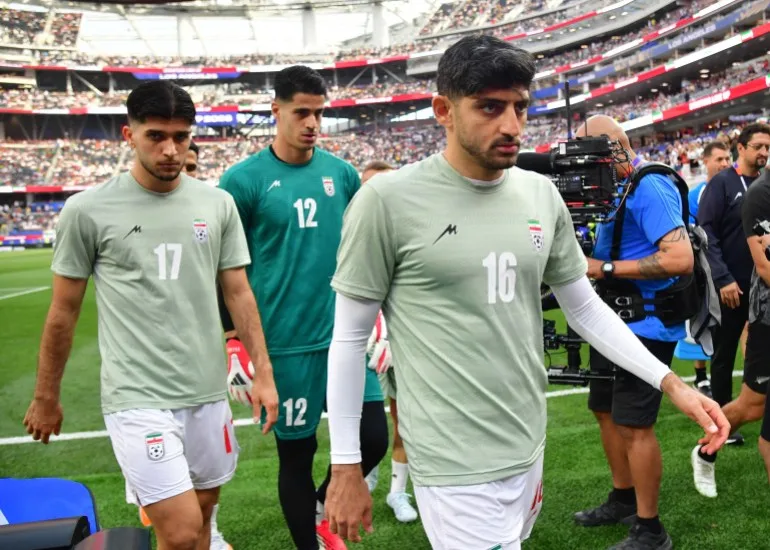
KATHMANDU: The Iranian national football team was required to leave the United States just hours after completing their World Cup 2026 group-stage match, in a move that has raised questions over security protocols and travel arrangements during the tournament.
According to U.S. officials, the policy applies to matches held in Los Angeles and Seattle during the group stage.
Andrew Giuliani, Executive Director of the FIFA task force under the U.S. President’s office, defended the decision, telling The Associated Press that the process had been made clear in advance.
“This procedure was outlined beforehand,” Giuliani said, standing by the enforcement of the rule.
Iran had played out a draw against New Zealand in Los Angeles on Monday in their Group G fixture, but the team was reportedly instructed to leave the country within hours of the match.
Iranian head coach Amir Ghalenoei said the squad had expected a routine recovery stay at their hotel but was instead forced to travel back to their base in Mexico the same evening.
Team officials confirmed the delegation departed the U.S. at around 8 p.m. local time, shortly after the match concluded.
The situation was further complicated by visa issues involving midfielder Mehdi Torabi, whose travel authorization initially expired after the first match.
The U.S. State Department later said the matter was resolved by issuing him a multiple-entry visa to ensure his participation in the tournament.
“We took immediate action once informed so that all players could continue competing,” the department said.
However, Giuliani also noted that some members of Iran’s support staff were denied entry into the United States due to security concerns, citing policies linked to individuals associated with Iran’s Islamic Revolutionary Guard Corps (IRGC).
Iran captain Mehdi Taremi described the conditions as physically and mentally demanding, pointing to long travel hours and strict security checks immediately after matches.
“We spent nearly five hours on what is normally a short journey and screening process,” Taremi said. “FIFA needs to support us better.”