UML manifesto a holistic economic “ecosystem”: Shivraj Adhikari
He highlighted initiatives like digital cards and dollar cards, which he says will directly promote exports and job creation, converting short-term costs into long-term economic gains.

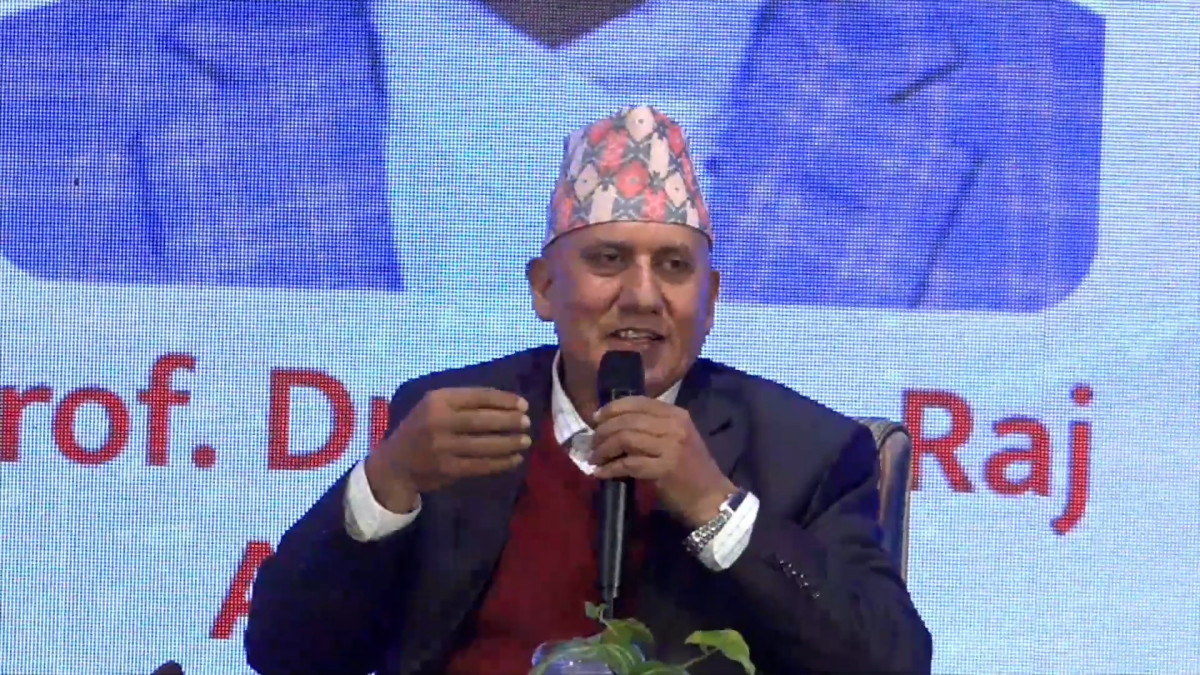
KATHMANDU: Former Vice Chair of the National Planning Commission, Prof. Dr. Shivraj Adhikari, has described the CPN-UML election manifesto as a carefully designed economic ecosystem.
According to Dr. Adhikari, the 25-point plan outlined in the manifesto functions as a complementary chain, aimed at driving the country’s economic growth in an integrated manner.
While some critics have labeled UML’s economic agenda as merely “distribution-focused” or costly, Dr. Adhikari dismissed such claims.
He highlighted initiatives like digital cards and dollar cards, which he says will directly promote exports and job creation, converting short-term costs into long-term economic gains.
On growth prospects, he asserted that Nepal could achieve 8–9 percent economic growth, noting that this should be analyzed in terms of nominal growth rate. “Today’s expenditures are laying the foundation.
Costs may be visible now, but tomorrow they support other sectors, ultimately transforming into investments. We are creating channels for this conversion,” Dr. Adhikari explained.
Addressing youth migration, he noted that the lack of work is not the only reason Nepali youths move abroad; the absence of dignified jobs and social security also plays a role.
The manifesto’s proposals for free and quality education and healthcare aim to create conditions where citizens can lead a dignified life without leaving the country.
Dr. Adhikari emphasized that industrial development alone cannot drive growth; it must be linked with the broader economic ecosystem to generate sustainable production and employment.