Tikot village awaits tourists with Himalayan charm
At an altitude of 2,250 meters, Tikot remains a hidden gem—waiting to be rediscovered by both domestic and international travelers.

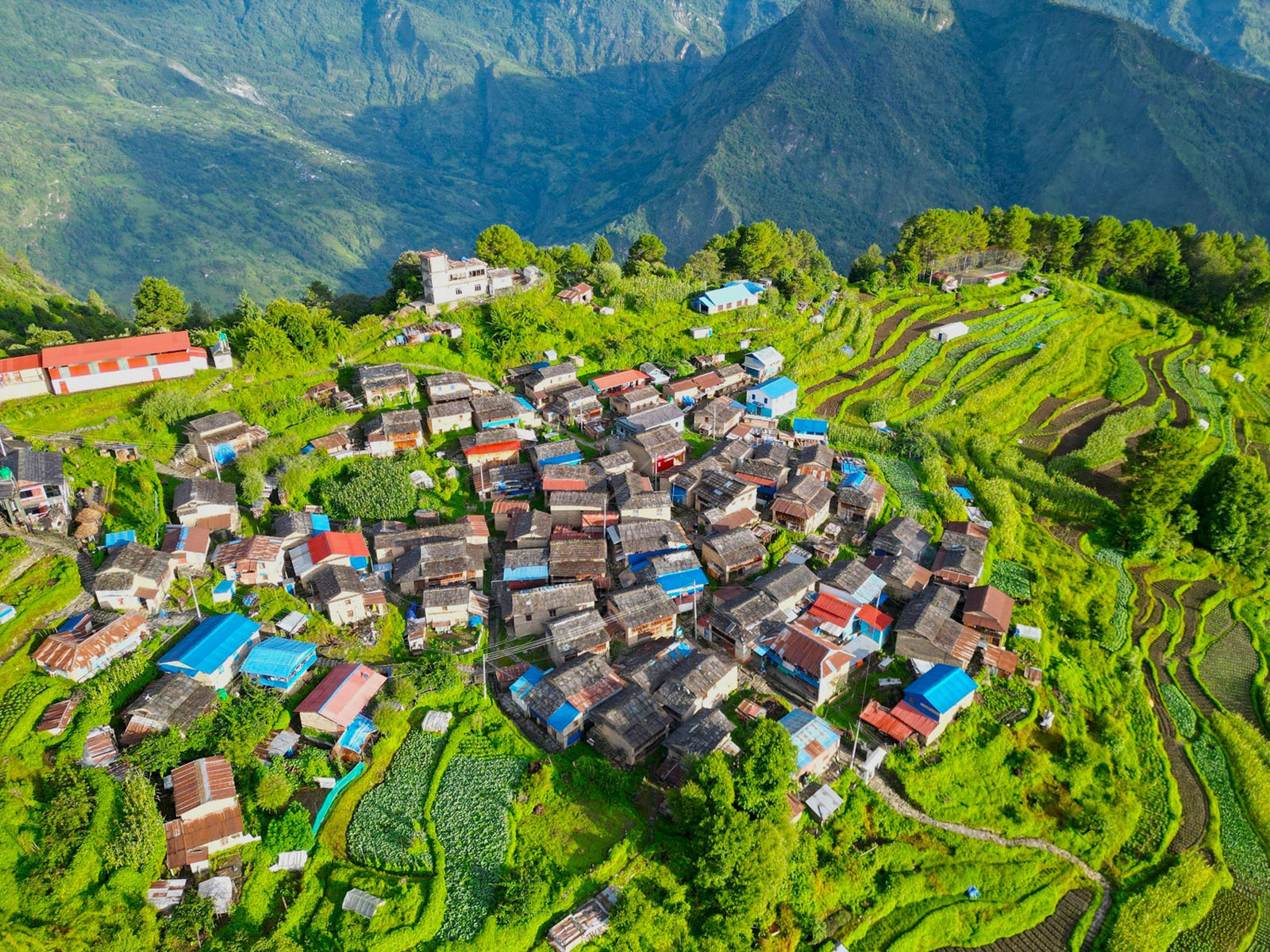
KATHMANDU: Perched on a steep hillside beneath snow-capped peaks, Tikot village in Myagdi’s Annapurna Rural Municipality–7, Myagdi is a serene haven where tradition, nature, and warm hospitality converge.
This picturesque village of traditional stone houses and terraced fields offers breathtaking views of Mt. Dhaulagiri, Annapurna, Nilgiri, Baraha Shikhar, and Manapathi.
At an altitude of 2,250 meters, Tikot remains a hidden gem—waiting to be rediscovered by both domestic and international travelers.
Once a thriving destination along the Annapurna–Dhaulagiri Community Eco-Trail, Tikot’s tourism momentum was disrupted by the COVID-19 pandemic. “Before the pandemic, the flow of tourists was steady, especially after Mahabir Pun introduced the eco-trail in 2011,” says Tikot Secondary School principal and homestay operator Pradip Pun. “But in the last five years, visitor numbers have sharply declined.”
Today, the village is making a gentle comeback, offering authentic homestay experiences in ten traditional houses, accommodating over 40 guests daily.
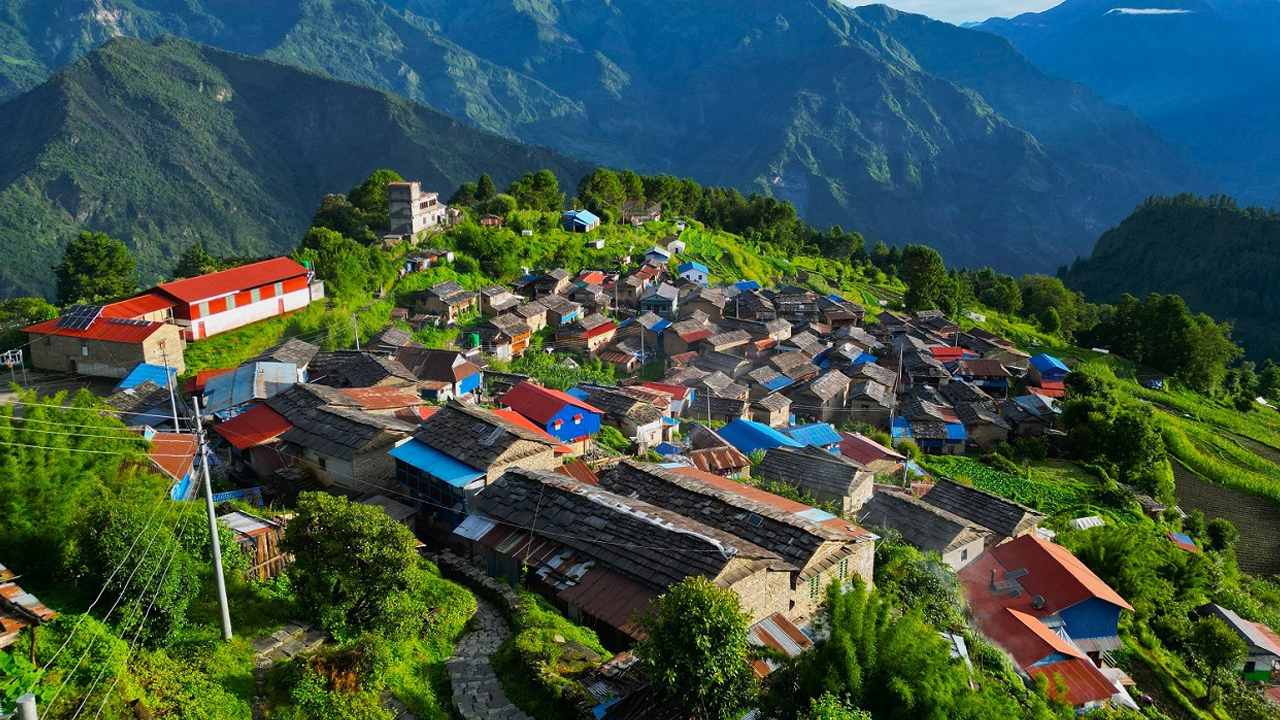
Each homestay promises spectacular mountain views right from the window and is part of a unique model—guests dine at a community lodge and sleep in rotation at local homes.
A short 30-minute uphill hike from the village leads to Panchabal Hill, a stunning viewpoint for sunrise, mountain vistas, and panoramic views of Myagdi’s rural settlements and hilly landscapes.
Tikot is predominantly inhabited by the Pun Magar community, known for their rich cultural heritage. Upon arrival, guests are welcomed with folk songs and dances performed by local women’s and heritage groups. Tikot’s agrarian lifestyle is itself a point of attraction, offering a window into a self-sufficient and eco-conscious way of life.
The homestays serve organic meals prepared from locally grown vegetables, wild mushrooms, and traditional ingredients like fapar (buckwheat), kodho (millet), dhindo, and free-range chicken. Guests can savor the taste of homemade dairy products, all produced without chemical fertilizers or pesticides.
Tikot is accessible via the Beni–Jomsom road, with a two-hour rough ride from Beni to the village via Tiplyang and Mahabhir.
Alternatively, the five-day eco-trail from Beni through Mallaj, Banskharka, Dandakatari, Nagi, Mohare Danda, Phulbari, and Thulakharka leads trekkers to Tikot, before continuing toward Khopra Ridge.
To further promote tourism and preserve local heritage, the Annapurna Rural Municipality has built a two-storey museum in Tikot.
Constructed with a budget of NPR 2.9 million over the last two fiscal years, the museum will showcase traditional household artifacts and cultural items used in daily life, according to Ward Chair Mailan Purja Pun.
With its captivating blend of Himalayan beauty, organic living, cultural richness, and community-driven tourism, Tikot stands ready to enchant travelers seeking authenticity and tranquility off the beaten path.