Tehrathum declares public holiday to control ‘Monkey Terror’
According to municipal officials, the growing monkey population has been destroying essential crops including maize, potatoes, vegetables and fruit, leaving farmers struggling to protect their livelihoods.

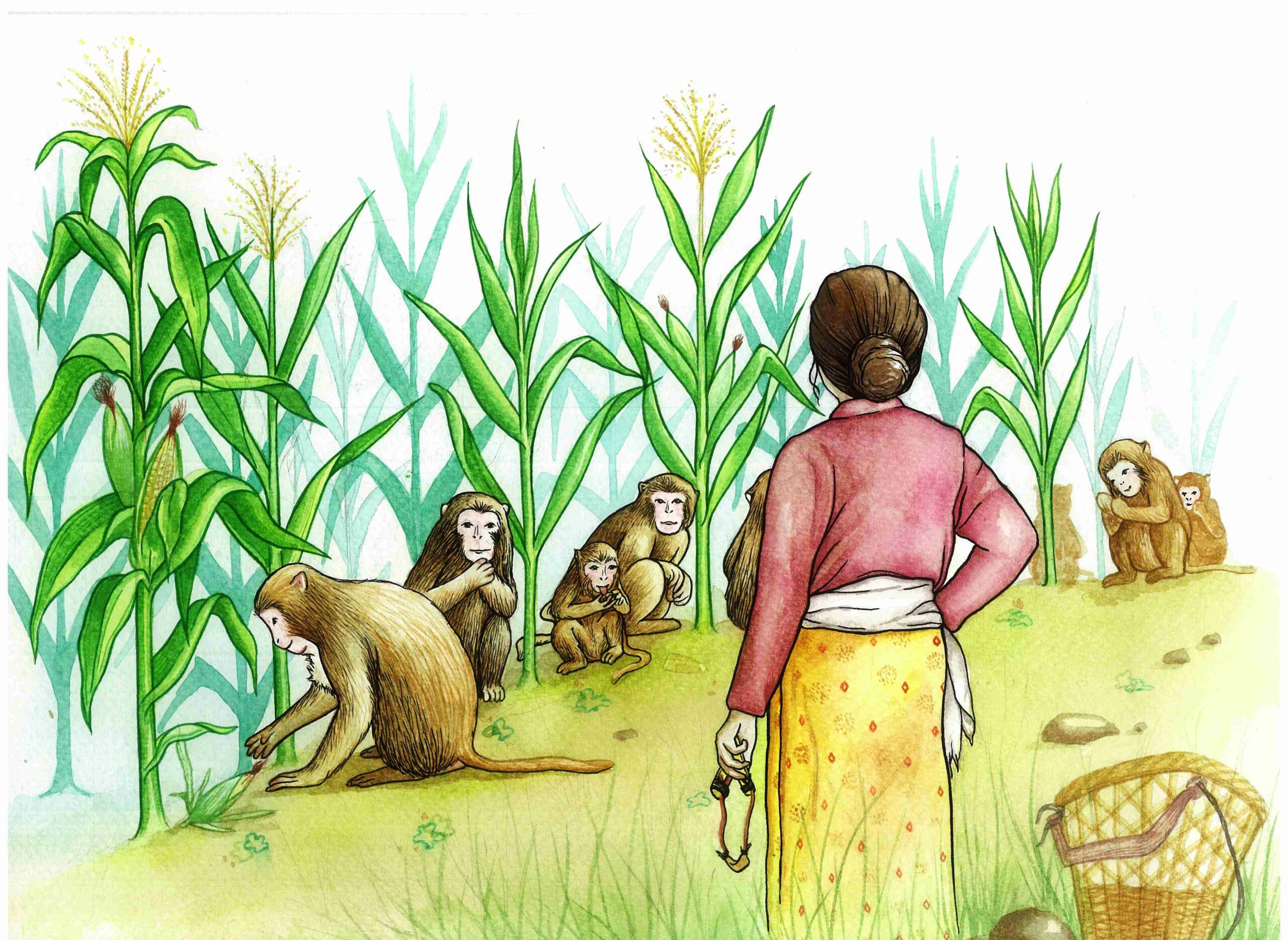
KATHMANDU: A municipality in eastern Nepal has declared a public holiday and launched a large-scale community mobilization campaign to tackle what officials describe as escalating “monkey terror” that is devastating crops and disrupting daily life.
Tehrathum District, Laligurans Municipality has announced that May 15, i.e. Jestha 1, will be observed as a public holiday as residents prepare for a coordinated effort to drive monkeys away from villages and farmlands.
According to municipal officials, the growing monkey population has been destroying essential crops including maize, potatoes, vegetables and fruit, leaving farmers struggling to protect their livelihoods.
Authorities say the damage has become so severe that many farmers now spend long hours guarding their fields, while some school-age children have also been pulled out of classes to help protect crops.
Municipal Chief Arjun Mabohang said the situation had reached a point where it was affecting not only agricultural production but also household income and children’s education.
In an official notice, the municipality said the crisis had expanded beyond agriculture, disrupting the broader rural economy and daily routines of farming families.
As part of the response, the local government will carry out a two-day “community monkey drive” on May 15 and 16, aiming to push the animals toward forested boundaries outside settlements. Farmers, elected representatives, municipal staff and residents have been urged to participate.
The municipality has also deployed temporary structures and hired “monkey watchmen” in key hotspots, including Megha Puchhar in Ward 8, the Nageshwari junction between Wards 6 and 8, and Singhathap Puchhar in Ward 5.
Officials say four personnel are currently stationed in these areas to monitor and manage the situation.
Human–wildlife conflict has become an increasingly serious issue across Nepal’s hill regions in recent years, with expanding monkey populations frequently raiding farms.
In some areas, repeated crop losses have forced farmers to abandon cultivation altogether, according to local reports.