Sagar Dhakal warns against blind faith in ‘new’ political leaders
Sharing his views on social media, he admitted that in the rush to connect figures such as Rabi Lamichhane, Balen Shah, and Kulman Ghising, weaknesses crept into the list.

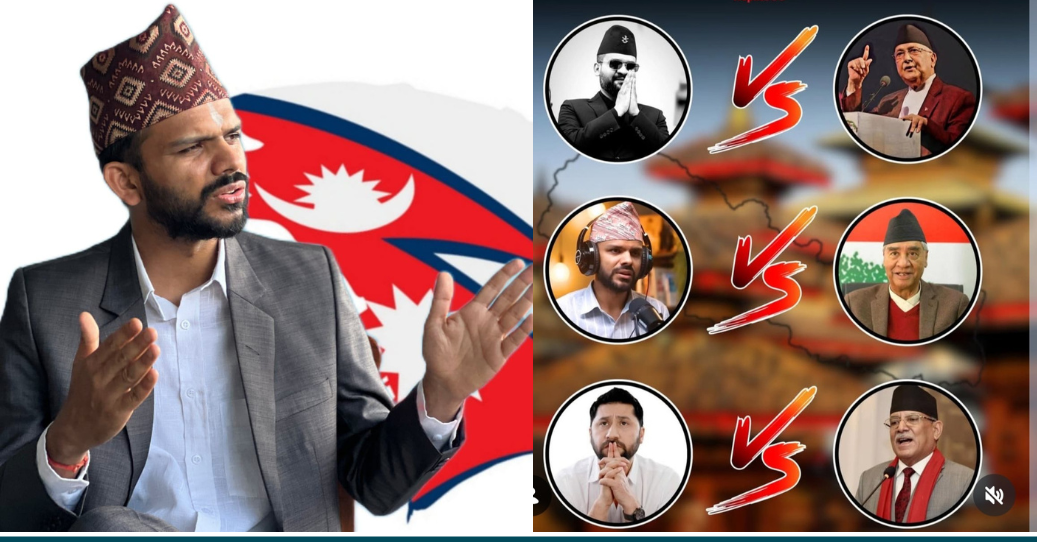
KATHMANDU: Young engineer Sagar Dhakal, who rose to national prominence after his electoral contest with former Prime Minister Sher Bahadur Deuba, has stressed that continuous public scrutiny is essential—even for newly emerged political forces.
At a time when the Rastriya Swatantra Party (RSP) is facing criticism over its proportional representation list, Dhakal acknowledged that technical errors occurred due to hasty political calculations.
Sharing his views on social media, he admitted that in the rush to connect figures such as Rabi Lamichhane, Balen Shah, and Kulman Ghising, weaknesses crept into the list.
“Yesterday, while hurriedly trying to bring Kulman, Rabi, and Balen together, some mistakes were made in RSP’s proportional list,” Dhakal wrote. “Not everything appearing in the media is exactly as it seems across all districts. Corrections are underway, and it is still likely that further revisions can be made.”
Dhakal argued that leadership is not defined by being error-free, but by the willingness to acknowledge mistakes and correct them once identified.
He expressed confidence that a team involving Rabi Lamichhane, Balen Shah, and Kulman Ghising would respond to public dissatisfaction and address the concerns raised at the grassroots level. He also pledged to convey people’s grievances to the appropriate platforms himself.
Cautioning citizens against blind faith in so-called “new” political forces, Dhakal appealed for sustained public vigilance. He warned that the moment people stop asking questions in a democracy is when leadership begins to deteriorate.
“My humble request to the people is this—please do not blindly believe anyone just because they are ‘new’,” he wrote in strong words. “If questions are not asked, then Balen, Kulman, and Rabi will not take long to become like Oli, Prachanda, and Deuba.”
Dhakal further emphasized that “silent devotion” cannot build a nation. Whether leaders are new or old, he insisted, accountability is non-negotiable. Only by moving forward collectively—listening to the people and remaining answerable to them—can the country truly progress, he concluded.