RSP raises alarm over India-China deal on Nepal’s border
The party accused the government of showing reluctance on matters of national maps and sovereignty, despite repeated parliamentary discussions on the sensitive issue.


KATHMANDU: The Rastriya Swatantra Party (RSP) has expressed serious concern over the recent agreement between India and China regarding the Limpiyadhura, Lipulekh, and Kalapani areas, and criticized the Nepalese government’s indifferent response.
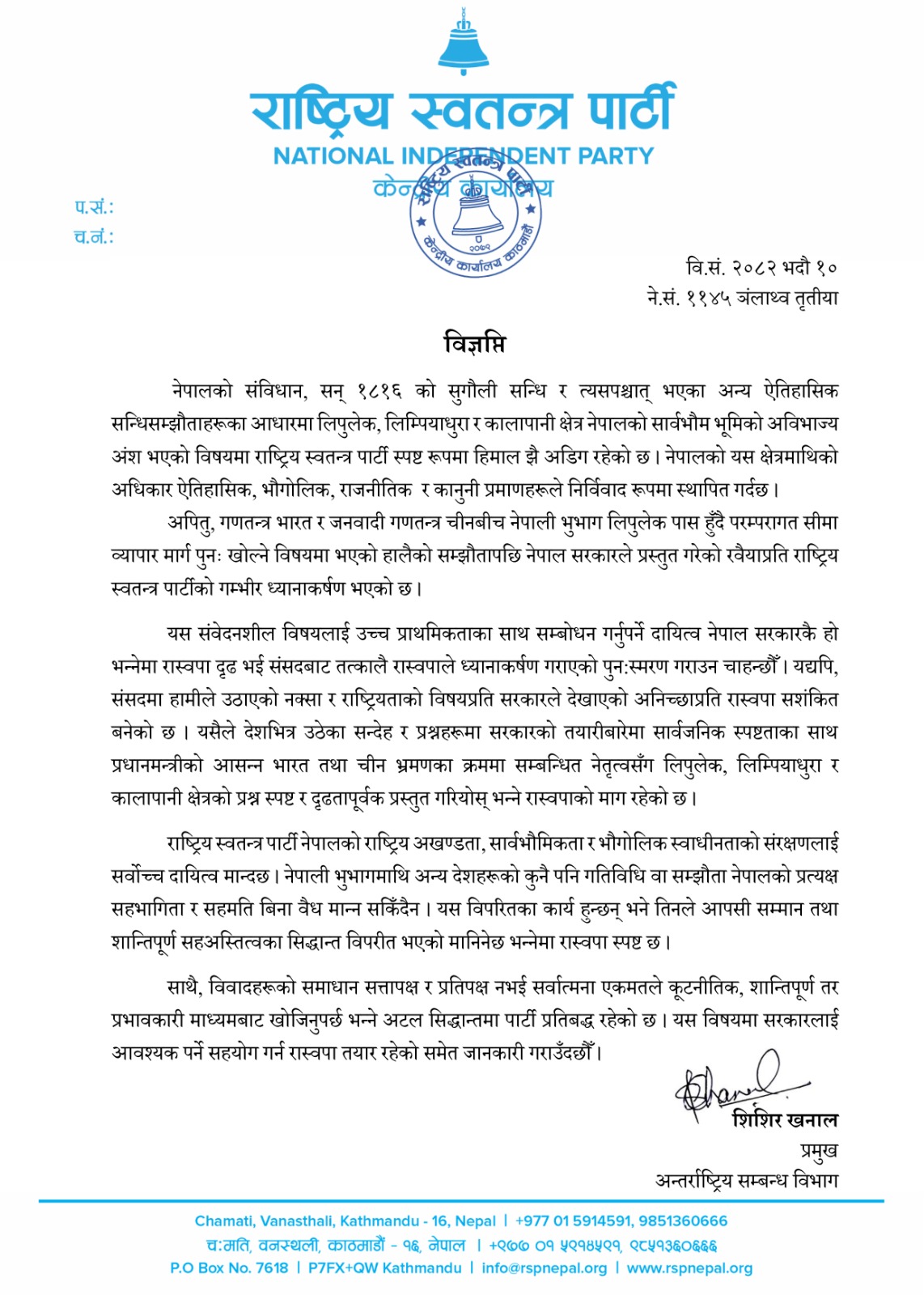
In a statement issued on Tuesday, the party reaffirmed that these territories are an inseparable part of Nepal and urged the Prime Minister to raise the issue clearly and firmly during his upcoming visits to India and China.
Signed by Shishir Khanal, head of the party’s International Relations Department, the statement emphasized that historical documents, including the 1816 Sugauli Treaty, leave no doubt that the disputed areas belong to Nepal. “RSP is deeply concerned about the government’s response following the recent agreement between India and China to reopen the traditional trade route via Lipulekh, a part of Nepalese territory,” the statement read.
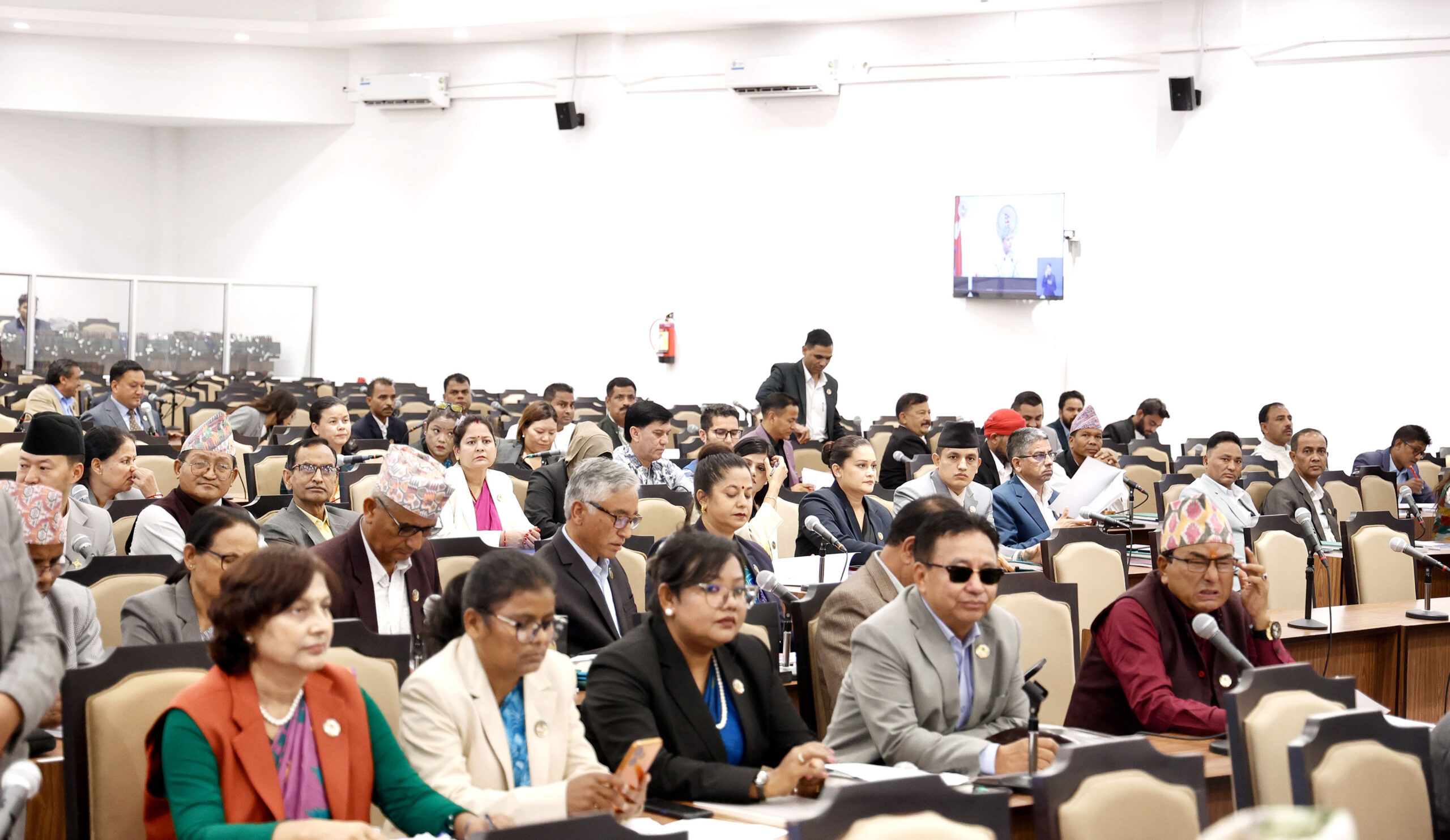
The party accused the government of showing reluctance on matters of national maps and sovereignty, despite repeated parliamentary discussions on the sensitive issue.
It warned that such behavior has raised numerous doubts and questions domestically, which must be addressed.
The statement stressed that the Prime Minister should prioritize the border issue during his visit, emphasizing: “No activity or agreement by other countries concerning Nepalese territory can be considered legitimate without Nepal’s direct participation and consent. Any contrary action would violate principles of mutual respect and peaceful coexistence.”
RSP also reiterated its unwavering principle that disputes over national territory should be resolved through diplomatic and peaceful means with national consensus, rather than partisan division.
The party confirmed its readiness to provide all necessary support to the government on this matter of national importance.