Rising bad loans linked to NRB rules, low investor confidence
According to him, banks issue demand letters to defaulters, and if repayments are not made, they are listed for auction after a 35-day notice.

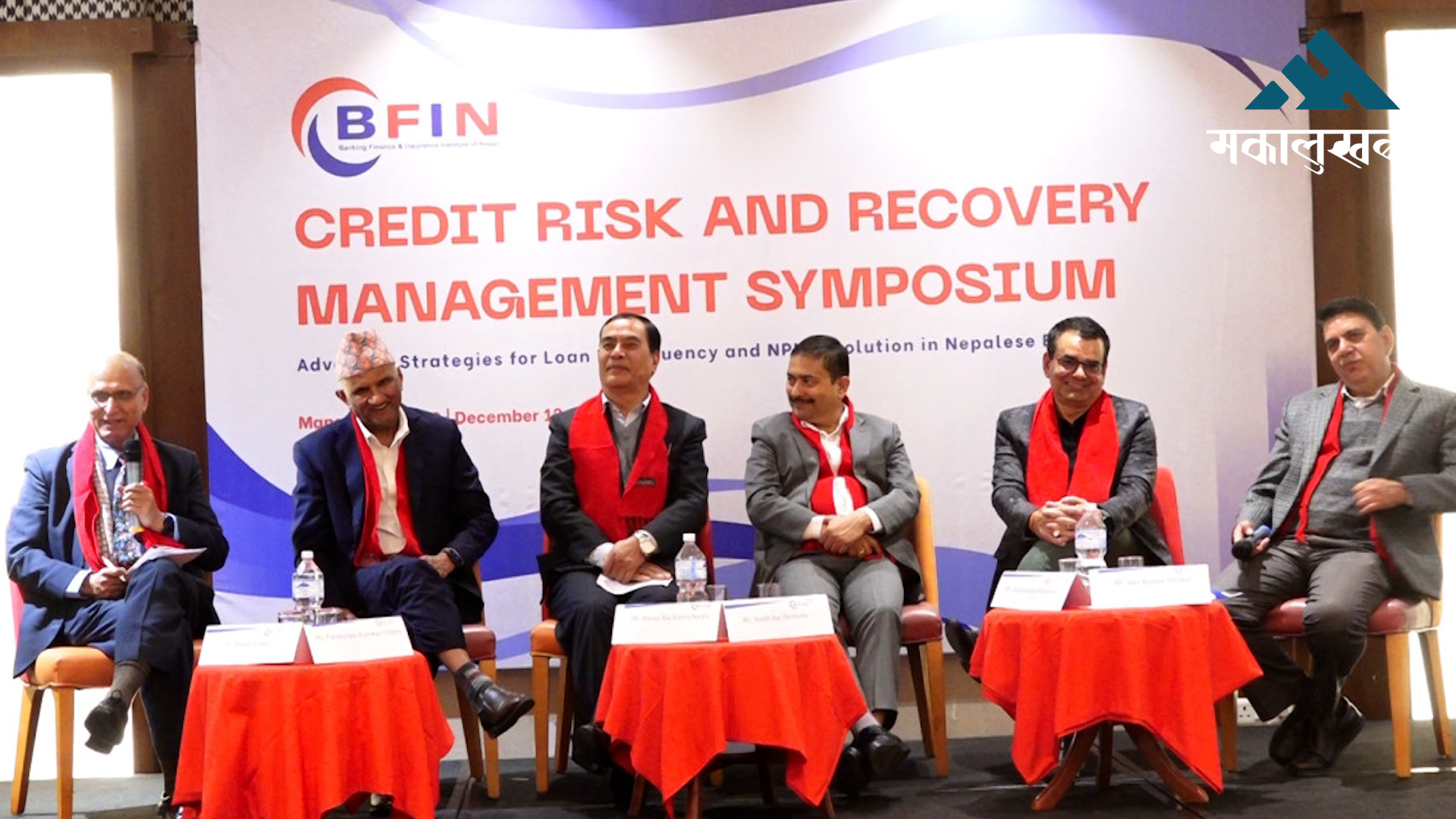
KATHMANDU: Experts have pointed out that some policies of Nepal Rastra Bank (NRB) are impractical, contributing to the recent rise in non-performing loans (NPLs) across the country.
At a program organized by the Nepal Bankers’ Association and the Finance and Insurance Institute of Nepal, experts highlighted that certain directives from the central bank have unintentionally fueled the growth of NPLs.
Former banker Gyanendra Dhungana said that impractical NRB guidelines have made loan recovery difficult.
According to him, banks issue demand letters to defaulters, and if repayments are not made, they are listed for auction after a 35-day notice.
However, even the auction process often faces challenges.
Dhungana emphasized the need to understand the business context before taking action. He suggested that banks should support businesses that can be revived with minimal assistance.
He further recommended that RBI should allow short-term loans for businesses that have defaulted but can still recover.
He cited past examples during the earthquake and COVID-19 pandemic when RBI instructed banks to provide 10–20% additional loans to all borrowers.
Those measures helped reduce NPLs, he noted. Dhungana urged reforms in the NPL definition and provisioning framework, warning that without such changes, bad loans could continue to rise, especially since many loans given during the earthquake and COVID period remain unpaid.
Political instability is another factor affecting investor confidence. Dhungana said investors are hesitant to invest due to the ongoing uncertainty and called for timely elections to restore stability in the country.
Former NRB Executive Director Devkumar Dhakal also pointed out that some problems arise when banks fail to implement central bank policies effectively.
He noted that restructuring facilities were not properly extended to borrowers, leaving many businesses in difficulty and, in some cases, forcing business owners to exit the market.
Dhakal added that banks have failed to satisfy customers despite receiving support from NRB.
Restrictions on over-financing and improper use of additional loans intended for business recovery have also contributed to the rise in bad loans.
He warned that pressuring borrowers repeatedly can worsen the situation and hinder bankers from reaching rural areas.
Similarly, former banker Parshuram Kunwar Kshetri noted that weak regulation and mismanagement have increased bad loans.
He stressed that loans should not be granted solely on collateral, and sound regulatory practices have proven effective in maintaining healthy bank balance sheets.
Experts collectively agreed that the broader economic slowdown and negative market sentiment have weakened businesses, reducing borrowers’ capacity to repay loans, thereby driving the increase in NPLs.