Regular health checkups & treatment for squatters in holding centers

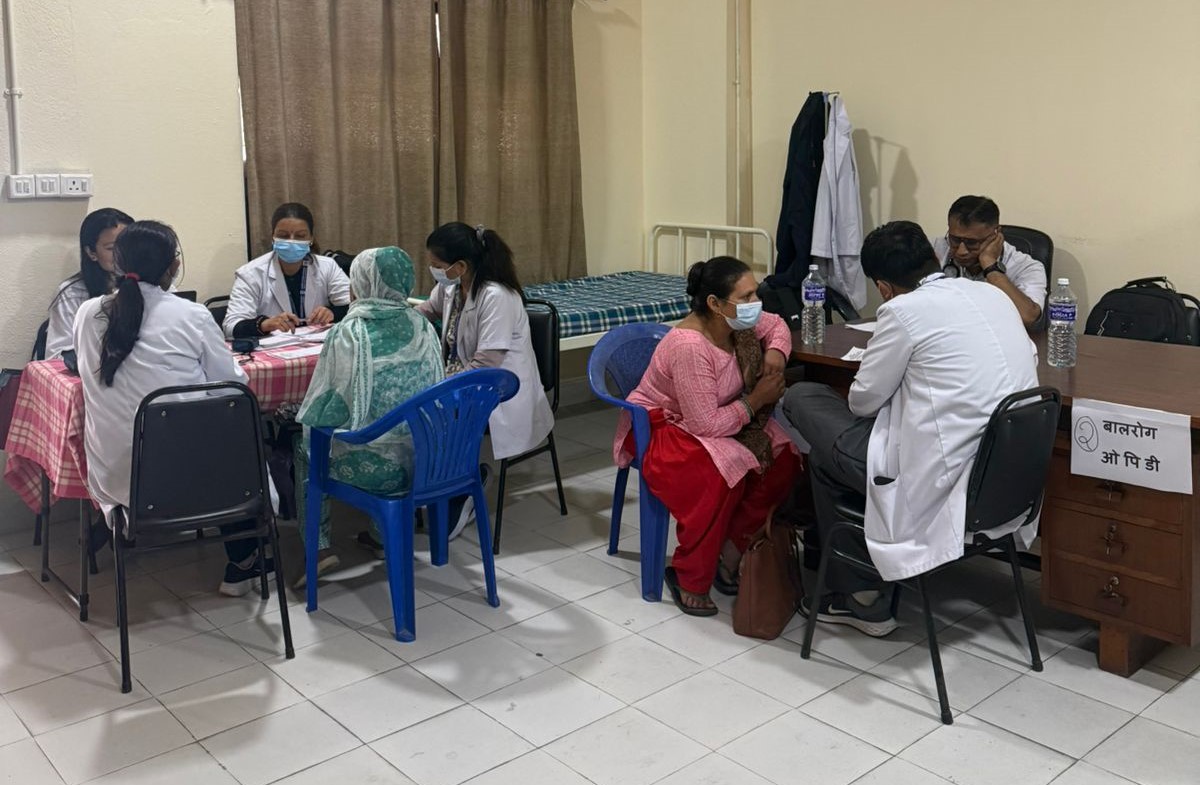
KATHMANDU: For Dambar Tamang, now living at a holding center in the Radhaswami Satsang premises inside the Tribhuvan University campus in Kirtipur, life finally appears to be moving in a different direction. After years of uncertainty and hardship along the banks of the Bagmati River in Thapathali, he has begun to believe that the future may not always be defined by fear and insecurity.
Like hundreds of other landless settlers, Tamang spent decades living in an informal settlement vulnerable to annual floods, disease, and displacement. Every monsoon brought anxiety as the Bagmati swelled, threatening homes that offered shelter but no legal ownership or security.
Basic services such as electricity, drinking water, roads, and sanitation existed only informally. Wastewater and garbage flowed directly into the river, while residents lived amid pollution that silently affected their health for years.
Today, regular medical examinations at the holding centers are revealing the extent of those long-hidden health problems.
Alarming Health Findings
Data collected from displaced families paints a stark picture of life along the riverbanks.
Before being transferred to the holding centers, health screenings conducted on 497 people at Dasharath Stadium found that nearly 30 percent suffered from high blood pressure, while 15 percent had diabetes.
The screenings also identified muscular disorders in 16 percent of participants, gastric problems in 13.5 percent, mental health issues in seven percent, and respiratory illnesses in 4.5 percent.
Further examinations conducted after residents arrived at the holding centers uncovered even more health concerns. However, health workers emphasize that the process has not only identified illnesses but also initiated treatment and follow-up care.
Medical data shows that at least one member had died in 38.5 percent of the surveyed families while living along the riverbanks.
Among those deaths, around 9.5 percent resulted from floods, drowning, or accidents involving bridges, roads, and wells. Another eight percent died from respiratory illnesses such as asthma and pneumonia, while a similar proportion succumbed to sanitation-related infectious diseases including tuberculosis, dengue, and typhoid.
Most of these deaths were linked directly or indirectly to the hazardous living conditions along the riverbanks, where contaminated water, poor sanitation, and stagnant waste created ideal conditions for disease transmission.
According to Dr. Anup Bastola, Director of the Shukraraj Tropical and Infectious Disease Hospital and coordinator of medical teams serving all six holding centers, non-communicable diseases such as heart disease, cancer, and hypertension accounted for another 28 percent of recorded deaths.
Health teams from Patan Hospital, Paropakar Maternity and Women’s Hospital, and the Mental Hospital in Lagankhel continue to conduct screenings and provide treatment.
Access to Health Care for the First Time
For Tamang, the medical support has already made a significant difference.
He suffers from a retinal condition that makes reading and seeing small objects difficult. Had he received regular checkups earlier, he believes the problem might not have become so severe.
Following consultations at the holding center, he visited an eye hospital in Tripureshwor and was later referred to Tilganga Institute of Ophthalmology for further treatment.
His wife and children have also undergone medical examinations. Health workers have advised his wife to seek hospital treatment for a heart-related condition.
Fifty-year-old Punam Magar, who spent nearly two decades living in Thapathali, said she had long struggled with high blood pressure, diabetes, and nerve-related ailments. After her condition worsened, emergency treatment was arranged through the holding center.
“Many different health tests were conducted here, and I was able to receive hospital treatment,” she said, noting that the cost of some medicines still remains a challenge.
Another resident, Khim Bahadur Pulaya Magar, said that although not all medications are available and some treatments are expensive, residents have no complaints about the health personnel serving them.
Many displaced families include people living with chronic illnesses who previously had little or no access to regular medical care. Mothers and newborns are receiving routine health monitoring, counseling, and nutritional supplements.
Subas Devi Paswan said her grandson received health checkups as well as nutritional food support at the center.
Hidden Mental Health Crisis Emerges
Health experts say the riverbank settlements affected residents not only physically but also psychologically.
Mental health specialists visiting the holding centers have observed the deep impact of years spent in unsafe, unstable, and marginalized living conditions.
Some residents have expressed sadness over being forced to leave places where they had spent much of their lives. Yet many have also acknowledged that life along the riverbanks exposed them to numerous physical and psychological hardships.
Dr. Sulabh Raj Upreti, a psychiatrist from the Mental Hospital in Patan, has led multiple visits to all six holding centers to identify and address mental health concerns.
“It is natural for people who considered the risky riverbank settlements their home to feel uncomfortable after relocation,” he said. “However, those living conditions themselves created significant psychological problems. We encountered a large number of such cases.”
A team of four specialists and psychology researchers conducted individual counseling sessions with more than 600 residents across the six centers.
“While many people expressed discomfort about leaving their former homes, a significant number also said they now hope the government will provide a better and more secure future,” Upreti said.
Based on the assessments, some residents require psychosocial counseling and support, while others need medical treatment for mental health conditions.
According to him, many individuals have already begun returning to their daily routines after receiving counseling and assistance. Concerns about children’s education have also eased as more children have been enrolled in nearby schools.
Data Reveals Deep Vulnerability
Mental health assessments and counseling conducted among 553 residents revealed that 82.8 percent of families had no alternative place to live before being relocated, forcing them to settle along riverbanks.
Among them, 24.6 percent belonged to families that had lived in such conditions for three generations.
The findings also showed that 3.3 percent of deaths were linked to suicide and another 3.3 percent to alcohol-related causes.
The absence of security and stability had taken a serious toll on residents’ mental wellbeing. Approximately 12 out of every 100 people surveyed reported having experienced suicidal thoughts, while seven percent required specialized psychiatric care.
In response, mental health professionals have been providing regular counseling services across all six holding centers.
Experts say these efforts are helping residents transition from lives marked by insecurity and risk toward a future filled with greater hope and stability.
Treatment and Support Continue
Since the relocation process began, government personnel have been working closely with residents to identify health issues, assess their needs, and provide ongoing support.
Prakriti Dhakal, Private Secretary at the Office of the Prime Minister and Council of Ministers, said authorities are not only identifying illnesses but also ensuring continued treatment and counseling according to each patient’s condition.
She added that patients suffering from serious illnesses such as cancer and pneumonia are currently receiving treatment at various hospitals in Kathmandu, and arrangements will be made for additional patients requiring specialized care.
For many former riverbank residents, the holding centers represent more than temporary shelter. They have become a place where long-neglected health conditions are being addressed, psychological wounds are receiving attention, and a sense of hope for a safer and more dignified future is beginning to emerge.