Phewa Lake rescue drill boosts monsoon preparedness
Several passengers were shown falling into the water, with some attempting to swim to safety while others were heard calling for help.

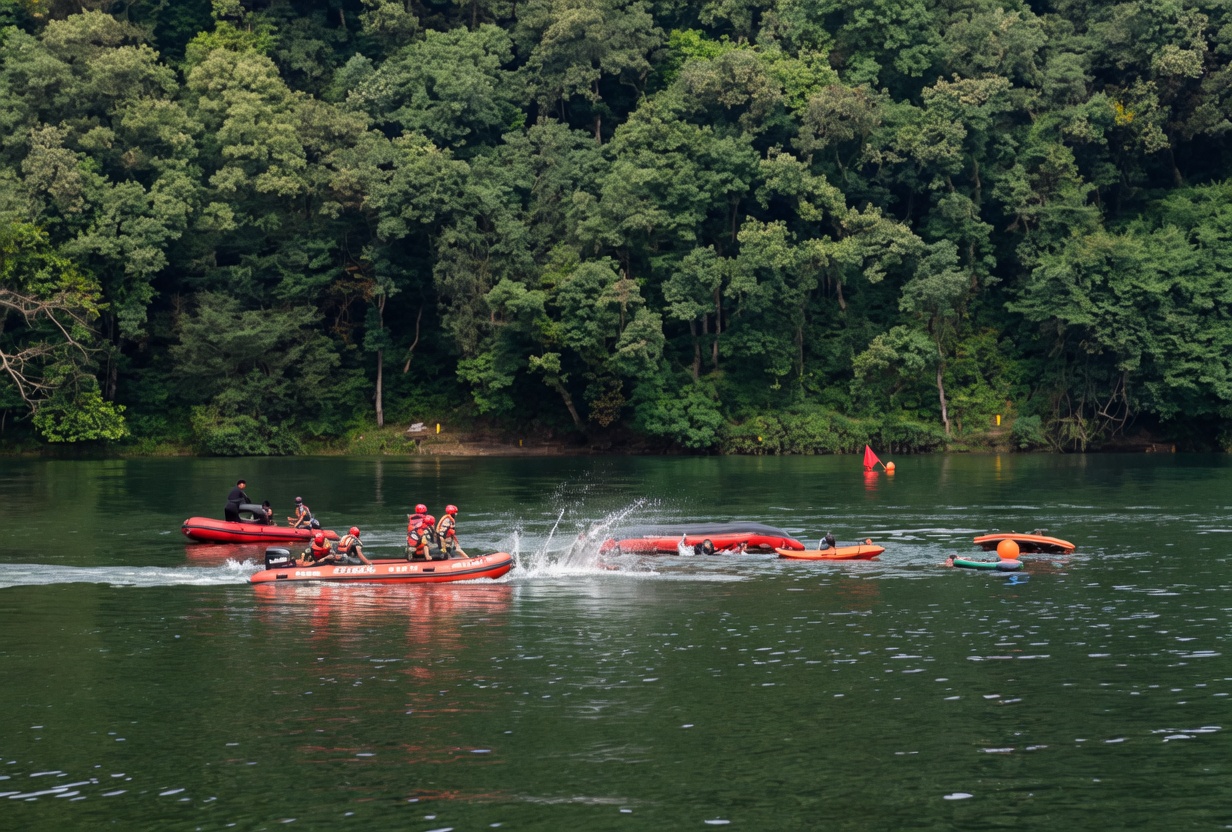
KATHMANDU: Authorities in Gandaki Province have conducted a large-scale water rescue simulation exercise at Phewa Lake in Pokhara, highlighting disaster preparedness ahead of the monsoon season, officials said.
The staged scenario involved a fictional accident in which a group of intoxicated youths were traveling in a boat and creating a disturbance on the lake.
In the simulation, a speeding motorboat approaching from the opposite direction collided with their vessel, causing the boat to capsize.
Several passengers were shown falling into the water, with some attempting to swim to safety while others were heard calling for help.
Following the simulated distress call, rescue teams from security agencies quickly arrived at the scene on motorboats and began immediate evacuation operations.
The stranded “passengers” were rescued from the water and given first aid before being transported to hospital for further medical checks as part of the drill. One individual “missing” in the exercise was later retrieved from the lake by a team of divers.
Officials said the operation demonstrated coordinated efforts where rescue personnel risked their own safety by entering the water to save lives, as part of a controlled training environment.
The joint exercise was organized by the District Administration Office, Kaski, at the lakeside area near Basundhara Park in Pokhara.
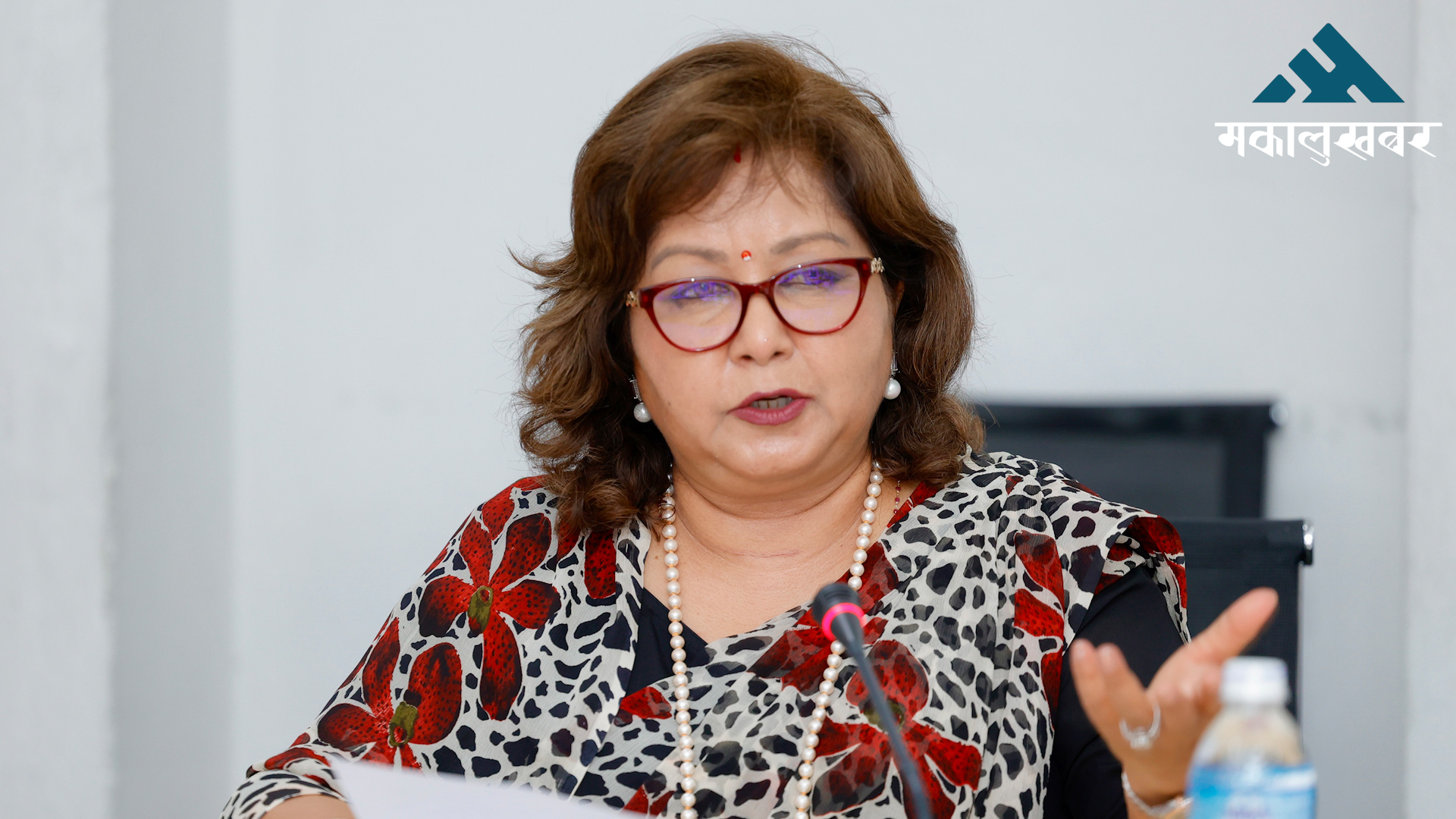
Chief District Officer Ruda Devi Sharma said the simulation was conducted under a disaster response preparedness program focusing on water-related emergencies.
The drill was carried out in coordination with Nepal Army’s Krishna Dal Battalion, the District Police Office Kaski, and Armed Police Force Nepal No. 24 Battalion.
According to officials, disaster management teams from all three security agencies—including divers and rope rescue specialists—participated in the exercise.
Authorities said the primary objective of the simulation was to enhance the skills and efficiency of security personnel in handling emergency rescue operations and to strengthen disaster response capability.
Assistant Chief District Officer Chitrangda Baral said such exercises are also intended to raise public awareness about disaster risk reduction and emergency preparedness at the community level.
He added that the District Disaster Management Committee has been conducting various training and awareness programs in local communities.
Officials noted that simulation exercises like this help analyze vulnerabilities during disaster situations and improve coordination among rescue teams, ultimately strengthening emergency response systems.
Following the observation of the drill, Gandaki Province Chief Minister Surendra Raj Pandey emphasized that such activities are crucial ahead of the monsoon season to build preparedness and public awareness about possible disasters.
“Gandaki Province is as beautiful as it is vulnerable,” he said. “Due to its diverse geography, rivers, lakes, and fragile geological structure, the risks of floods, landslides, inundation, and storms increase every year with the onset of the monsoon.”
He stressed that reducing potential loss of life and property requires preparedness, early warning systems, improved rescue capacity, and community-level awareness.
The Chief Minister also noted that accidents in lake areas during adverse weather conditions, including sudden rainfall and storms, frequently result in loss of life and property. He said effective disaster management depends primarily on strong preparedness measures.
He further called for regular community-level awareness programs, training sessions, and simulation exercises in high-risk areas prone to floods, landslides, fires, and lake-related accidents.
With support from the provincial government, watchtowers have been constructed at Phewa Lake and Begnas Lake to assist in monitoring and rescue operations. Rescue boats have also been handed over to security agencies for emergency response.
The Gandaki Provincial Government has prioritized disaster risk reduction and management and has been conducting annual preparedness programs and simulation exercises in coordination with the Nepal Army, Nepal Police, Armed Police Force, and District Disaster Management Committees.
Regular programs include procurement and management of rescue equipment, relief distribution, diver training, community search and rescue training, and disaster simulation exercises. Emergency supplies are stored in provincial warehouses and distributed to security agencies as needed.
Under decisions of the Provincial Disaster Executive Committee, funds are allocated through the Provincial Disaster Management Fund to district disaster management committees.
Each of the 11 districts receives Rs 1 million (10 lakh) for disaster response, while the provincial fund operates with no less than Rs 100 million (10 crore) for disaster management activities.
Officials said these measures aim to ensure rapid response and minimize the impact of natural disasters across the province.