New political forces shake Nepal; Congress-UML explore alliance
Sources claim the UML has informally suggested a “bargaining” arrangement with Congress for 10 seats in the National Assembly to offset this disadvantage.

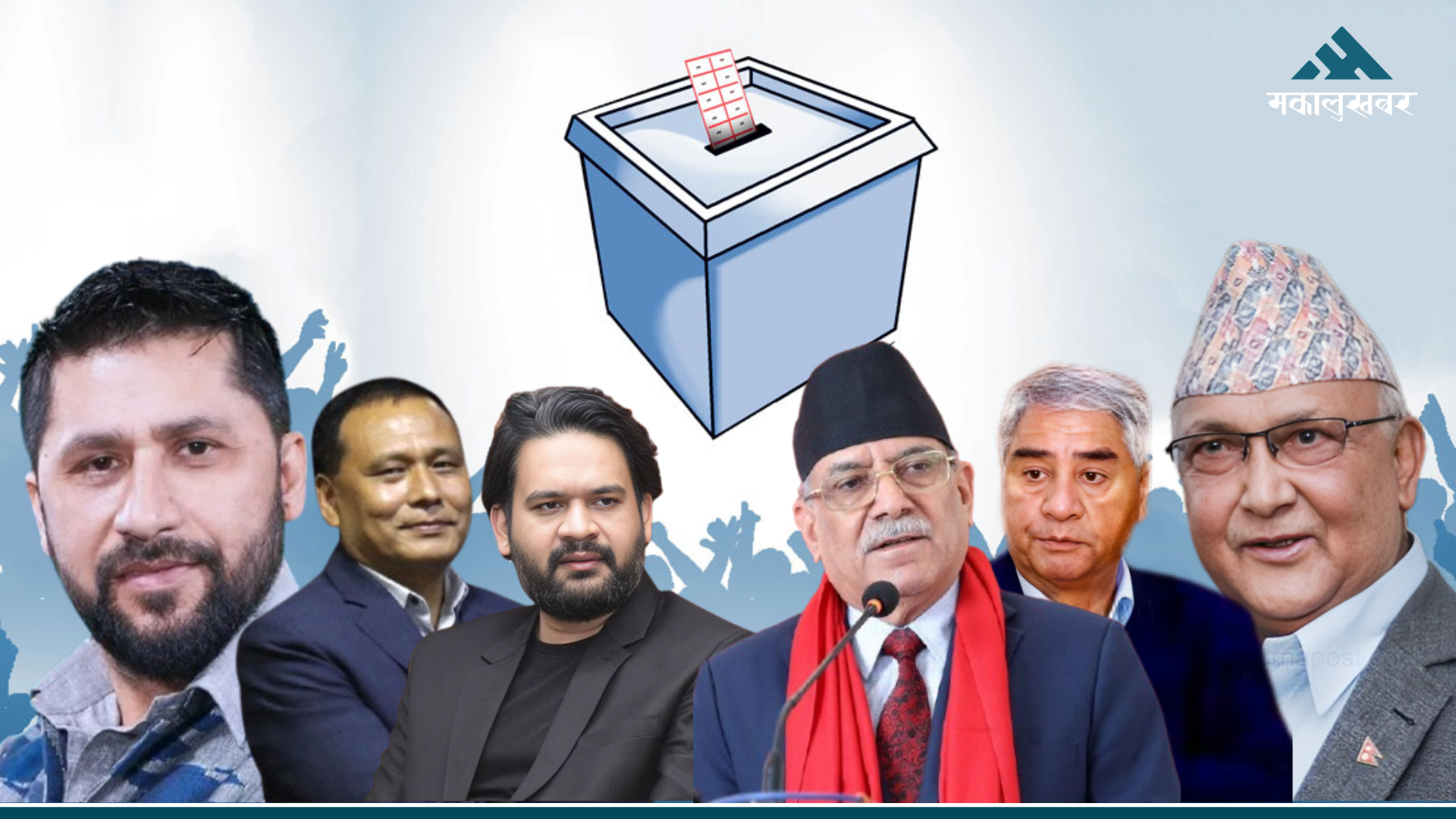
KATHMANDU: The rise of alternative political forces—Rastriya Swatantra Party (RSP), Kathmandu Mayor Balendra Shah, and Ujyaalo Nepal Party led by Kulman Ghising—has sent ripples through Nepal’s traditional political landscape.
Sensing the challenge posed by this new power bloc, the country’s two major parties, Nepali Congress (NC) and CPN-UML, have quietly begun groundwork for a potential pre-election alliance.
In preparation for the National Assembly elections on 11 Magh and the House of Representatives polls on 21 Falgun, NC President Sher Bahadur Deuba and CPN-UML Chair KP Sharma Oli have initiated preliminary discussions.
Chair Oli proposed cooperation based on the seven-point agreement of 2081 Asar 17, though internal party dynamics within Congress cast doubt on whether this will materialize.
For CPN-UML, the alliance is seen as a strategic necessity. Currently holding 10 National Assembly seats, the party risks being reduced to just two seats if it contests alone.
Sources claim the UML has informally suggested a “bargaining” arrangement with Congress for 10 seats in the National Assembly to offset this disadvantage.
UML Secretary Bhanubhakta Dhakal argued that in times of systemic challenges, collaboration between major parties is natural. “While healthy competition is important, protecting the constitution and political system requires cooperation. Still, UML is ready to contest alone if needed,” he said.
Internal Rift in Congress
Despite President Deuba’s flexibility, a significant faction within Congress opposes a pre-election alliance. Senior leaders Gagan Thapa and Shekhar Koirala argue that forming alliances before elections is not in the party’s interest. Past party resolutions emphasized contesting future elections independently. Senior leader Bishwprakash Sharma added, “Reverting to failed alliances is politically immature.” Shekhar Koirala also warned that forcing a coalition against grassroots sentiment would be unacceptable.
Meanwhile, establishment figures like NP Saud and spokesperson Prakash Sharan Mahat favor tactical coordination in the National Assembly but suggest a case-by-case approach for the House of Representatives.
Political analysts note that the emergence of new forces has pressured traditional parties to reconsider alliances. Professor Krishna Pokhrel observed, “The combined rise of Ravi, Balendra, and Kulman has created a psychological push for Congress and UML to come closer. However, repeating unnatural coalitions risks sending negative signals to voters.”
Both Congress and UML have also maintained parallel dialogue with the CPN (Maoist), although the latter, under Pushpa Kamal Dahal ‘Prachanda’, has prioritized its independent strategy following the 17-party unity and ‘Gen-Z’ movement.
The next few weeks are likely to reveal whether Nepal’s old political guard can adapt to the shifting landscape or if the new forces will redefine the country’s electoral dynamics.