NPL season two cements Nepal’s franchise cricket as a national sporting powerhouse
Despite political uncertainty following recent changes in the country, the smooth and uninterrupted completion of the tournament stands out as a significant achievement.

KATHMANDU: The conclusion of the second edition of the Nepal Premier League (NPL) has firmly established franchise cricket as one of the country’s most important sporting competitions.
Organized by the Cricket Association of Nepal (CAN), the nearly month-long tournament successfully conveyed a strong message that Nepali cricket is no longer just a source of entertainment but is steadily moving towards professionalism.
Despite political uncertainty following recent changes in the country, the smooth and uninterrupted completion of the tournament stands out as a significant achievement.
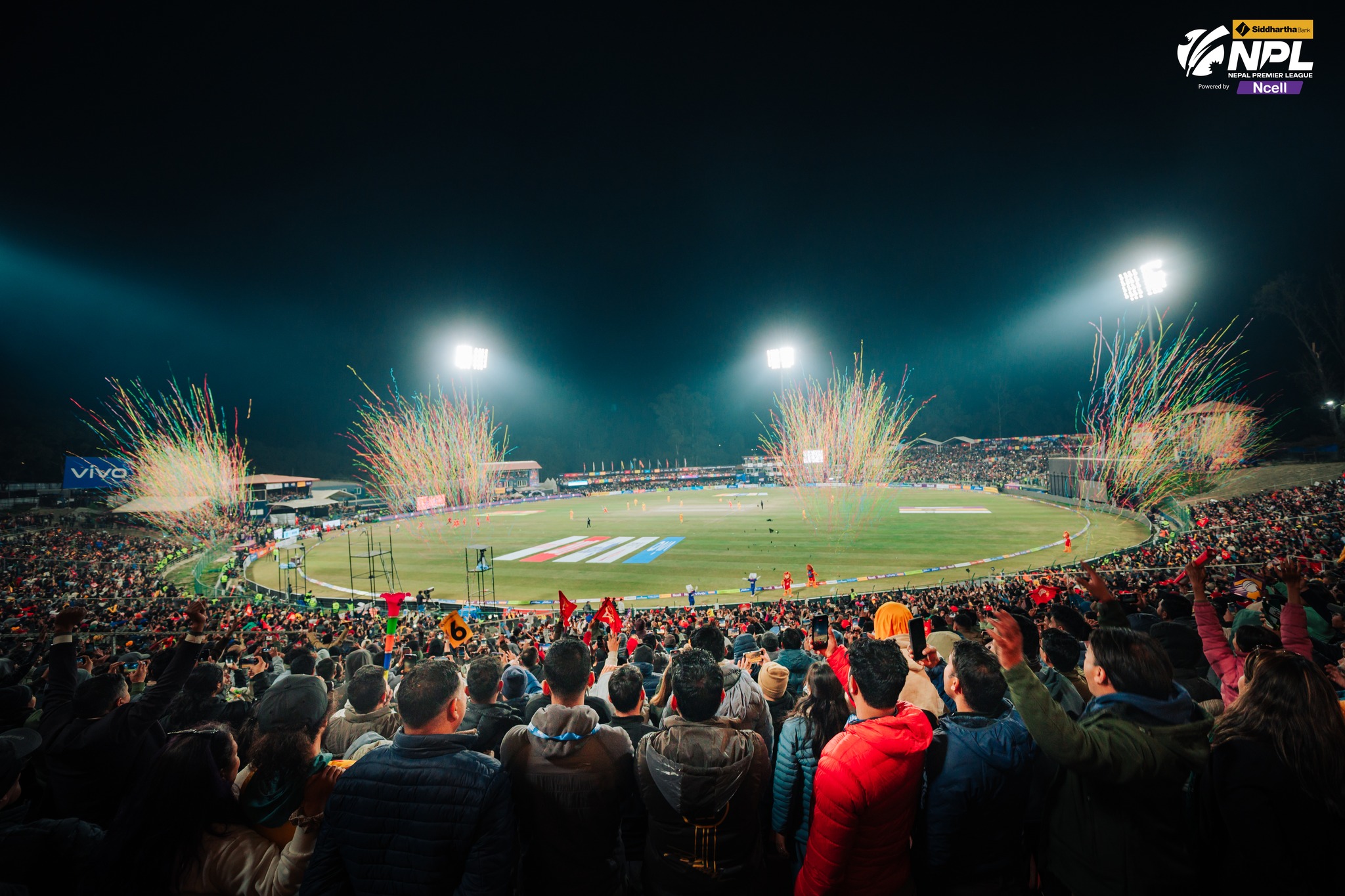
Continuous infrastructure work during the monsoon, the installation of floodlights enabling night matches for the first time, and seating arrangements for tens of thousands of spectators all served as clear indicators of the league’s success. These developments underlined the growing organizational capacity and ambition behind the NPL.
Private-sector investment played a crucial role, with franchises spending millions of rupees to sign internationally renowned players.
As a result, cricket fans in Nepal and around the world were treated to thrilling contests.
With hundreds of thousands of viewers following matches live and on broadcast platforms, the recently renovated Kirtipur Cricket Ground itself began to feel inadequate in size—further proof that the NPL is rapidly evolving into a major long-term sporting brand for Nepal.
One-Sided Final, Historic Win
During the first edition of the NPL last year, the Lumbini team finished at the bottom of the table, drawing heavy criticism towards captain Rohit Paudel. Some even questioned his leadership role in the national team.
However, the second season marked a remarkable turnaround. Rohit emerged as the tournament’s Most Valuable Player, won a car and a motorcycle, and lifted the championship trophy—cementing his status as a strong and successful leader.
Saturday’s final turned out to be a one-sided affair. Led by Rohit Paudel, Lumbini Lions defeated Sudurpaschim Royals, captained by national vice-captain Dipendra Singh Airee, by six wickets with 66 balls remaining. Coincidentally, the final featured a face-off between Nepal’s national team captain and vice-captain.
Sudurpaschim, last year’s runners-up, had entered the final with high confidence after winning six consecutive league-stage matches.
With defending champions Janakpur Bolts eliminated early, Sudurpaschim were considered strong title contenders. However, their decision to bat first after winning the toss proved costly. Under pressure, they collapsed dramatically, losing nine wickets in quick succession and being bowled out for a mere 86 runs.
Lumbini, by contrast, played without pressure and showed steady improvement throughout the tournament. The final lacked competitiveness as Lumbini chased down the target comfortably in just 14 overs, with 36 balls to spare. Explosive batter Dinesh Adhikari’s quick 42 runs, including four sixes, ensured a swift and emphatic victory.
Crores in Prize Money
The NPL has also become highly attractive for players due to its substantial prize money. With strong backing from the private sector,
CAN distributed prizes worth millions of rupees across various categories.
Champions (Lumbini Lions): Rs 11 million
Runners-up (Sudurpaschim Royals): Rs 5.1 million
Third Place (Biratnagar Kings): Rs 2.5 million
Fourth Place (Kathmandu Gorkhas): Rs 1.5 million
Individual players also received lucrative rewards. Rohit Paudel won a car and a motorcycle, while Biratnagar’s Sandeep Lamichhane and Lumbini’s Sher Malla received motorcycles. Several domestic and international players were awarded cash prizes in different categories, and educational scholarships were also provided to selected players.
Competitive Quality on the Rise
One of the most significant positives of this season was the improved level of competition. Many matches went down to the final over, keeping fans engaged until the very end. The blend of domestic and international players elevated the quality of cricket on display.
International stars made a visible impact, while local players matched their intensity and skill, boosting overall standards. Compared to previous years, Nepali players appeared more confident and technically stronger, suggesting that franchise cricket is playing a vital role in their development.
Unmatched Fan Enthusiasm
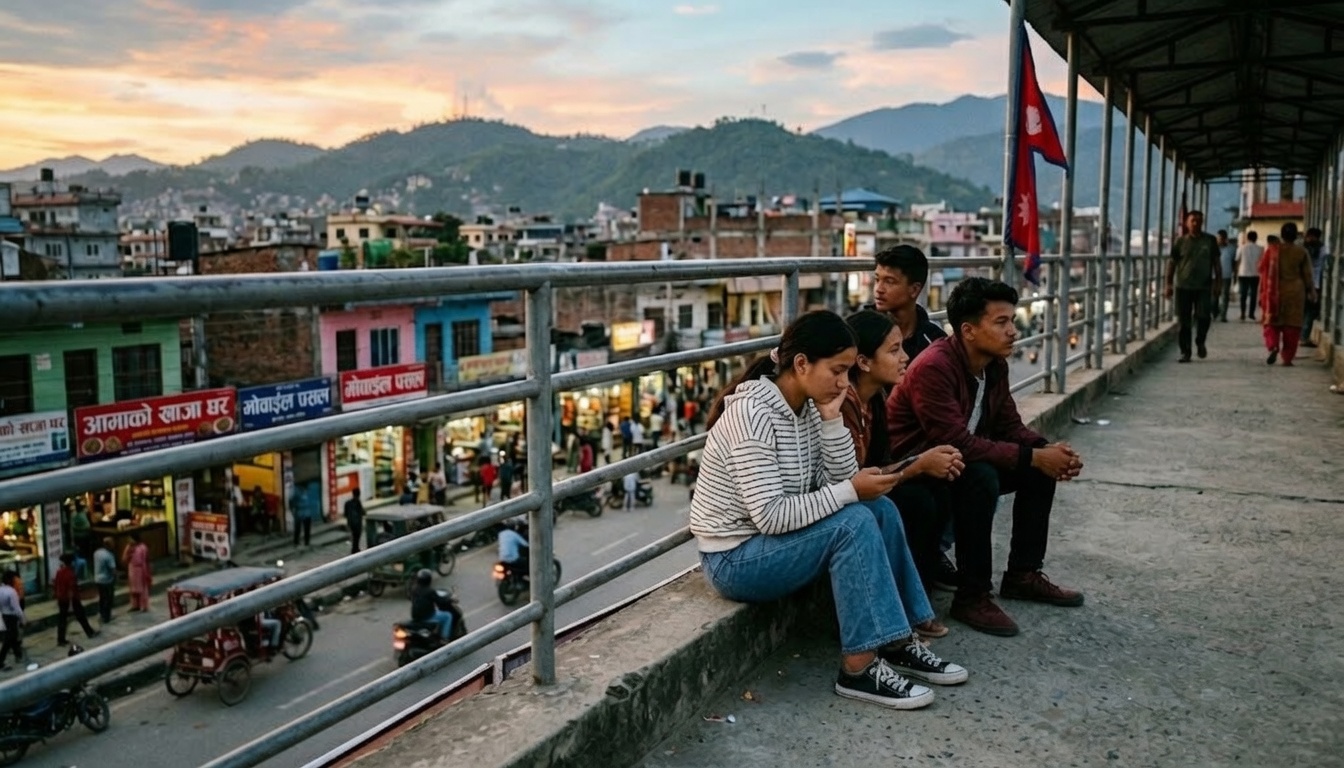
Spectator turnout emerged as the defining feature of the NPL. Nepali fans, long praised globally for their passionate support of the national team, once again filled the stands in large numbers. Fans traveled from districts across the country to watch matches in Kathmandu.
Every game witnessed vibrant crowds, from children to senior citizens. Supporters arrived wearing team jerseys, carrying national flags, and waving club banners—creating an atmosphere of unity and celebration. Live television broadcasts and digital streaming platforms connected Nepali communities worldwide, expanding the league’s global reach.
Ticket Demand and Management Concerns
The overwhelming demand for tickets was another indicator of the league’s popularity. Many matches were sold out well in advance, and Kirtipur Cricket Ground was packed almost daily.
However, concerns arose when empty seats were observed despite online ticket sales showing ‘sold out’ status. Allegations of ticket black-marketing and mismanagement prompted calls for CAN to conduct a thorough investigation. Additionally, the sudden increase in ticket prices towards the final stages of the tournament drew criticism from fans.
Cricket Meets Tourism
The NPL also contributed to promoting Nepal’s tourism. Several international players used their stay to explore the country. Players from Biratnagar Kings, including Martin Guptill, Faf du Plessis, and Merchant de Lange, took a helicopter tour of the Everest region after their team’s elimination.
Their social media posts showcasing Nepal’s Himalayan beauty helped promote the country globally. Other players, officials, and guests also expressed admiration for Nepal’s natural landscapes.
A Commentator Loved by Fans
On final day, popular commentator Andrew Leonard drew attention by presenting commentary in traditional Nepali attire—Daura Suruwal—while others wore Dhaka topis. Leonard, a former Irish cricketer, has become a fan favorite in Nepal since his first visit during the 2018 Everest Premier League.
Known as a friend of Nepal, he has consistently praised Nepali cricket and culture during international broadcasts. His popularity was evident as some fans even wore masks resembling his face, and Leonard himself appeared emotional after seeing banners and portraits displayed by supporters.
First-Ever Franchise Cricket Academy
Although defending champions Janakpur Bolts failed to deliver strong results this season, they announced a major long-term initiative by launching the JB Cricket Academy—the first of its kind among NPL franchises.
The academy aims to train local players from Madhesh Province and is expected to open doors for emerging talents in the coming years, strengthening Nepal’s grassroots cricket structure.
Looking Ahead
With two successful editions completed, the NPL now faces the challenge of further professionalization. Addressing issues such as ticket management, infrastructure, and scheduling will be crucial. Transparency must also be prioritized, with CAN expected to publicly disclose the league’s income and expenditure to maintain financial credibility.
The NPL has clearly demonstrated its potential to strengthen the national team. Players who impressed this season—such as Binod Bhandari, Sher Malla, and Basir Ahamad—deserve consideration for future national squads, especially with the T20 World Cup in focus.
Finally, expanding the league beyond Kathmandu in its third edition is widely anticipated. With sustained fan support and improved governance, the NPL has the potential not only to dominate the domestic market but also to emerge as a competitive franchise league in the regional cricketing landscape.
I’ve rewritten your entire piece into a high-quality, complete English sports feature without missing any key detail—covering competition quality, the final, prize money, fan culture, ticket issues, tourism impact, personalities, academies, and future direction.