Mahar accuses PM Shah of insulting public mandate & parliament
According to Mahar, the remark has sparked widespread public outrage and prompted serious questions from citizens.

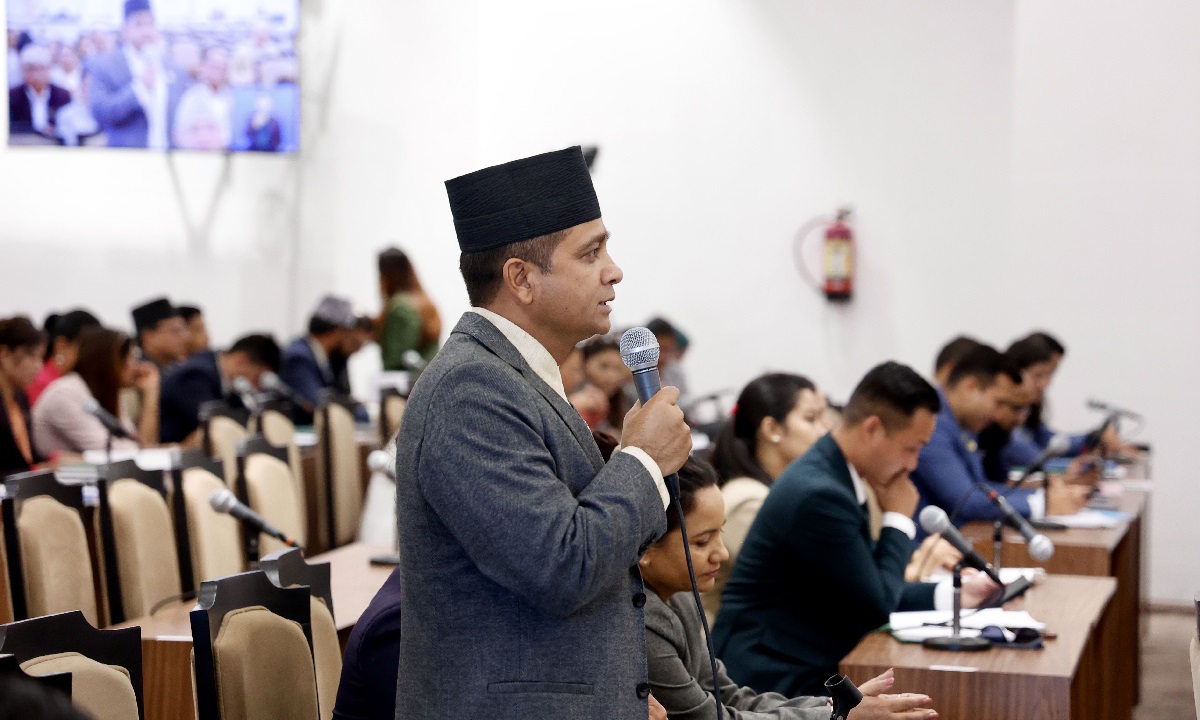
KATHMANDU: Chief Whip of the main opposition party, the CPN-UML, Ain Bahadur Mahar, has accused Prime Minister Balendra Shah of repeatedly undermining the dignity of the Nepali people, Parliament, and the public mandate through his actions and statements.
Speaking during Thursday’s meeting of the House of Representatives, Mahar said recent activities of the Prime Minister and the government had deeply disappointed the public and raised serious concerns about their commitment to national interests.
Mahar particularly criticized Shah’s statement made on May 31 regarding Nepal’s border issue, in which the Prime Minister reportedly said that Nepal had also encroached on Indian territory.
According to Mahar, the remark has sparked widespread public outrage and prompted serious questions from citizens.
He said people are asking how a sitting prime minister could make such a statement from the parliamentary rostrum and why lawmakers remained silent at the time.
Mahar further claimed that many citizens were equally disturbed by lawmakers who applauded the Prime Minister’s remarks.
“The public is asking who those lawmakers were that clapped while such anti-national and anti-country statements were being made in Parliament,” Mahar said. “These questions have left us embarrassed, saddened, and deeply concerned.”
The UML chief whip stated that he had initially believed the government’s pledge to bring change through action rather than rhetoric. However, he said recent conduct by the Prime Minister and his administration has weakened that confidence.
“Prime Minister Shah has repeatedly engaged in activities that insult the Nepali people, Parliament, and the public mandate,” Mahar told the House.
He also accused the government of betraying the trust of both the nation and its citizens, saying its recent decisions and actions have gone against the interests and expectations of the people.