LPG crisis: Officials split over supply numbers
Meanwhile, the Nepal Oil Corporation defended itself, saying that since mid-January, daily imports have reached approximately 125,000 cylinders.

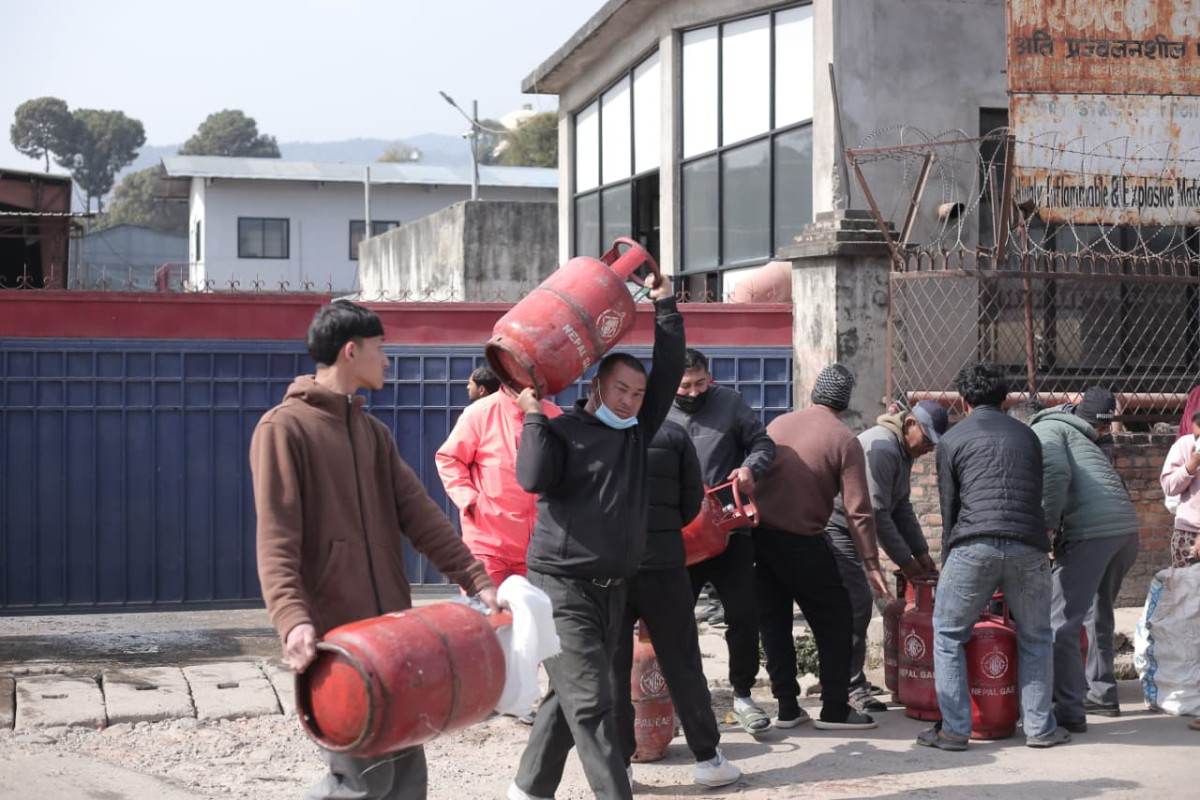
KATHMANDU: Nepal is facing a severe shortage of liquefied petroleum (LPG) gas, leaving households across the country, including the capital, struggling to cook meals.
An investigation by the Department of Commerce, Supply, and Consumer Protection revealed that LPG supply is significantly below demand, while the Nepal Oil Corporation (NOC), responsible for distribution, insists imports exceed requirements.
Director of the Commerce Department, Narhari Tiwari, described the market situation as “alarming.” He stated that only about one-third of the required gas is currently being supplied. “It is not enough for the Oil Corporation to claim that imports surpass average demand. Consumers are not receiving gas. To resolve the current crisis, increasing imports is the only option,” Tiwari emphasized.
Meanwhile, the Nepal Oil Corporation defended itself, saying that since mid-January, daily imports have reached approximately 125,000 cylinders.
Spokesperson Manoj Thakur added that an additional quota of 2,000 tons has been approved for February beyond the regular allotment.
According to NOC, the primary issue lies in consumer panic, not supply. “About 4 million cylinders in homes were empty, but fear of shortage caused everyone to rush for refills simultaneously, creating the current problem,” Thakur said. In the Kathmandu Valley alone, 23 industrial suppliers distribute 40,000 cylinders daily.
Major Industries Struggle to Supply Gas
Monitoring revealed serious supply issues in four large gas companies: Nepal Gas, Everest, Sai Baba, and Shree Krishna Gas.
Customers of these companies are finding it difficult to obtain cylinders, with Nepal Gas holding around 800,000 cylinders and Everest Gas nearly 500,000, yet distribution bottlenecks have left many consumers frustrated.
Market Data at a Glance
-
Total certified cylinders: 14 million
-
Cylinders in market rotation: 10 million
-
Average monthly demand: 3 million cylinders (~47,000 tons)
-
February quota: 49,500 tons