Germany’s super sub Undav: From factory floor to World Cup star
Today, however, the striker has become one of Germany’s most influential players at the FIFA World Cup.

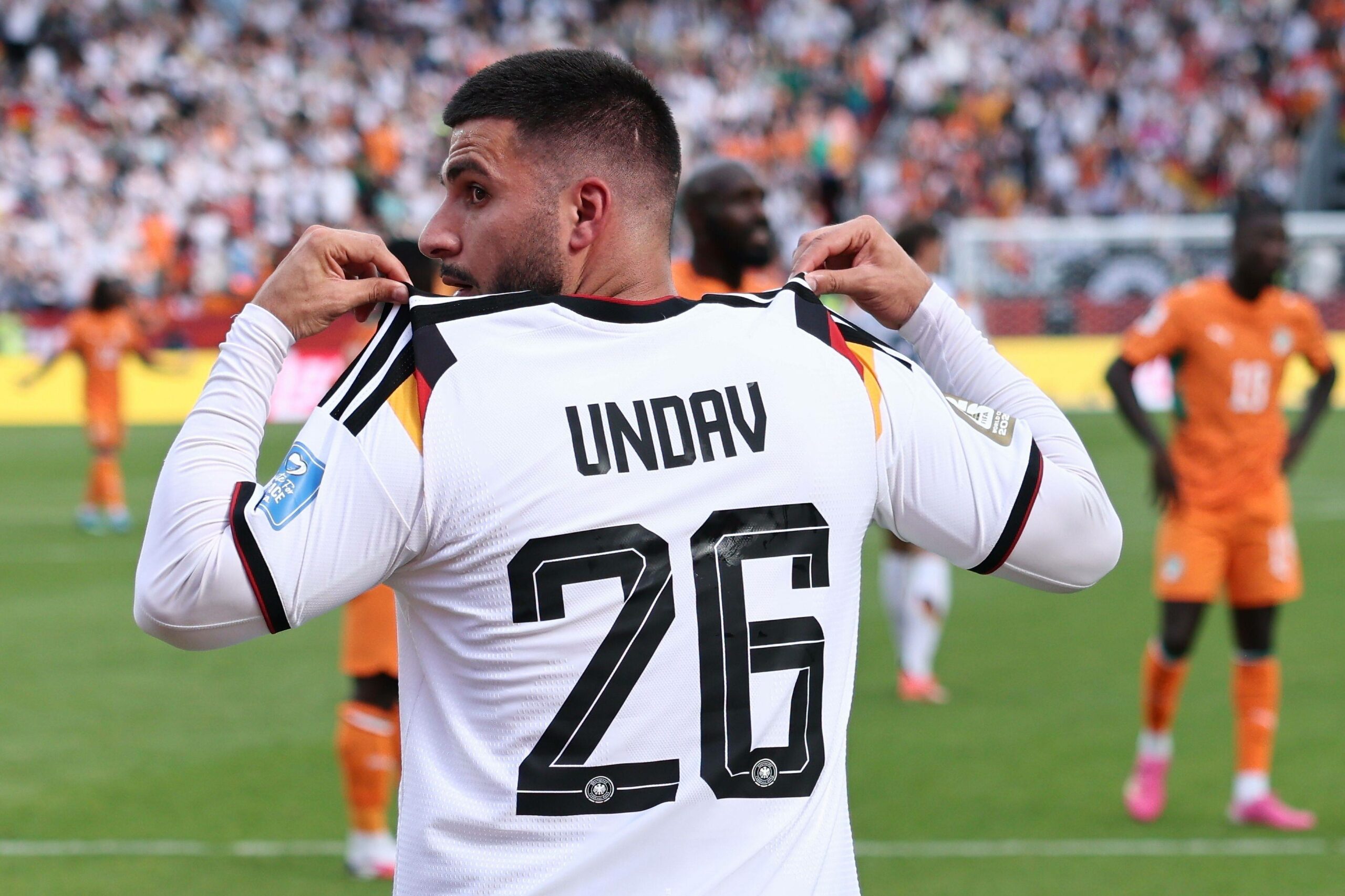
KATHMANDU: Not long ago, Deniz Undav found himself publicly criticized by Germany head coach Julian Nagelsmann.
Today, however, the striker has become one of Germany’s most influential players at the FIFA World Cup.
Undav played a decisive role in Germany’s dramatic 2-1 comeback victory over Ivory Coast, coming off the bench to score twice and help his side secure a place in the knockout stage for the first time since their triumphant 2014 World Cup campaign.
The 29-year-old has now recorded three goals and two assists as a substitute in just two matches, contributing to five goals overall. In doing so, he equaled the World Cup record for the most goal involvements by a substitute since 1966, matching Cameroon legend Roger Milla’s achievement from 1990.
Yet Undav’s place in Germany’s World Cup squad was far from guaranteed. His future with the national team appeared uncertain following a public disagreement with Nagelsmann after scoring a late winner against Ghana in March.
Undav had openly expressed his desire to become a regular starter for Germany. Nagelsmann responded by warning him against putting public pressure on selection decisions and even suggested that the striker might not have scored had he started the match.
The coach later revealed that he apologized to Undav for those comments.
Since then, Undav has delivered the perfect response on the pitch.
His outstanding performances have strengthened his case for a place in Germany’s starting lineup. He has now scored nine goals in just 11 international appearances.
Following the victory over Ivory Coast, Nagelsmann acknowledged Undav’s impressive form.
“Of course he can start. We do not want to disrupt his momentum. He keeps coming on and scoring goals,” the Germany coach said.
A Journey Built on Hard Work
Undav’s rise to the top has been anything but straightforward.
At the age of 14, he was rejected by Werder Bremen, who reportedly told him he was too small and had little future in professional football.
By 17, he was playing in Germany’s fourth division while earning only £120 per week. To support himself, he also worked full-time in a factory.
“When I was 14, Werder Bremen told me I had no future. It broke my heart,” Undav recalled.
“At 17, I left home and joined Havelse. I had to combine football with factory work. I woke up at 4 a.m., worked for eight hours, went to training afterward, and did not get home until around 8 p.m.”
“Football alone was not enough to make a living.”
His career eventually took off in Belgium with Union Saint-Gilloise, where he helped the club earn promotion to the top division and scored 25 goals. His performances earned him a move to Brighton & Hove Albion.
After scoring five goals in 22 Premier League appearances, Undav joined Stuttgart on loan before making the move permanent.
His breakthrough season came in 2025-26, when he scored 19 Bundesliga goals for Stuttgart, securing his place in Germany’s World Cup squad.
Ready for a Starting Role
Nagelsmann initially favored Arsenal forward Kai Havertz as Germany’s first-choice striker, but Undav’s recent displays have made selection decisions increasingly difficult.
“When the game opens up, he is extremely effective,” Nagelsmann said. “He is an outstanding finisher and has reached the highest level of his career.”
Undav also became the first German player since Miroslav Klose in 2002 to score in each of his first two World Cup appearances.
The striker’s last start for Germany came in a 4-0 victory over Finland, where he produced two goals and one assist.
“It feels fantastic,” Undav said. “The most important thing is that the team wins. Now we move on to the next stage.”
If his remarkable form continues, Undav could become one of Germany’s most important weapons as the four-time world champions pursue a historic fifth World Cup title.