Chaunri Tourism Festival transforms high-altitude livelihoods in Panchthar’s Phalelung region
Traditional yak herding sheds have now been transformed into tourist homestays, while infrastructure development in the region has also seen steady growth.

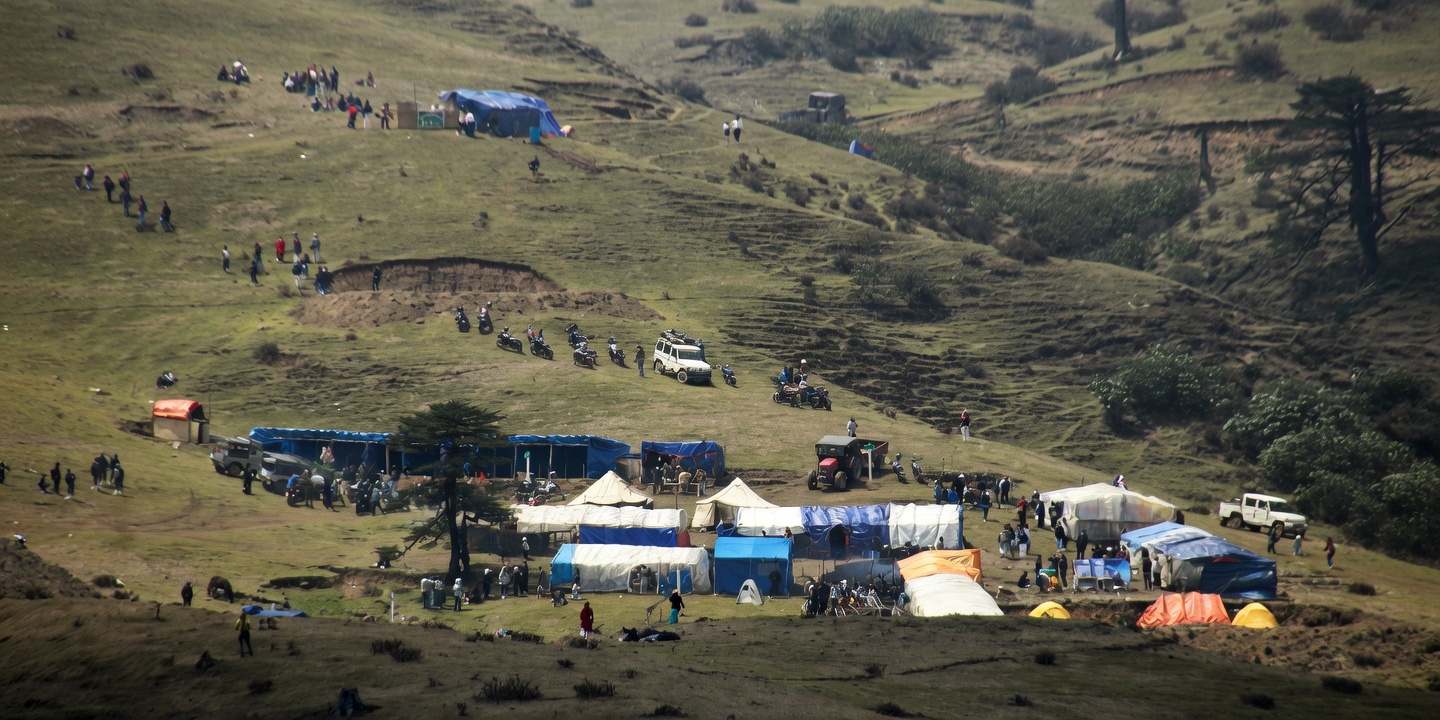
KATHMANDU: The Chaunri Tourism Festival, held for the past nine years in the Chararate–Phalot area of Phalelung Rural Municipality in Panchthar, has brought significant benefits to local chaunri (yak) herders, boosting both their livelihoods and the regional economy.
Since its inception in 2074 BS, the festival—organized at an altitude of around 3,500 meters above sea level in Phalot—has contributed not only to the promotion of chaunri farming but also to the expansion of international markets for chaunri-based products.
Traditional yak herding sheds have now been transformed into tourist homestays, while infrastructure development in the region has also seen steady growth.
According to Chandralal Nepal, a key chaunri herder and operator of the Phalot Yak Goth Bās initiative, enthusiasm among herders has increased significantly since the festival began. “Before 2017, there were only 18 chaunri sheds in the Phalot area, but now there are 31,” he said. “Young people and women are increasingly attracted to this occupation. Earlier, only men used to stay in the sheds, but now the situation has changed, and the sheds have improved significantly. We now provide accommodation for tourists inside the sheds, which is called ‘goth-bās’ (shed stay).”
However, not all sheds have yet adopted the homestay model. Currently, only 10 to 12 sheds are capable of hosting tourists, with accommodation capacity for around 150 visitors across the Sanda Kanchanjunga area up to Phalot. Nepal stated that at least 5,000 tourists visit annually.
During the monsoon months of Asar, Shrawan, and Bhadra (June–August), heavy rainfall forces herders to move livestock down to lower villages, making tourist access and accommodation more difficult.
Previously, chaunri products were limited mainly to butter and churpi (dried cheese), but now cheese production has also begun and is being commercially sold.
Nepal noted that the festival has helped open markets for chaunri products, encouraged government support, and increased tourist arrivals.
Ramchandra Gurung, chairperson of the Kanchanjunga Yak Cheese Producers’ Group from Chararate and Tin Simana areas of Phalelung, said chaunri population has increased significantly in recent years, and more people are now relying on chaunri-based livelihoods.
He added that ecotourism has received a major boost due to growing tourist arrivals.
According to Gurung, various chaunri products—including bones, horns, and tails—are also sold, as they are widely used in religious and cultural activities, creating multiple income sources for herders.
He also mentioned ongoing efforts to develop improved chaunri breeds by bringing in new yak from Taplejung’s Himalayan regions and Bhutan. So far, more than 40 improved animals have been raised through this initiative.
Gurung stressed the need for government support in artificial insemination for chaunri breeding. He also highlighted market availability for chaunri products, although he noted occasional export challenges for churpi. “Yak cheese is currently exported mainly to Kathmandu,” he said. “It sells at around Rs 800 to Rs 1,000 per kilogram, while chaunri butter sells for about Rs 800. However, we feel the prices are still too low compared to production costs.”
He added that there is a significant difference between cow and yak dairy products, as yaks graze on medicinal herbs in high-altitude regions, yet their products are not priced accordingly, making it difficult to recover production costs.
This year, sheep butter produced in Yangru, Panchthar, was also showcased at the festival. Seller Lokesh Gurung said sheep butter is priced at around Rs 12,000 per kilogram due to the high labor required and declining sheep farming. “Demand is high, but production is difficult. We need state support,” he said.
The Chaunri Tourism Festival has been organized every New Year’s Day in Chararate for the past nine years. The event attracts tourists from various districts of Nepal as well as from India, Bhutan, and Bangladesh.
Visitors enjoy viewing herds of hundreds of chaunri, observing panoramic Himalayan ranges of Nepal, India, and Bhutan, and experiencing blooming rhododendrons and Chimal forests.
According to Phalelung Rural Municipality Vice Chair Mahendrahang Jabeghu, the festival has become a vibrant platform to experience Himalayan culture and has significantly contributed to the development of cross-border eco-tourism in the Nepal–India–Bhutan highland region.