Age limit row in UML: Senior student leaders barred from contesting key posts
The decision has caused dissatisfaction among several student leaders preparing for the upcoming Anejraswiyu general convention scheduled for Jestha 25, just days away.

KATHMANDU:The secretariat meeting of the ruling party CPN-UML held on Jestha 21 decided to impose an age limit of 32 years in its sister organization ANNFSU.
The proposal, put forward by Party General Secretary Shankar Pokharel and endorsed by Prime Minister and UML Chairperson KP Sharma Oli, was formally approved by the Secretariat despite some opposition from party leaders.
The decision has caused dissatisfaction among several student leaders preparing for the upcoming Anejraswiyu general convention scheduled for Jestha 25, just days away.
Many leaders expressed their discontent on social media, arguing that imposing the age limit so close to the convention is unfair and undermines the organizational spirit.
Following the Secretariat’s directive, General Secretary Pokharel has already issued a circular instructing the ANNFSU In-Charge, Kishor Bikram Malla, to enforce the age restriction at the upcoming convention.
The circular states that only delegates under 32 years of age will be eligible to run for office, in line with the party’s bylaws.
Those elected under this rule will hold their positions until the next general convention.
The age limit will apply to all organizational committees at every level, with necessary amendments to the bylaws to be implemented accordingly.
However, the move has sparked criticism from current leaders, including ANNFSU General Secretary Naresh Rokaya, who accuses the party of conspiracy to block his leadership due to his age. Rokaya claims that his energetic years have been dedicated to the organization, but the party’s decision is a deliberate effort to sideline him.
“This decision, taken while everyone is preparing for the convention, sends a negative message,” Rokaya told Makalu Khabar. “It’s a conspiracy to stop me, and this must be corrected.”
Traditionally, ANNFSU’s leadership has been chosen through competition among vice presidents and the general secretary. But with the new age limit, many current leaders—whose ages exceed 32—will be ineligible to contest for vice president or general secretary posts. Notable leaders such as Vice Presidents Maryada Bist, Govind Giri, Dharma Giri, Narayan Gharti, General Secretary Naresh Rokaya, Sanjiv Dhital, and Treasurer Sangam Aryal are likely to be excluded.
Only a few current secretaries, including Dr. Sujan Kadariya, Prakash Paudel, Deepak Dhami, Anjana Shivakoti, and Aarti Bhattarai, will meet the new age criteria.
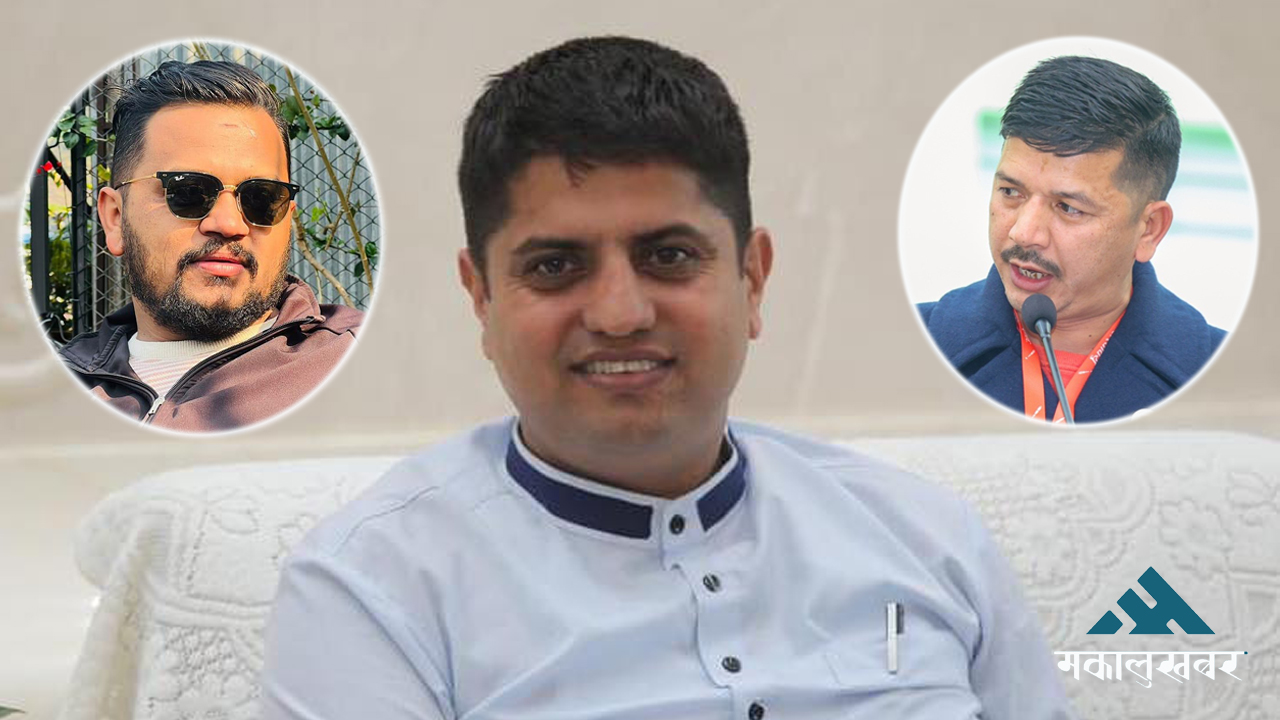
This sudden change raises questions about who will lead the organization next, especially since many seasoned leaders have been rendered ineligible. Current President Samik Badal reportedly supports Prakash Paudel, the current spokesperson and secretary, for the presidency and has lobbied both Chairperson Oli and General Secretary Pokharel on his behalf. Meanwhile, Rokaya is said to be backing Dr. Sujan Kadariya for leadership.
Some leaders have accused that the age limit has been introduced specifically to pave the way for Prakash Paudel’s ascendancy. Most leaders attending meetings at the organization’s headquarters, the “Red House,” also expect Paudel to become the next president.
Central Committee member Gagan Singh Basnet acknowledges that while debate over the age limit is natural, implementing it right before the convention is problematic. “This decision undervalues the contributions of many veteran leaders and could demoralize the student leaders at a critical time,” he said.
On the other hand, UML youth leader and former ANNFSU vice chair DB Saud welcomes the age limit, noting that other major student organizations like those affiliated with Congress and the Maoists also enforce age restrictions. He urged all members to accept the party’s decision. “Age limits exist in other parties; it’s good that ours has it too. We must implement it without unnecessary controversy,” Saud said.
The new policy marks a significant shift in the leadership dynamics of one of Nepal’s largest student organizations, with potential impacts on its future political trajectory and internal balance of power.
-Yakendra Khatri