Symbolic pillars put Tehrathum’s identity & tourism in spotlight (photos)
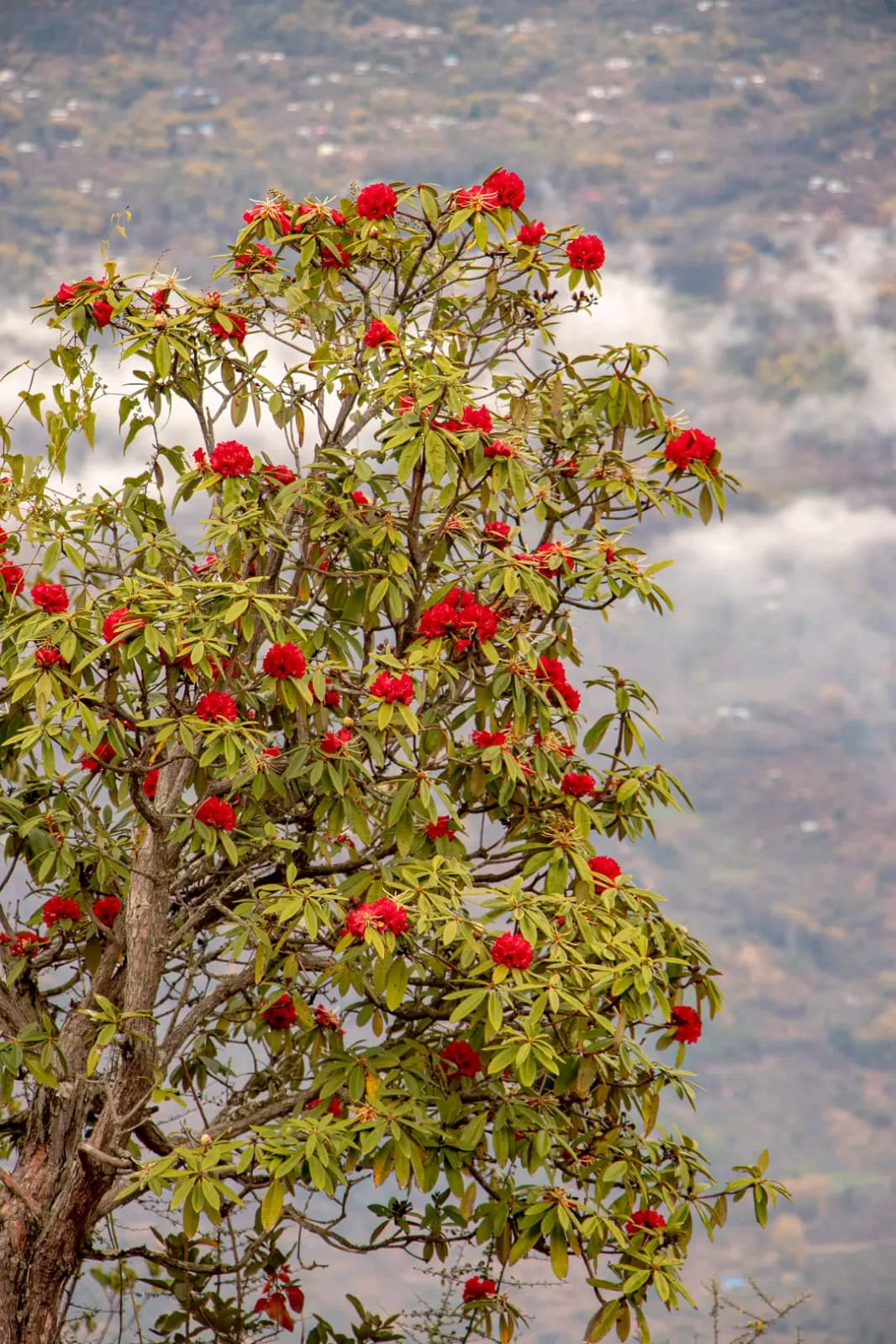
While rhododendrons bloom only seasonally, the pillar was designed to present visitors with an everlasting image of the flower, symbolizing the TMJ region throughout the year.

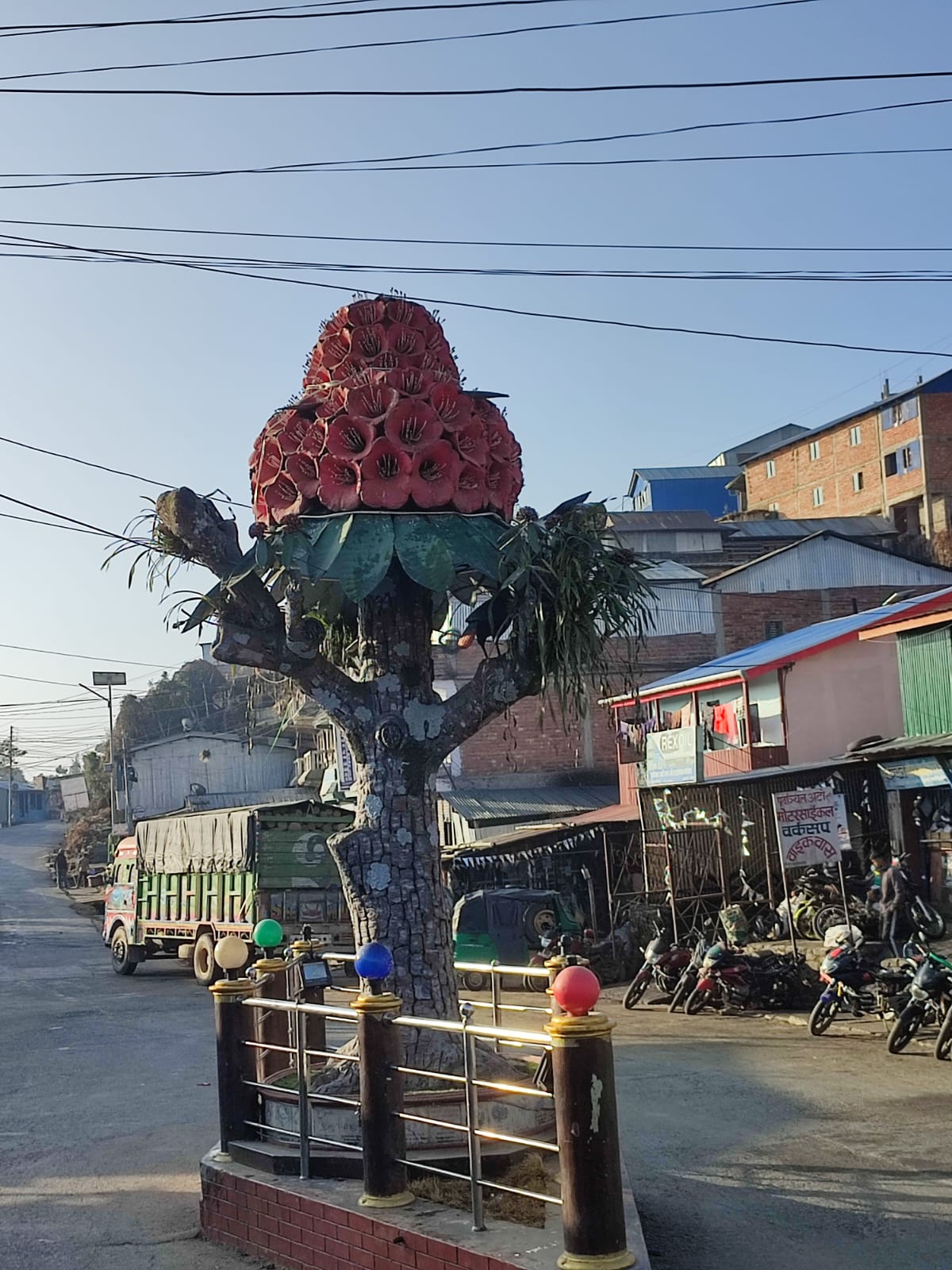
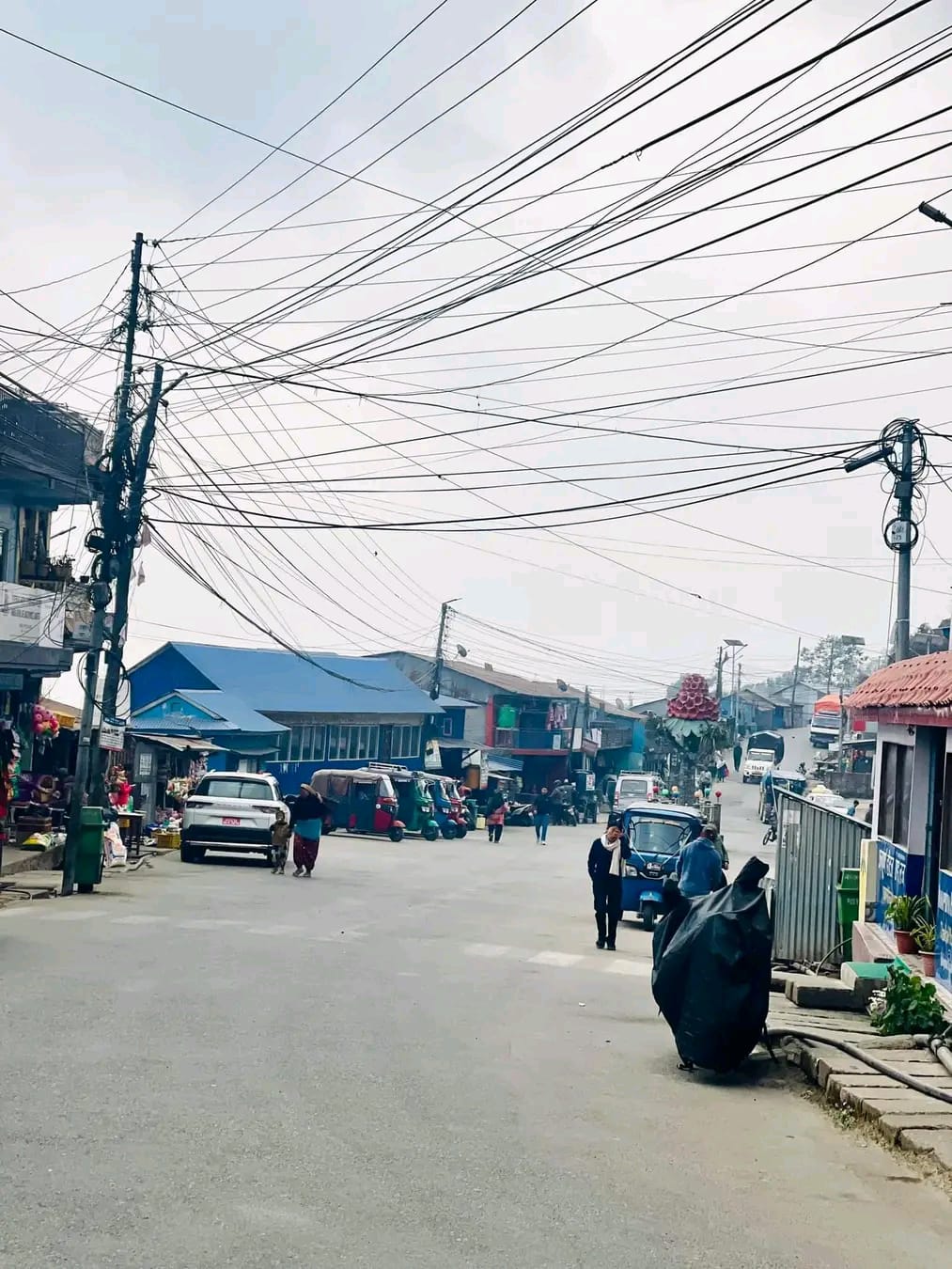
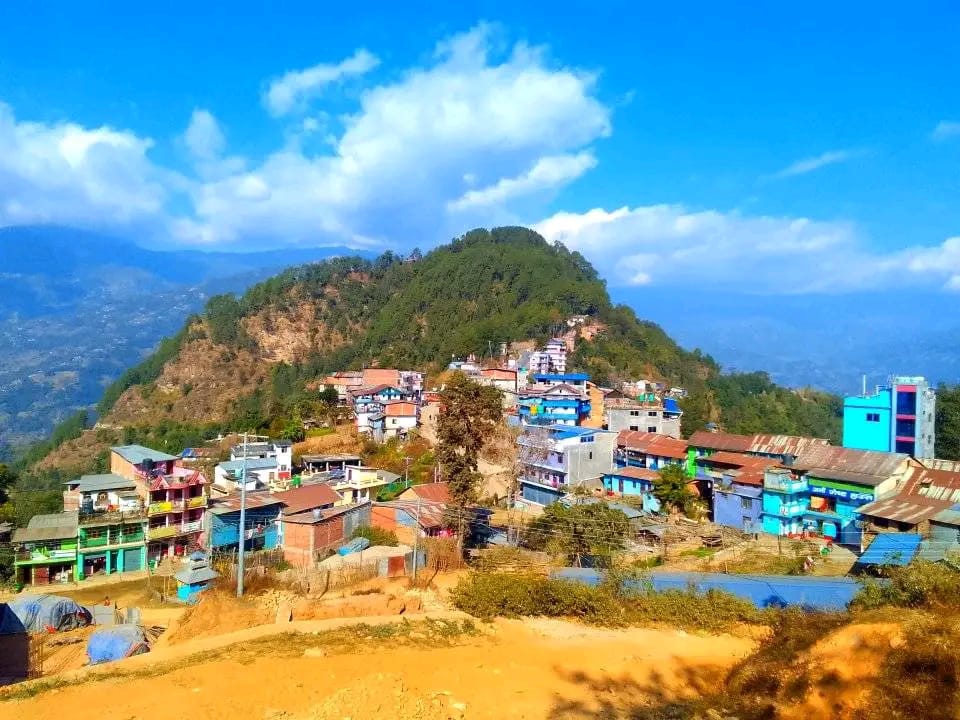
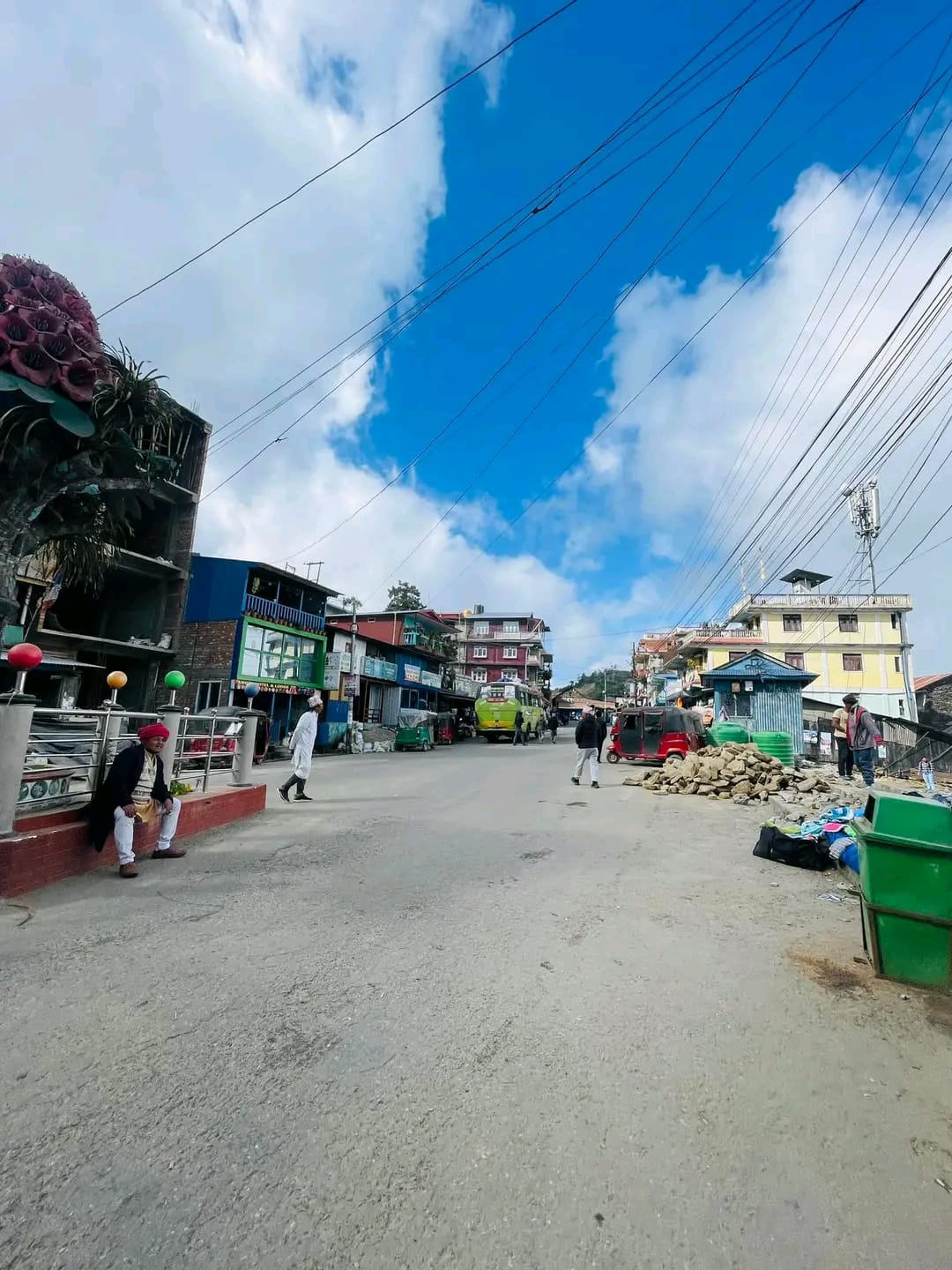
KATHMANDU: Basantapur Bazaar, the main gateway to the rhododendron capital Tinjure–Milke–Jaljale (TMJ) region, welcomes visitors with a striking symbol of local identity.
At the heart of this popular tourist market in Laligurans Municipality, a towering rhododendron pillar stands in the middle of the main intersection, signaling entry into Nepal’s famed rhododendron zone.
Constructed in 2071 BS, the Laligurans pillar was built with a total budget of Rs 585,000, including Rs 300,000 from the then Kakarbhitta Tourism Office and the rest through local contributions.
Former provincial assembly member and rhododendron conservation activist Laxman Tiwari says the pillar has become a defining identity of Laligurans Municipality.
While rhododendrons bloom only seasonally, the pillar was designed to present visitors with an everlasting image of the flower, symbolizing the TMJ region throughout the year.
Pillars as Living Symbols of Heritage
In Tehrathum, a hilly district of Koshi Province, such symbolic pillars have been constructed to reflect local identity, history, culture, and agricultural uniqueness.
Locals say these landmarks not only help visitors understand the significance of specific places but also contribute significantly to tourism promotion.
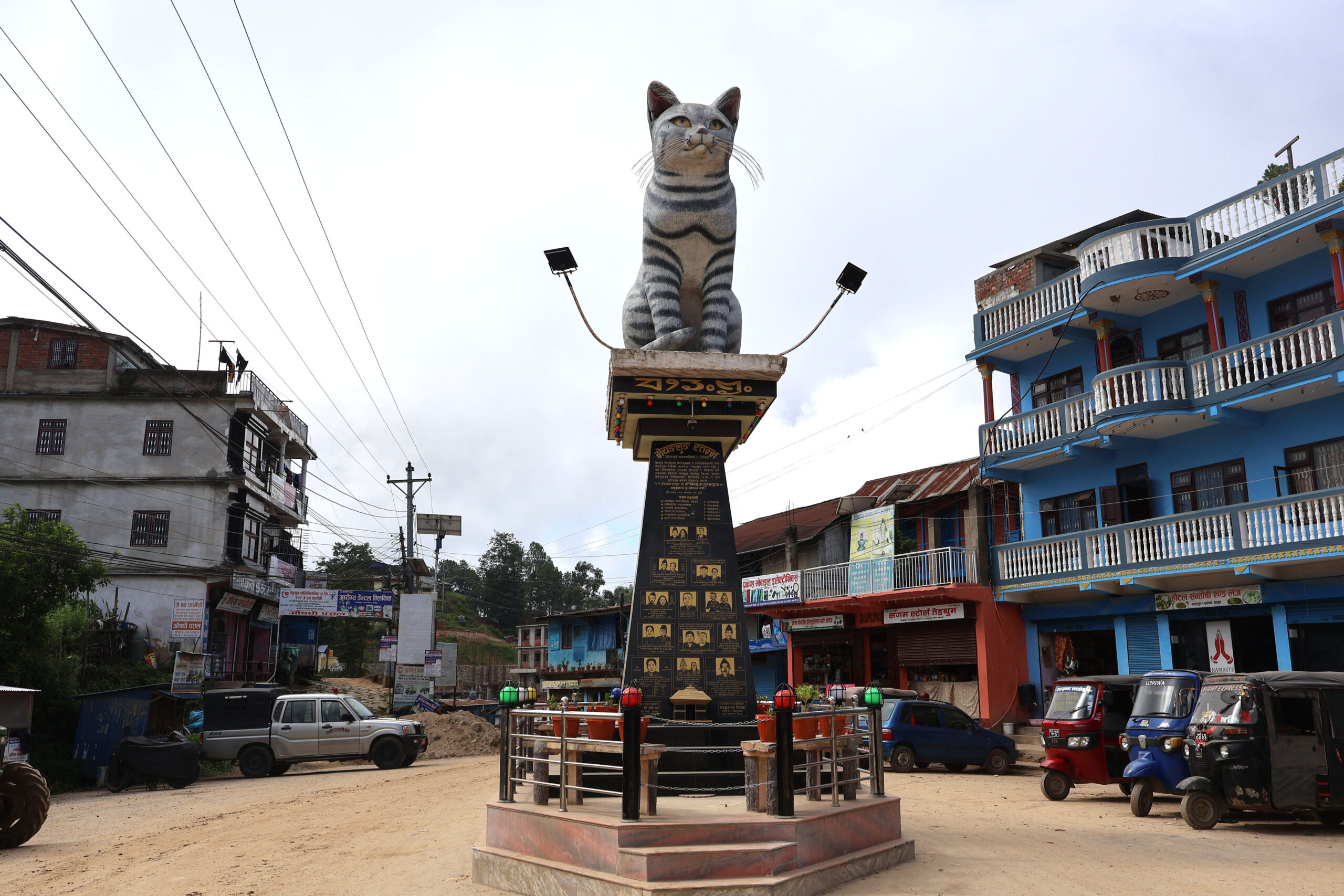
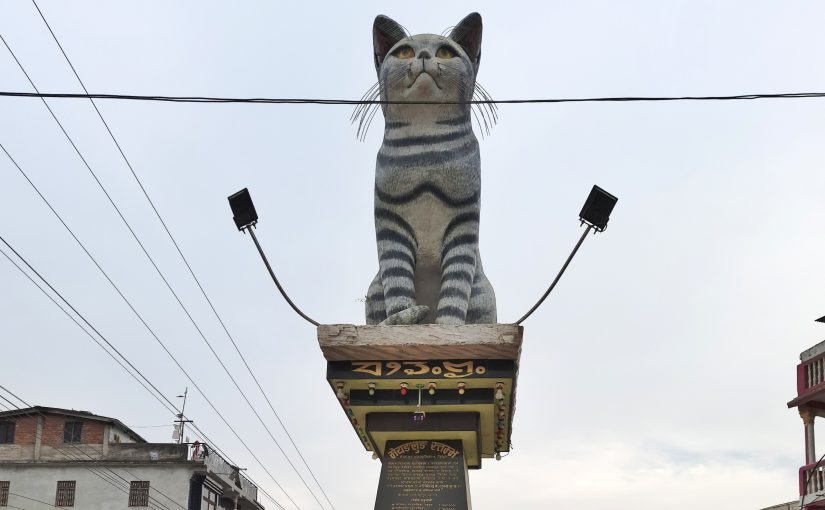
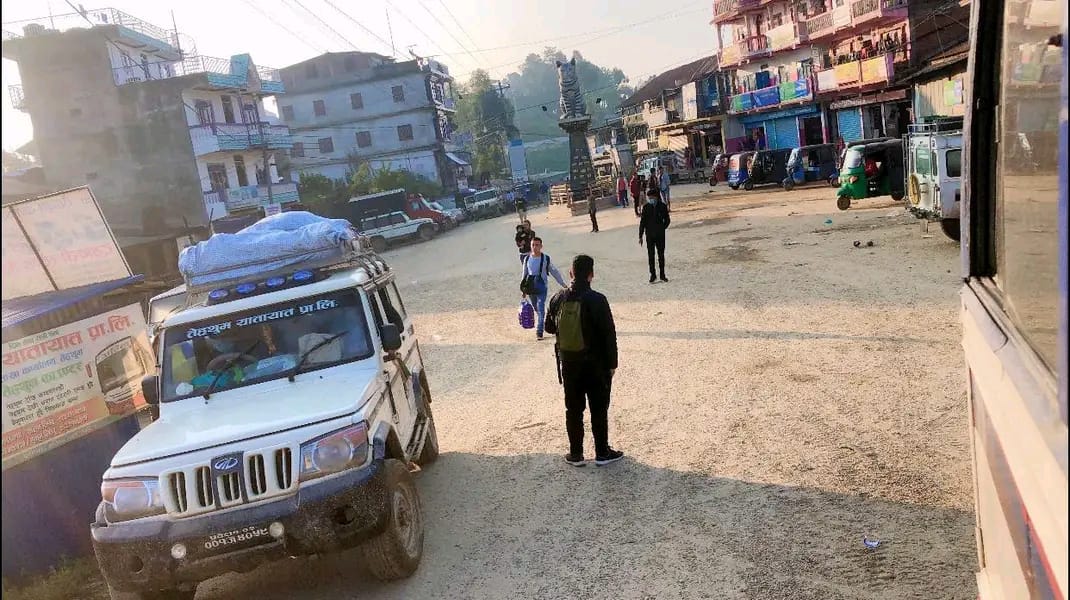
The district headquarters Myanglung is home to the iconic Meyang (Cat) Pillar, which represents the town’s deep historical and mythological roots.
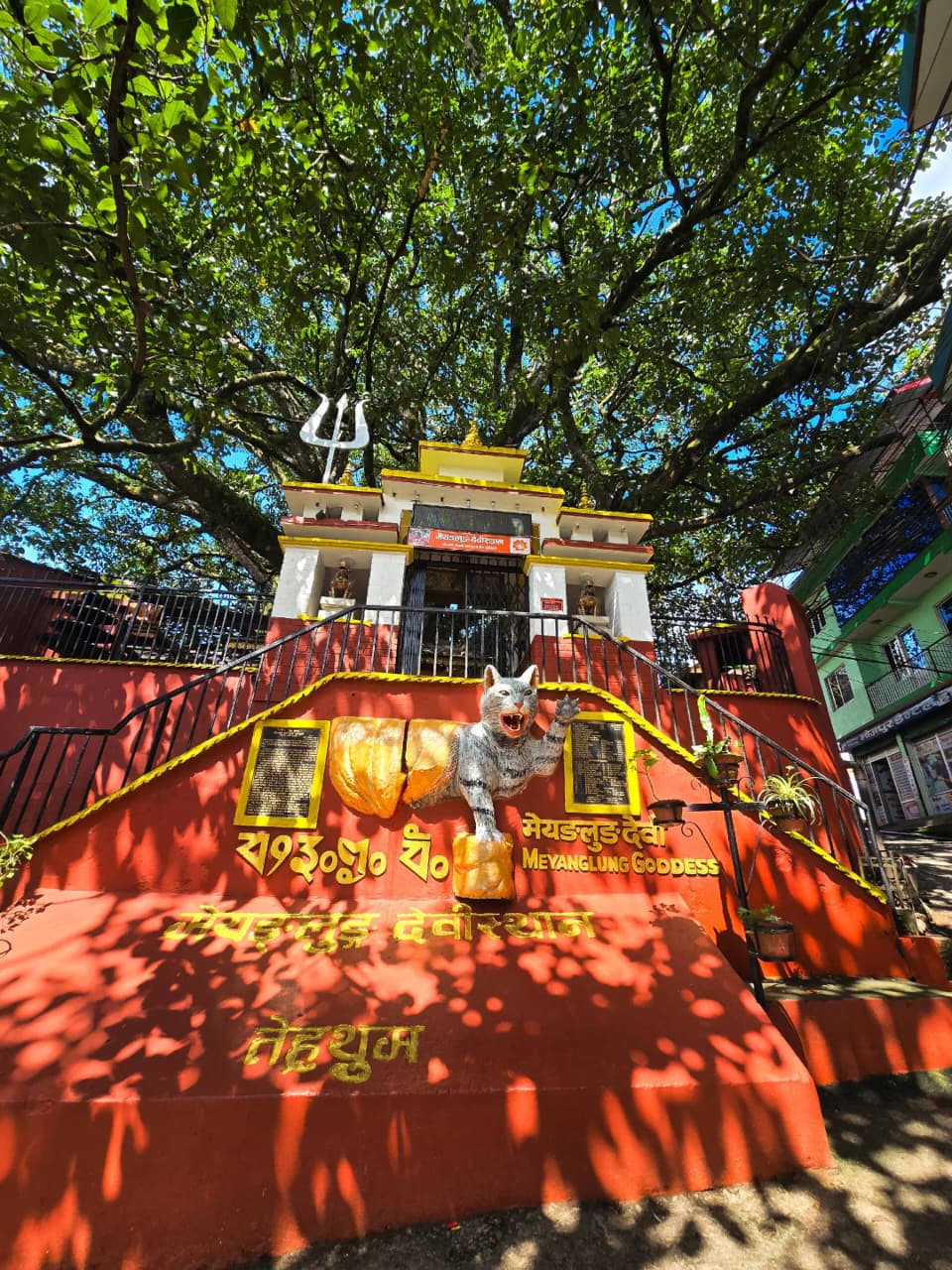
The term Meyang means cat in the local language and is closely tied to the legend of Meyanglung Devi, a powerful deity believed to have first manifested as a cat-shaped stone in Nagdaha, Myanglung–2, in ancient times.
According to history, the deity was later relocated to present-day Myanglung Bazaar. The town’s name evolved from Meyanglung to Myanglung, and even the municipality derives its name from this deity.
To preserve and showcase this myth and history, the Meyanglung pillar was constructed under the leadership of Tejman Kandangwa, then secretary of Kirat Yakthung Chumlung Tehrathum.
Built in the fiscal year 2072–73 BS, the project received Rs 500,000 from Myanglung Municipality along with support from other donors.
The total cost reached approximately Rs 3.5 million and includes railings, CCTV cameras, and a sound system that emits cat sounds every hour.
Tourism Impact and Social Media Visibility
Locals say such pillars have become popular photo spots. Tourists and travelers frequently take pictures, create reels, and post videos on social media platforms like TikTok and Instagram, indirectly promoting these locations and strengthening tourism.
After the construction of the Meyanglung pillar, public movement and activity in the area noticeably increased, said Kalpana Lwagun, a local resident of Myanglung.
Most of these symbolic structures are located along the Mid-Hill Highway, especially at key market areas and intersections. Beyond representing history and culture, some pillars also promote local agricultural products.
Celebrating Local Produce and Traditions
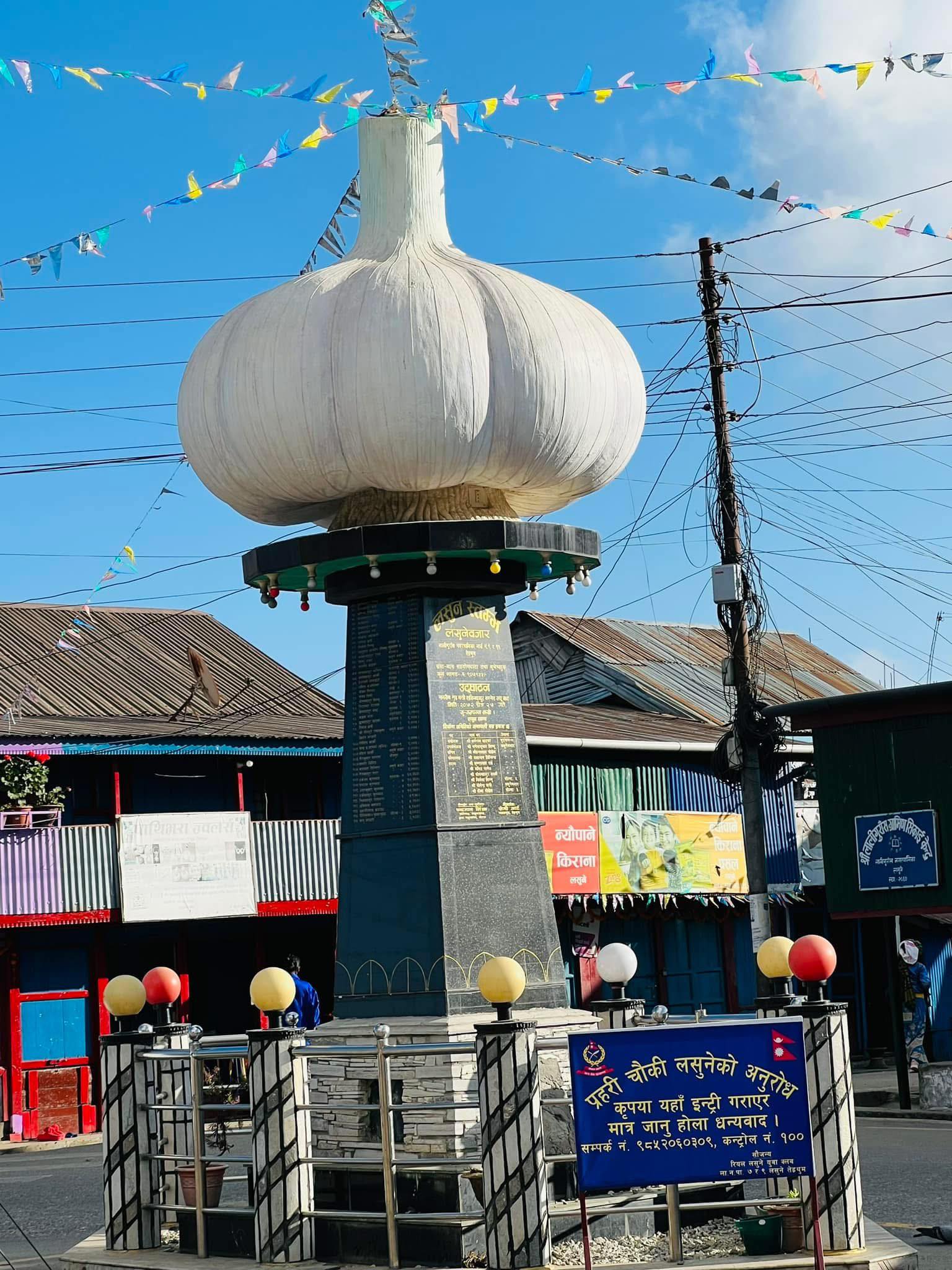
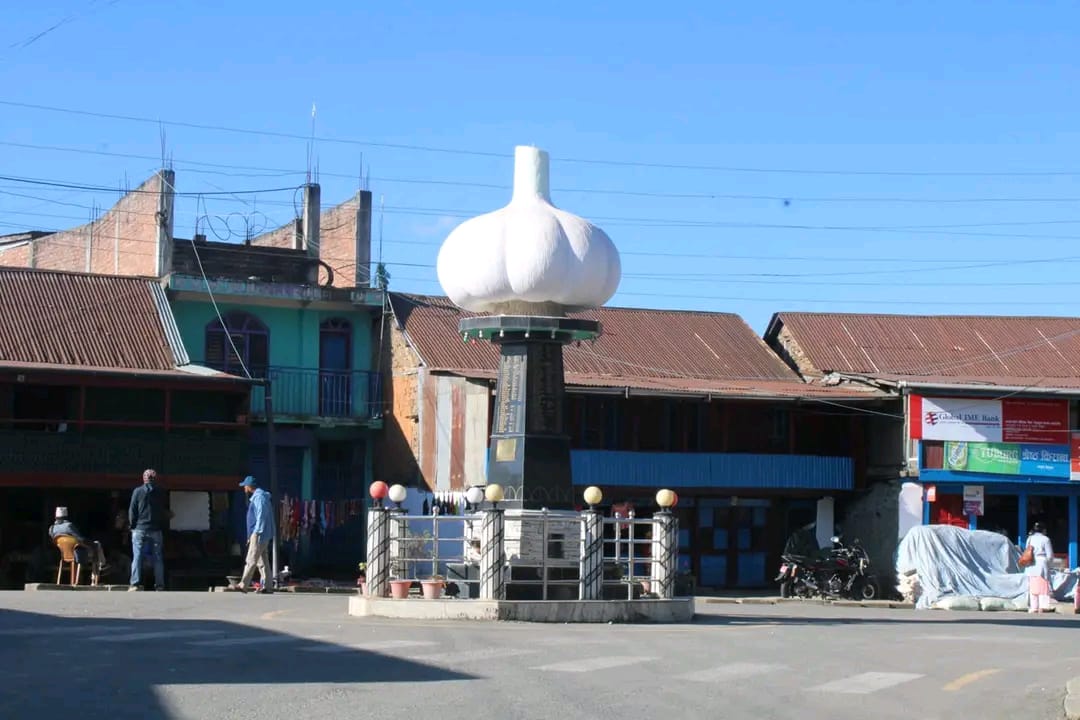
In Lasune Bazaar, known nationwide for its garlic production, a garlic-shaped pillar was constructed in 2015 (2072 BS) at the junction of Wards 7 and 9 of Laligurans Municipality. The project was supported by Lasune residents living both in Nepal and abroad.
Local resident Him Bahadur Khatri said many travelers instantly learn about the place’s name and specialty simply by seeing the garlic pillar beside the Mid-Hill Highway.
Similarly, at Halimela Bazaar in Myanglung–9, a pillar depicting a farmer carrying a plough has been erected. Inaugurated last April with joint support from Myanglung Municipality and local residents, the structure preserves the historical identity of the area.
Historically, Halimela was a resting place for farm laborers working in surrounding fields. Over time, these laborers began organizing fairs, a tradition that continues today.
The Halimela Fair is still held every year on Baisakh 1, 2, and 3, giving the place its name. Local Khagendra Tamang said the pillar was built to ensure this history remains alive.
Honoring Traditional Weaving
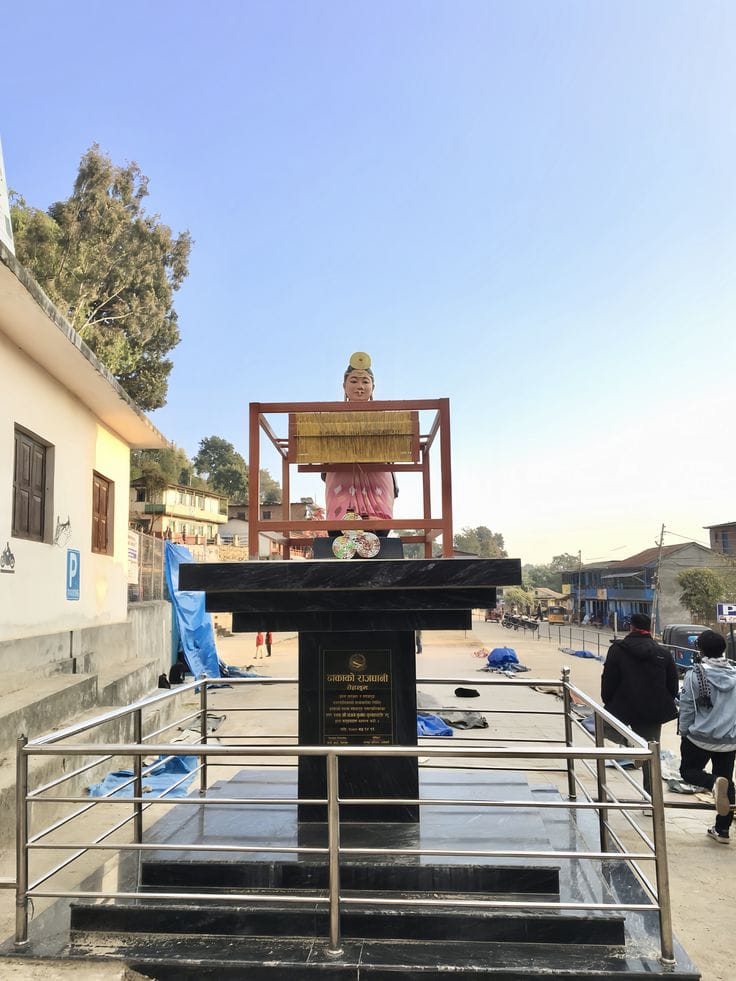
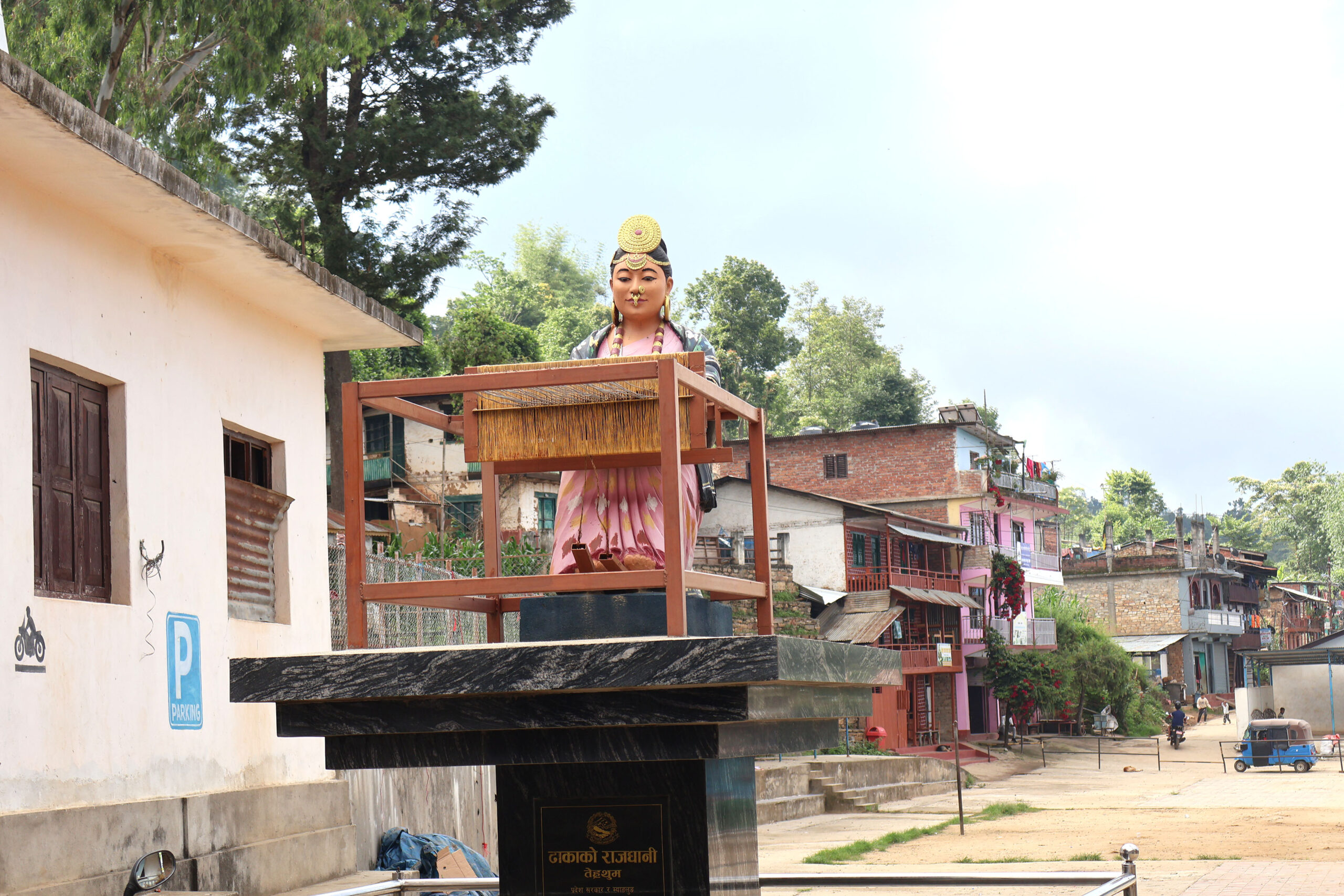
At the Tundikhel of Myanglung, another distinctive pillar features a woman weaving Dhaka fabric, highlighting Tehrathum’s recognition as the “Capital of Dhaka” in 2079 BS.
Built through joint investment by the provincial government and Myanglung Municipality, the structure honors local women weavers and promotes the globally popular Tehrathume Dhaka.
Deputy Mayor Jamuna Karki Subedi said the pillar serves as a tribute to the women who have preserved and promoted the traditional Dhaka weaving craft.
A Model of Cultural Preservation
Residents believe these symbolic pillars play a vital role in keeping history, tradition, and local identity alive, while also strengthening tourism.
Their construction has been possible through the collective efforts of local governments and community members.
Calling the initiative both beautiful and effective, Rajkumar Teyung, secretary of Kirat Yakthung Chumlung Tehrathum, said this approach to tourism promotion and cultural preservation has successfully blended authenticity with visibility, making Tehrathum’s local identity stand tall—quite literally.
Photos: