Shakya urges parties to make climate change key election agenda
Shakya said future election manifestos must prioritize climate action, warning that Nepal—despite contributing only 0.056 percent of global greenhouse gas emissions—remains among the most vulnerable countries to its impacts.

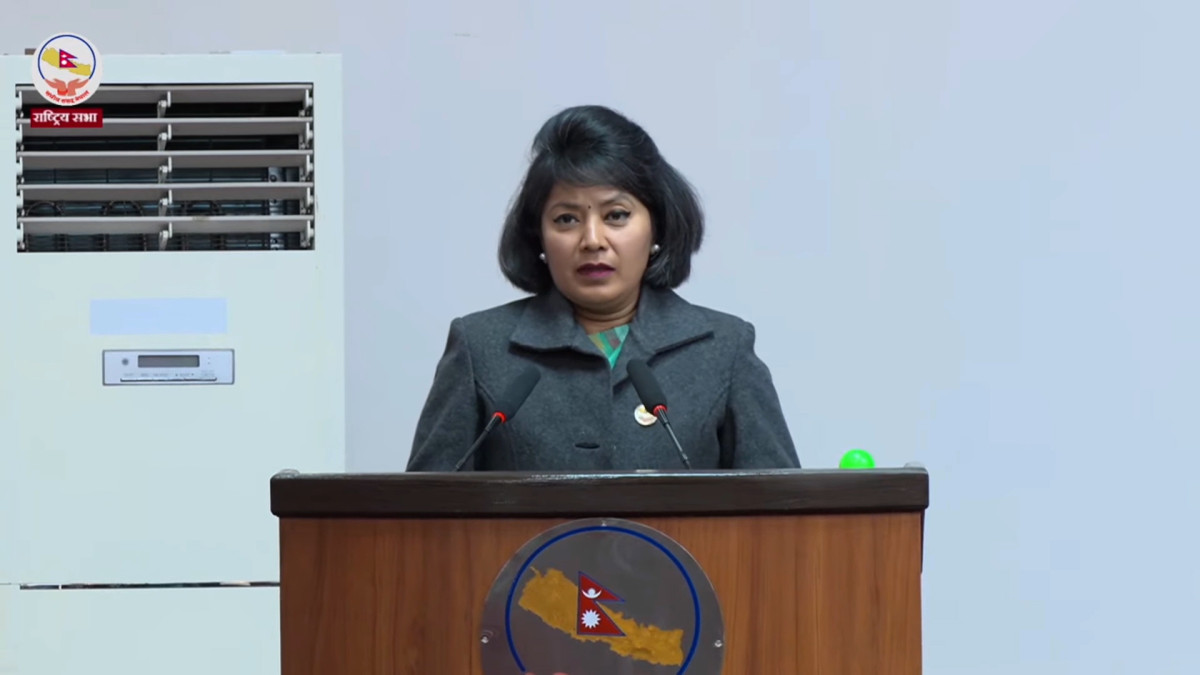
KATHMANDU: National Assembly member Anjan Shakya has urged political parties to make climate change the central agenda in the upcoming elections, stressing that traditional pledges on education, health and infrastructure alone are no longer sufficient.
Speaking at Friday’s meeting of the National Assembly, Shakya said future election manifestos must prioritize climate action, warning that Nepal—despite contributing only 0.056 percent of global greenhouse gas emissions—remains among the most vulnerable countries to its impacts.
Citing data from the Department of Hydrology and Meteorology, she noted that Nepal’s average maximum temperature has increased by 2.4 degrees Celsius over the past four decades, while the rate of glacier melt has surged by 65 percent.
Referring to a study by Climate Analytics, Shakya warned that Nepal’s GDP could decline by up to 18 percent by 2050 if current trends continue.
She also expressed concern over unrest that occurred last Sept, stating that the incidents damaged public and private infrastructure and eroded investor confidence.
According to her, attacks on businesses and growing instability have made both foreign and domestic investors hesitant, pushing the country’s economy into a risky phase and threatening thousands of jobs.
Shakya called on the government to introduce immediate special programs to create an investment-friendly environment across all seven provinces, even amid the election atmosphere. “For economic transformation, we need not empty slogans but guaranteed investment security and practical implementation,” she said.
Highlighting regional impacts of climate change, she pointed out that water sources are drying up in Sudurpaschim and Karnali provinces, while recurrent droughts and floods in Madhesh Province have severely affected farmers.
To address the crisis, Shakya proposed energy transition and industrial reform measures.
She advocated for the expanded use of domestic hydropower to promote electric vehicles, metro systems and electric cooking.
She also urged the government to strictly implement policies requiring cement factories and brick kilns to replace coal with domestic electricity.
Shakya concluded by appealing to all political parties to ensure that climate change becomes a core commitment in their upcoming election manifestos.