Security agencies claim full preparedness for House election
The Nepali Army and Nepal Police have prepared province-wise security strategies and finalized plans for the mobilization of personnel across all seven provinces.

KATHMANDU: Security agencies have claimed that all necessary preparations have been completed to ensure the safety and integrity of the House of Representatives election scheduled for March 5.
The Nepali Army and Nepal Police have prepared province-wise security strategies and finalized plans for the mobilization of personnel across all seven provinces.
A joint security team led by the Nepali Army is set to begin patrol operations starting next week.
Nepali Army spokesperson Rajaram Basnet said that the Army will provide security from the third security ring, in close coordination with local administrations, election officers, and other security agencies.
“Besides ground deployment, the Nepali Army will also conduct aerial patrols,” he said.
The announcement comes amid questions raised by political parties regarding election security. In response, authorities have decided to deploy joint teams comprising the Nepali Army, Nepal Police, Armed Police Force (APF), and Election Police.
According to security plans, the Nepali Army will mobilize around 89,000 soldiers, while the Nepal Police, including Election Police, will deploy nearly 150,000 personnel nationwide.
The Armed Police Force will also mobilize manpower as required.
The Nepali Army stated that security deployment will be carried out in three phases—before, during, and after the election.
Considering the country’s 165 electoral constituencies, the Army has planned to mobilize resources, including aerial patrols, from four locations: Eastern Region, Kathmandu Valley, Central Region, and Sudurpaschim.
Area patrolling in election constituencies will also be conducted.
Meanwhile, the Nepal Police has announced the deployment of more than 70,000 personnel across the seven provinces.
Police deployment will be determined based on provincial population size and the sensitivity level of electoral areas.
Nepal Police spokesperson Abhinarayan Kafle said that security personnel, including Election Police, will be mobilized in first, second, and third security rings as needed.
“The number of police personnel will be fixed based on whether polling stations are classified as normal, sensitive, or highly sensitive,” he said.
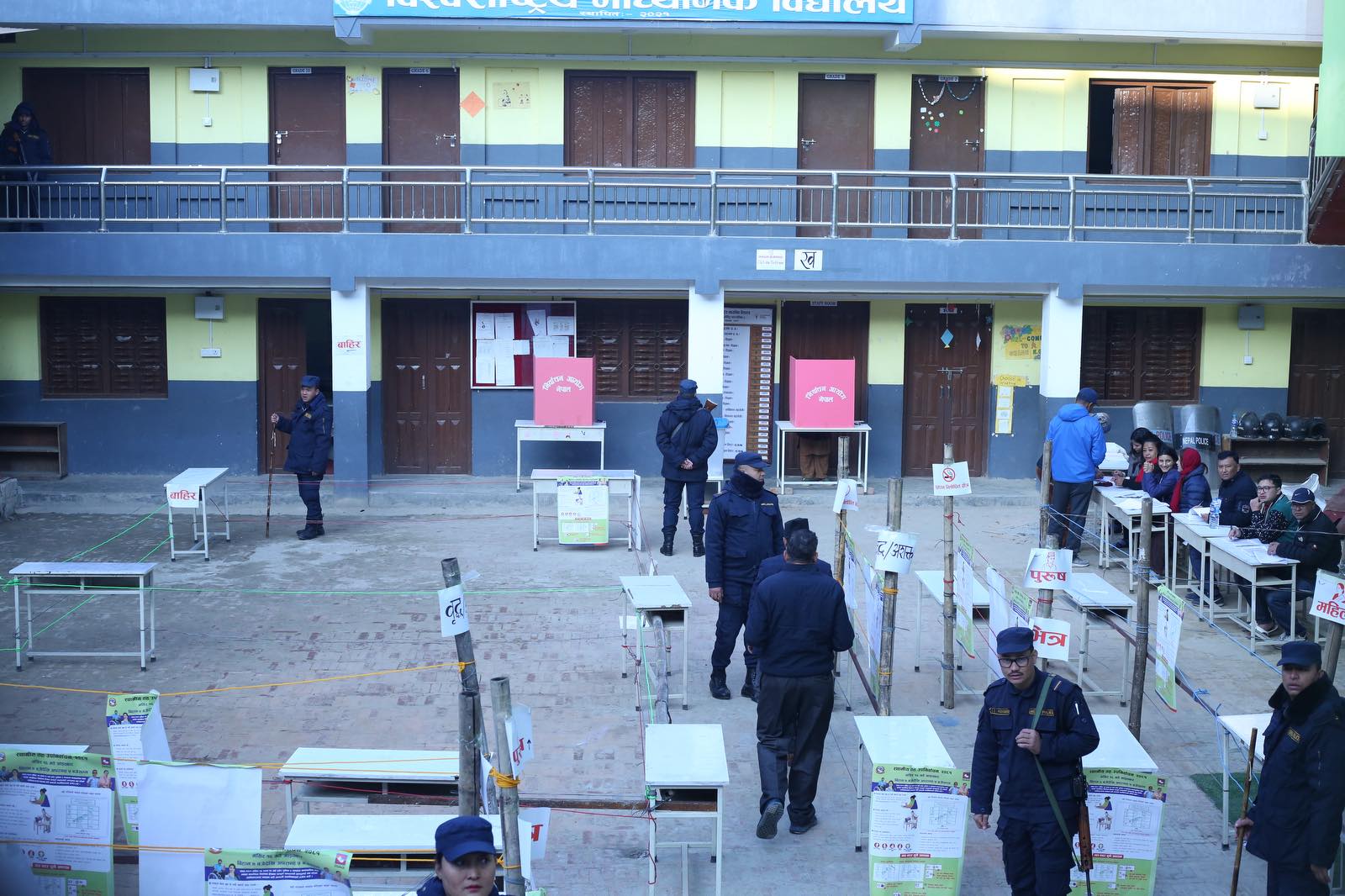
According to Kafle, a single polling station will have an average of 13 polling centers, where up to 80 security personnel, including police and election police, will be deployed.
Both the Army and Police have emphasized that security arrangements are being strengthened to ensure the safety of ballot boxes, candidates, voters, and polling officials.
For ballot security, the first and second security rings will be handled by Nepal Police and Election Police, while the third ring will be covered by the Nepali Army and the Armed Police Force.
To further strengthen preparedness, the Nepal Police and Armed Police Force have already begun a 10-day training program for Election Police.
With just one month remaining until the election, security agencies have urged all citizens to participate in the electoral process without fear, assuring that a safe and secure environment will be ensured nationwide.