Over 226,000 people expected to be affected by this year’s monsoon
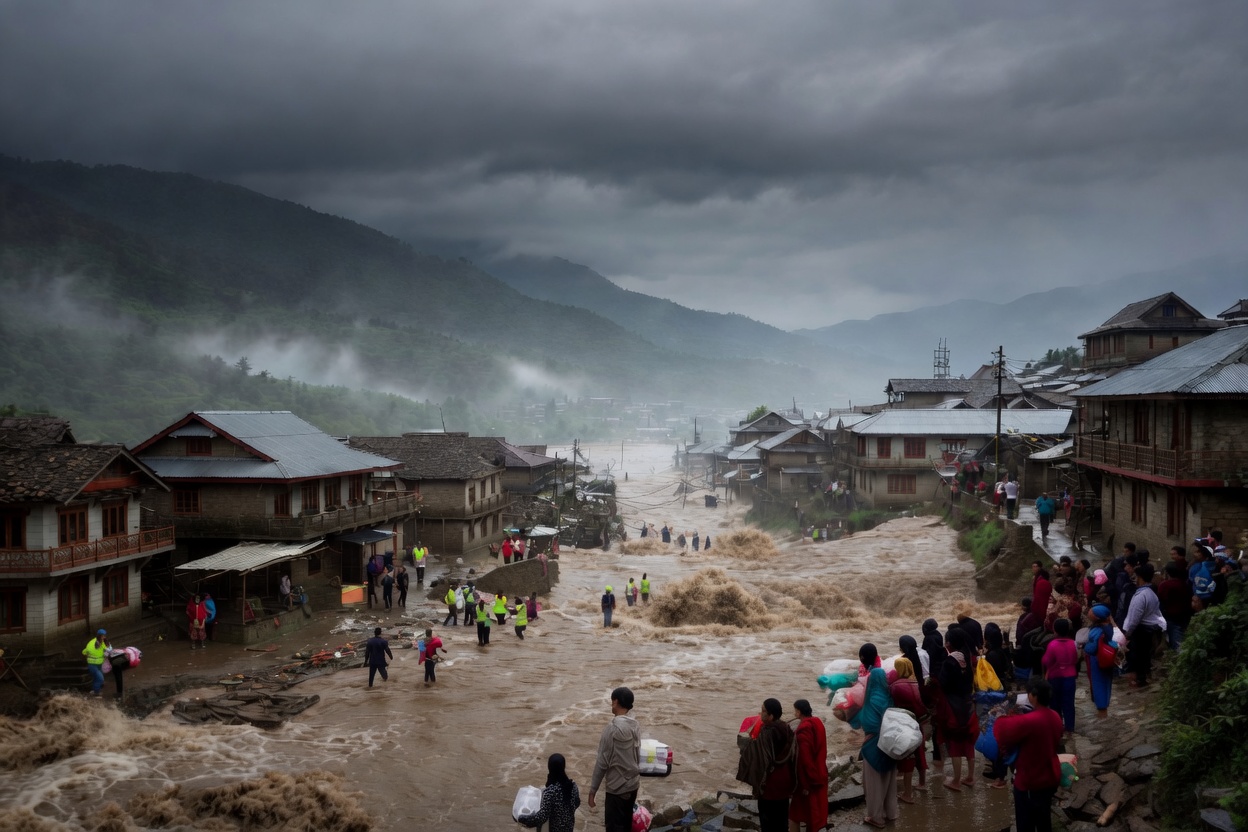
The plan notes that this year’s monsoon pattern closely resembles the seasons of 2014, 2016, and 2022, with a significant number of communities likely to face risk from floods, landslides, inundation, riverbank erosion, and flash floods.

KATHMANDU: Nepal is expected to see more than 226,000 people affected during this year’s monsoon season, according to a newly approved national preparedness and response action plan.
A meeting of the Disaster Risk Reduction and Management Executive Committee has endorsed the Monsoon Preparedness and Response National Action Plan, which estimates that around 51,868 households, or 226,661 people, could be impacted by monsoon-related disasters across the country.
The plan notes that this year’s monsoon pattern closely resembles the seasons of 2014, 2016, and 2022, with a significant number of communities likely to face risk from floods, landslides, inundation, riverbank erosion, and flash floods.
According to the assessment, 1,000 to 4,000 households could be directly affected under a worst-case scenario, representing roughly 10 percent of the projected high-impact situation.
Shanti Mahat, spokesperson for the National Disaster Risk Reduction and Management Authority, said the analysis was conducted to support federal and local governments in strengthening preparedness and response measures.
She added that the projections were based on provincial-level risk assessments to improve targeted planning.
The action plan also warns that rising average temperatures during the monsoon could increase risks in high-altitude regions, including the possibility of glacial lake outburst floods (GLOFs), along with intensified flooding and landslides in downstream areas.
In the southern Terai plains, the report highlights an increased likelihood of heatwaves and extreme heat conditions, potentially affecting daily life during the monsoon period.
The Department of Hydrology and Meteorology has previously forecast below-average rainfall in most parts of the country this monsoon season.
Regions including southern Karnali, much of Lumbini, eastern Madhesh, and southern Koshi are expected to receive below-average rainfall with a probability of 55 to 65 percent.
Other areas, including parts of Sudurpashchim, western Madhesh, and central Koshi, also face a 45 to 55 percent chance of reduced rainfall.
Despite varying rainfall projections, officials say the national risk outlook has been used to finalize preparedness plans aimed at minimizing loss of life and property during the monsoon season.