Opposition demands full release of local grants, raises farmers’ and women’s issues in Parliament


KATHMANDU: Opposition lawmakers in Nepal’s Federal Parliament have strongly urged the government to release 100% of financial equalization grants to local levels, while also raising concerns over agricultural damage caused by monkeys and calling for stronger gender justice measures.
Opposition Push on Local Government Funding
Nepali Communist Party (NCP) Chief Whip Yubaraj Dulal demanded that the government immediately release the full amount of financial equalization grants to local governments without any cuts.
He accused the federal government of reducing the grant by 20% in the first installment and 21% in the second, saying the decision has left local bodies unable to meet payment obligations.
Dulal argued that local budgets are prepared based on constitutionally guaranteed transfers and that any reduction has created a serious financial crisis at the municipal level. He also urged the government to ensure timely disbursement of funds and respond to concerns raised by municipal associations.
Lawmakers Raise Alarm Over Monkey Menace
Separately, lawmaker Dhruvaraj Rai of the Shram Sanskriti Party highlighted the growing problem of monkey attacks on crops across rural Nepal, saying farmers are facing severe livelihood threats.
He warned that agricultural losses are forcing rural residents to abandon their settlements and criticized public ridicule of the issue in Parliament.
Rai called for urgent government intervention and a serious policy debate on managing the problem, including long-term wildlife control strategies. He stressed that the issue is a shared concern of rural communities rather than a political debate.
Call for State Apology to Women Over Historical Discrimination
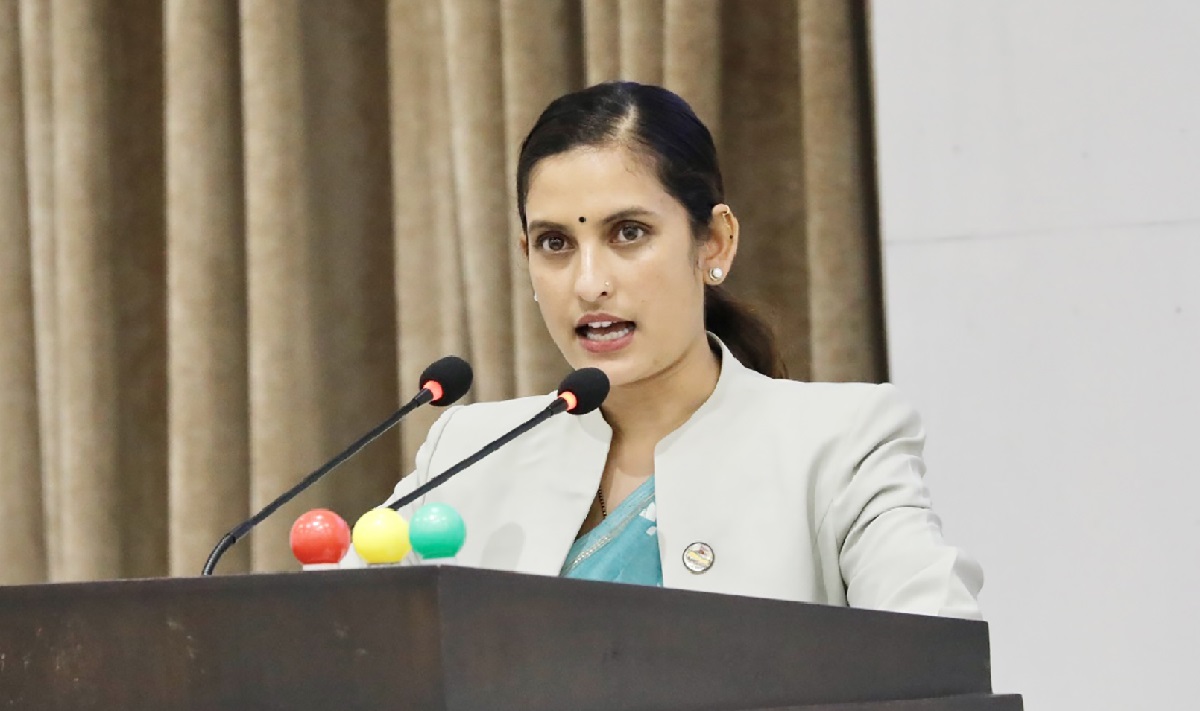
Nepali Congress MP Gita Gurung called on the state to formally apologize to women for historical and structural discrimination, similar to recent acknowledgments made toward the Dalit community.
Speaking in Parliament, she cited practices such as Sati, witchcraft accusations, Chhaupadi, and long-standing inequality in citizenship and property rights.
Gurung said such injustices have relegated women to second-class status for generations. She urged that any apology must go beyond symbolism and be backed by meaningful representation, economic empowerment, and policy reform.
She also expressed concern over the underrepresentation of women in state institutions and called for greater inclusion in policymaking and governance structures.