Once barren land, now bustling park draws domestic & foreign visitors
The Shram Sanskriti Park, located on the border of Wards 13 and 20 of Dharan Sub-Metropolitan City, has rapidly emerged as a major attraction in eastern Nepal.

KATHMANDU: A once-neglected riverbank jungle area has been reborn into a thriving tourist destination through volunteer labor, community development, and public investment, drawing both domestic and international visitors in growing numbers.
The Shram Sanskriti Park, located on the border of Wards 13 and 20 of Dharan Sub-Metropolitan City, has rapidly emerged as a major attraction in eastern Nepal.
What was once described as barren, quiet forest land has now been transformed through shramdaan (voluntary labor) into a vibrant recreational and eco-tourism site.
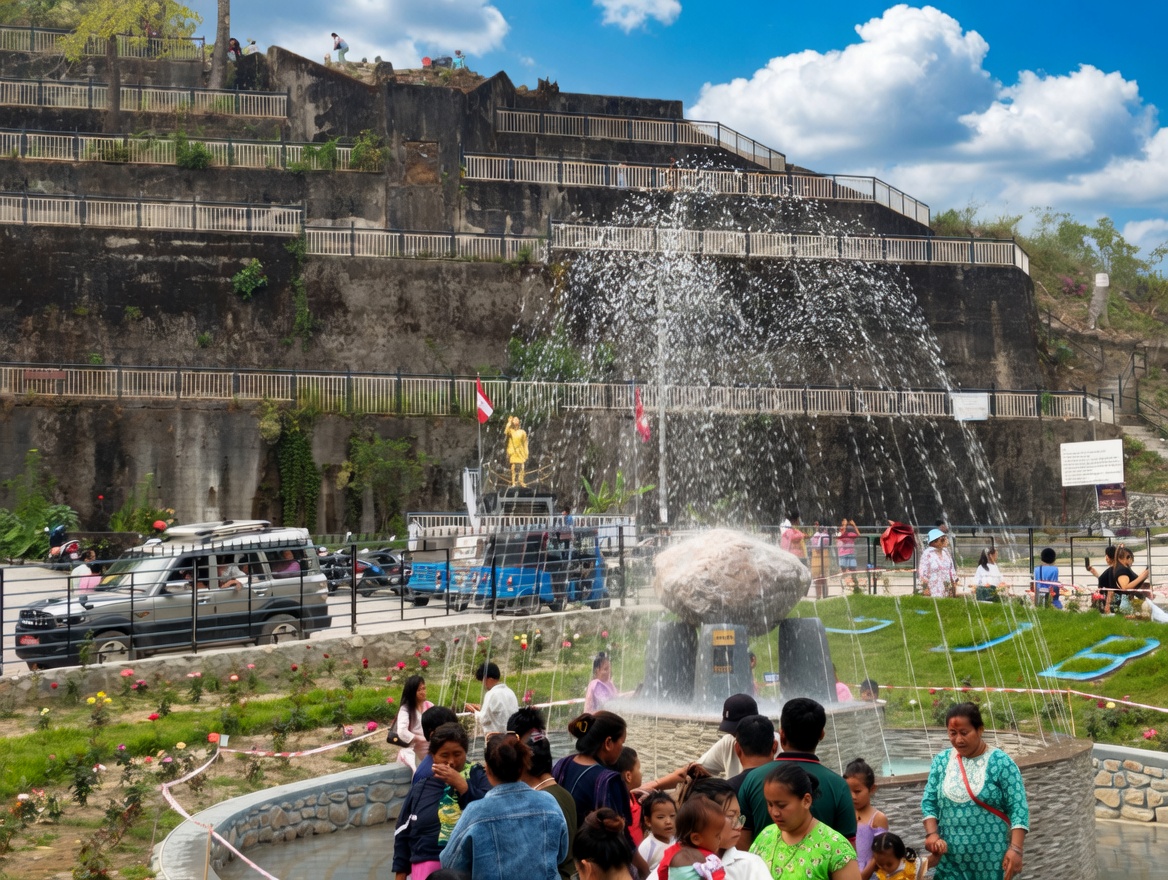
At the heart of the park’s appeal is an eye-catching water fountain that has become a major draw for visitors.
Tourists say the combination of greenery, floral landscapes, resting platforms, and artistic installations creates a refreshing natural experience.
A visitor from Siraha’s Dhangadhimai Municipality, Harinarayan Chaudhary, said his first visit exceeded expectations. He noted that although he had visited Dharan many times before, this was his first time exploring the park. “I had seen and heard about it on social media. When I came here, it felt very beautiful. It feels like a well-designed natural park,” he said, adding that the environment made him cancel plans to visit other locations in Dharan.
He also said that if natural landscapes are preserved and beautified, even barren riverbeds can become strong tourism destinations.
Chaudhary further said the park offers a new kind of experience created through volunteer effort. Surrounded by flowers, resting shelters, and greenery, he described it as an example other regions should learn from.
Previously known by names such as Osho Park and BP Park, the area is now collectively recognized as Shram Sanskriti Park. Around it, several smaller thematic parks have been developed, including SDB Park, Rock Garden, Children’s Park, and a Senior Citizens’ Park.
A “Gorkha Chautari,” built by retired Gurkha soldiers, has also become a key attraction.
The park features fruit-bearing plants, landscaped gardens, and open resting spaces along the banks of the Sardu, Khardu, and Nisane rivers.
It also includes cultural installations reflecting local identity, such as a wooden sawmill model representing Dharan’s historical livelihood and a dhara (water structure) designed in the shape of a traditional Kirat cultural vessel.
Visitors have praised the artistic blend of nature and culture. Jayanti Jimi from Jhapa, visiting with friends, said she was delighted by the transformation. “Everything has been built through volunteer labor, making the park very attractive,” she said. Recalling her earlier visit five to six years ago, she said she had only seen jungle, bushes, and rivers, but now finds flowers, resting places, and greenery everywhere.
The park’s development has also boosted the local economy. Hotel and tea shop businesses around the area have increased significantly. Local hotel entrepreneur Suraj Gurung said business has grown sharply since the park’s development. Where only four or five small shops existed earlier, more than two dozen are now operating.
The park attracts hundreds of visitors daily from districts including Dharan, Panchthar, Tehrathum, Dhankuta, Itahari, Morang, Jhapa, and beyond Nepal’s borders. On holidays, the number reportedly reaches up to 5,000 visitors a day.
According to park committee chair Punendra Prasad Limbu, daily footfall ranges from 500 to 1,000 on normal days.
Limbu said the site, once only a walking trail, was developed under a volunteer-driven campaign initiated during the leadership of former mayor Harka Sampang. The project was supported by donors from within Nepal and abroad, combined with extensive community labor.
Currently, the park provides employment to 25–28 workers and operates three ticket counters. Staff have also been deployed to maintain planted trees and manage infrastructure.
However, seasonal flooding from nearby rivers continues to damage some structures, and officials say better river management is needed for long-term stability.
Further expansion and beautification work is ongoing to enhance the park’s appeal. According to Limbu, improving infrastructure and flood control would make the park even more sustainable and attractive.
The site’s earlier development included smaller park projects funded in 2075/76 BS by parliamentary allocations.
Former MP Jay Kumar Rai’s constituency fund provided Rs 2 million to build Osho Park and BP Park, while another Rs 1 million from MP Krishna Kumar Rai’s fund was used to construct stairways leading toward nearby geological features.
Local leaders say these early investments laid the foundation for today’s tourism growth. The park has now become a symbol of community-led transformation and sustainable tourism development.
Accessibility has also improved significantly. A one-kilometer stretch of road from Fusre Chowk in Ward 13 has been blacktopped with Rs 4 million support from the Koshi Province government, making travel easier for visitors.