New ministry to drive Science, Technology and Innovation agenda

KATHMANDU: The government has officially established the Ministry of Science, Technology and Innovation, placing science, technology and innovation at the center of Nepal’s long-term development strategy.
According to the Government of Nepal (Allocation of Business) Regulations, 2083, published in the Nepal Gazette following a Cabinet decision made on Baisakh 30, the newly formed “Ministry of Science, Technology and Innovation” has formally come into operation.
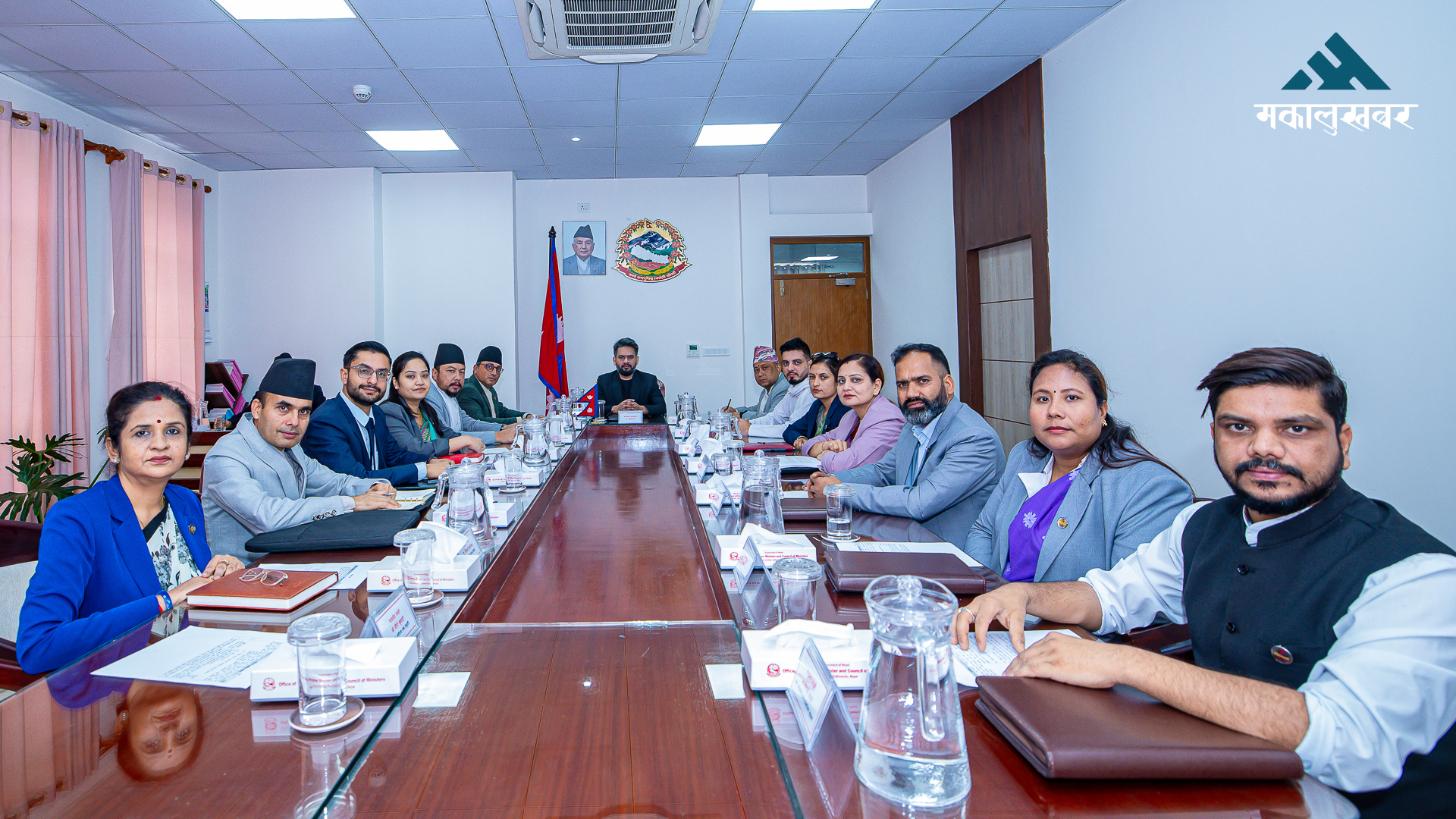
The government’s decision to create a separate ministry dedicated to science and technology is being viewed as a strategic move aimed at strengthening Nepal’s research, innovation and technological capabilities. At present, Prime Minister Balen Shah himself is overseeing the responsibilities of the ministry.
The newly established ministry has been entrusted with the authority to formulate policies, laws and standards related to science, technology and innovation. It will also lead studies and research in scientific innovation, space science and astronomy.
The government stated that the ministry has been formed with the objective of institutionalizing scientific discovery, research, invention, promotion and technological development in Nepal. Under its mandate, the ministry will carry out the collection, processing and survey of science and technology-related data while also setting technical standards and benchmarks.
Similarly, the ministry has been assigned responsibility for establishing, managing and regulating data systems related to nuclear technology and radioactive materials, including their quality standards and use. It will also oversee the promotion, utilization, regulation and control of biological and nuclear technologies.
The ministry’s scope further includes ozone layer studies, solar radiation measurement and information dissemination, calibration and certification of scientific instruments, and regulation concerning the use of chemical substances.
The government has also prioritized the management of nuclear energy and radioactive materials. The ministry will be responsible for the search, recovery and management of nuclear substances and abandoned radioactive sources. In addition, it will formulate and implement policies, laws and standards related to nuclear energy and oversee their regulation.
Key scientific institutions and facilities, including the Nepal Academy of Science and Technology, the National Forensic Science Academy, planetariums, observatories and science museums, will now function under the jurisdiction of the new ministry.
Innovation, technological advancement and industrial modernization have also been identified among the ministry’s major priorities. The ministry has been tasked with the development, improvement and application of products, services, processes, technologies and designs. It will also conduct studies, research and implementation related to emerging industrial concepts such as Industry 4.0 and Industry 5.0 in Nepal’s industrial and business sectors.
In addition, the ministry has been granted the authority to establish treaties, agreements, coordination and communication with national and international organizations related to science and technology.
Nepal’s science and research sector has long struggled with limited budgets, policy uncertainty and the migration of skilled manpower abroad. With the formation of this dedicated ministry, expectations have risen that the country may finally achieve targeted progress in scientific research, technological innovation and industrial transformation.