NEPSE expands daily price movement limit to 15%
Under the new system, the daily price fluctuation limit for listed companies has been expanded from 10 percent to 15 percent.

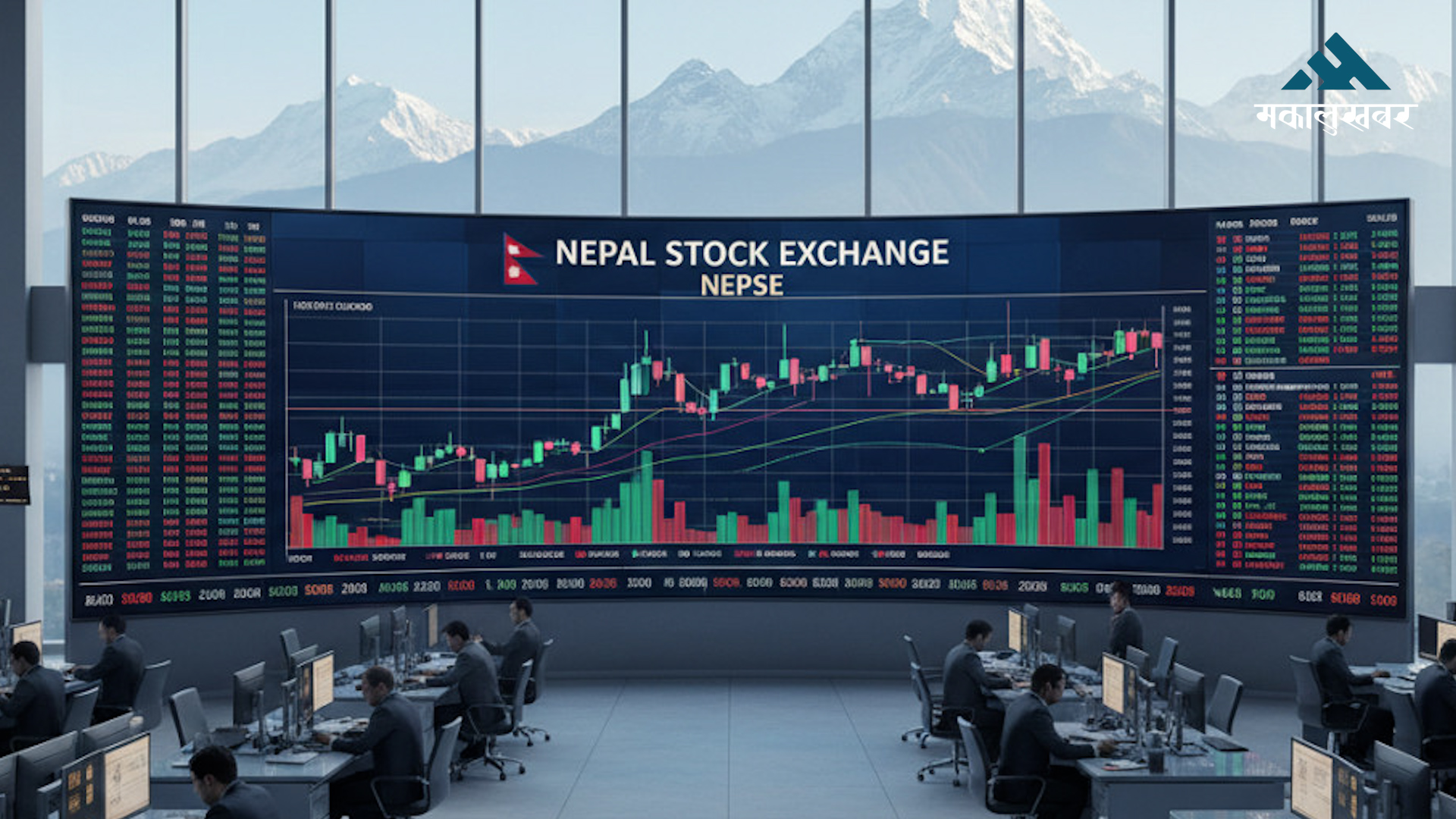
KATHMANDU: The Nepal Stock Exchange (NEPSE) is set to implement major reforms in trading regulations following the approval of the Securities Trading Operation (Fourth Amendment) Regulation, 2082 by the Securities Board of Nepal (SEBON).
Under the new system, the daily price fluctuation limit for listed companies has been expanded from 10 percent to 15 percent.
NEPSE stated that the change aims to make the market more dynamic and ensure a more realistic price discovery process.
The revised rule will come into effect from Monday.
Alongside this, changes have also been introduced in the pre-open session price limit. The previous 2 percent limit has been increased to 5 percent, a move expected to reduce abnormal volatility at the market opening.
NEPSE has also simplified its circuit breaker mechanism based on the NEPSE index. The earlier three-tier system has been replaced with a two-tier structure.
According to the new arrangement, if the market index rises or falls by 5 percent within the first two hours of trading, trading will be suspended for 15 minutes. If the index moves by 8 percent, the entire trading session will be halted for the day.
Previously, circuit breaker thresholds were set at 4 percent, 5 percent, and 6 percent in a more complex three-stage system. The revised structure is intended to reduce trading interruptions and make market operations smoother.
In addition, SEBON has introduced stricter provisions to improve transparency and reliability in Initial Public Offerings (IPOs). The new rules, which came into effect from the first of Baisakh, require enhanced review of company details submitted for IPO issuance.
Under the revised framework, companies applying for IPOs must undergo mandatory re-evaluation of their financial condition by accounting experts. The board will examine audited financial statements from the last three years.
Companies will face additional scrutiny if more than 75 percent of their total sales revenue remains outstanding. Similar thresholds apply across sectors—75 percent for manufacturing companies and 50 percent for hotel and tourism companies—if receivables exceed these limits.
SEBON has also set sector-specific financial indicators to further strengthen the IPO evaluation process and improve market credibility.