Nepal’s first hijacked plane ‘9N-ABB’ turns into museum legacy
At around 8:40 AM, 53 years ago, Nepal witnessed its first-ever aircraft hijacking.

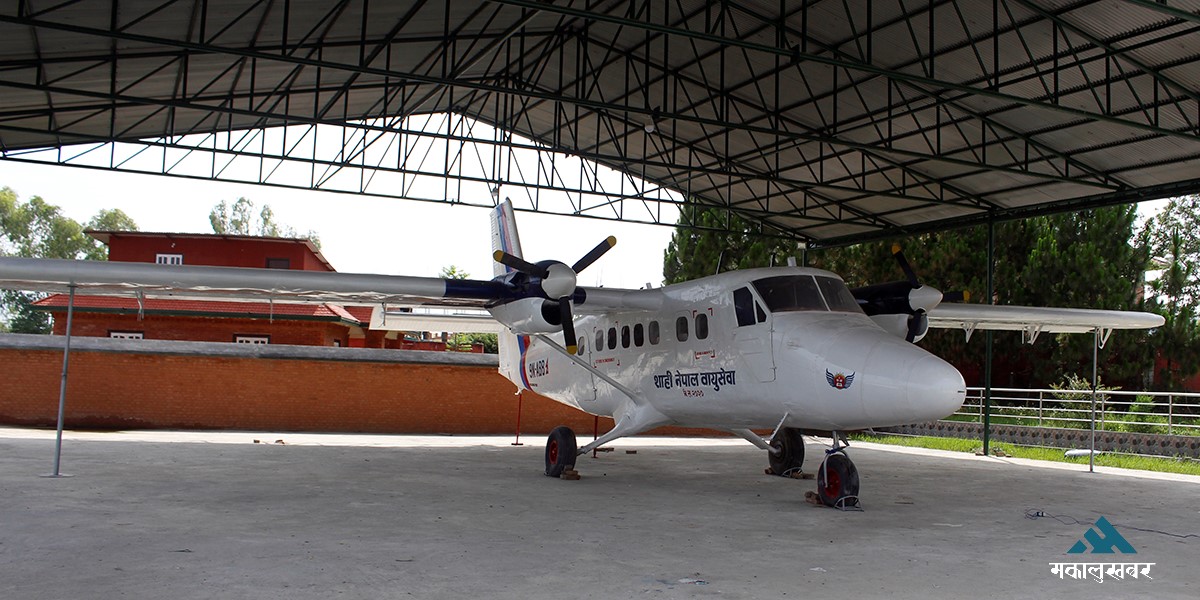
KATHMANDU: Nepal’s aviation history includes several landmark events, but few are as extraordinary as the story of aircraft ‘9N-ABB’, a Twin Otter operated by the then Royal Nepal Airlines Corporation (RNAC), which became the country’s first-ever hijacked aircraft and later met a tragic end decades later.
First-ever hijacking in Nepali skies (2030 BS / 1973 AD)
On an ordinary Sunday morning nearly 53 years ago, at around 8:40 AM, a Twin Otter aircraft with call sign ‘9N-ABB’ took off from Biratnagar bound for Kathmandu, carrying 14 passengers and INR 30 lakh in cash belonging to Nepal Rastra Bank.
Just five minutes after departure, the aircraft’s destination changed dramatically when it was hijacked mid-air by activists associated with the Nepali Congress, then engaged in an armed struggle against the Panchayat regime.
The operation was reportedly executed under the political direction of BP Koirala. The plan is widely believed to have been orchestrated by Girija Prasad Koirala, with involvement from student leaders including Durga Subedi, Basant Bhattarai, and Nagendra Dhungel, under Subedi’s leadership. Sushil Koirala is also noted to have played a supporting role.
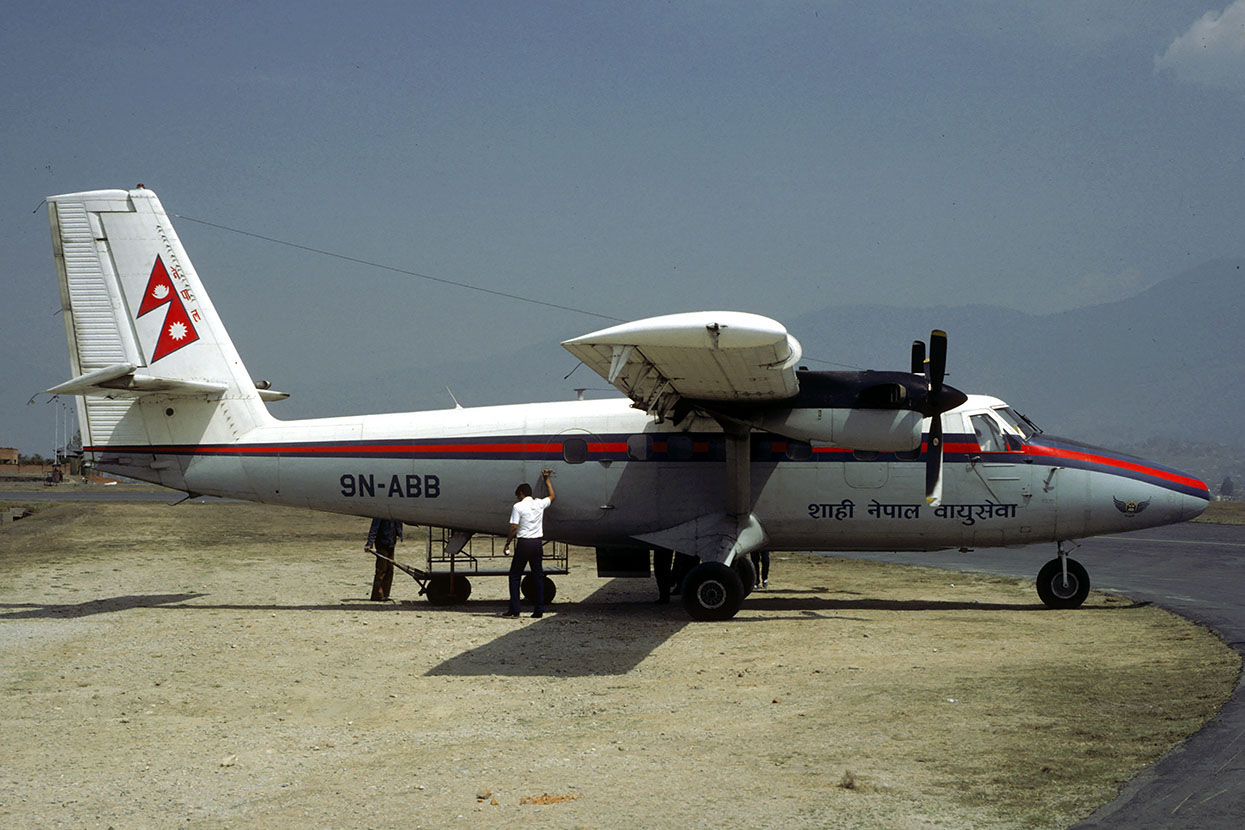
The hijacked aircraft was forced to land at a grassy field in Forbesganj, India, where the cash was taken. After roughly half an hour, the aircraft was safely flown back to Biratnagar. All passengers and crew members, including pilot Captain R.K. Manandhar and co-pilot Sridhar Vaidya, remained unharmed.
The aircraft itself, a De Havilland Canada DHC-6 Twin Otter, had entered Nepal’s fleet in 2028 BS (1971 AD) and was registered as 9N-ABB.
Early service and first accident
Despite its historic hijacking, the aircraft continued to serve Nepal’s domestic aviation network for years.
On Asar 21, 2049 BS, it met its first accident at Jumla Airport. The incident occurred during takeoff when the aircraft’s rear wheel became trapped in the airport’s fence. A failure in engine power on one side prevented proper lift, but the aircraft sustained only minor damage and no casualties were reported.
Final crash in 2070 BS
More than two decades later, the same aircraft met its final and fatal accident.
On Falgun 4, 2070 BS, the Twin Otter was operating a Kathmandu–Pokhara–Jumla flight. After refueling in Pokhara, it proceeded toward Jumla but was forced to alter its route due to adverse weather conditions.
At 1:13 PM, contact with the aircraft was suddenly lost. A large-scale search operation was launched involving helicopters from Fishtail Air, the Nepal Army, and ground teams. However, difficult weather conditions hampered the mission.
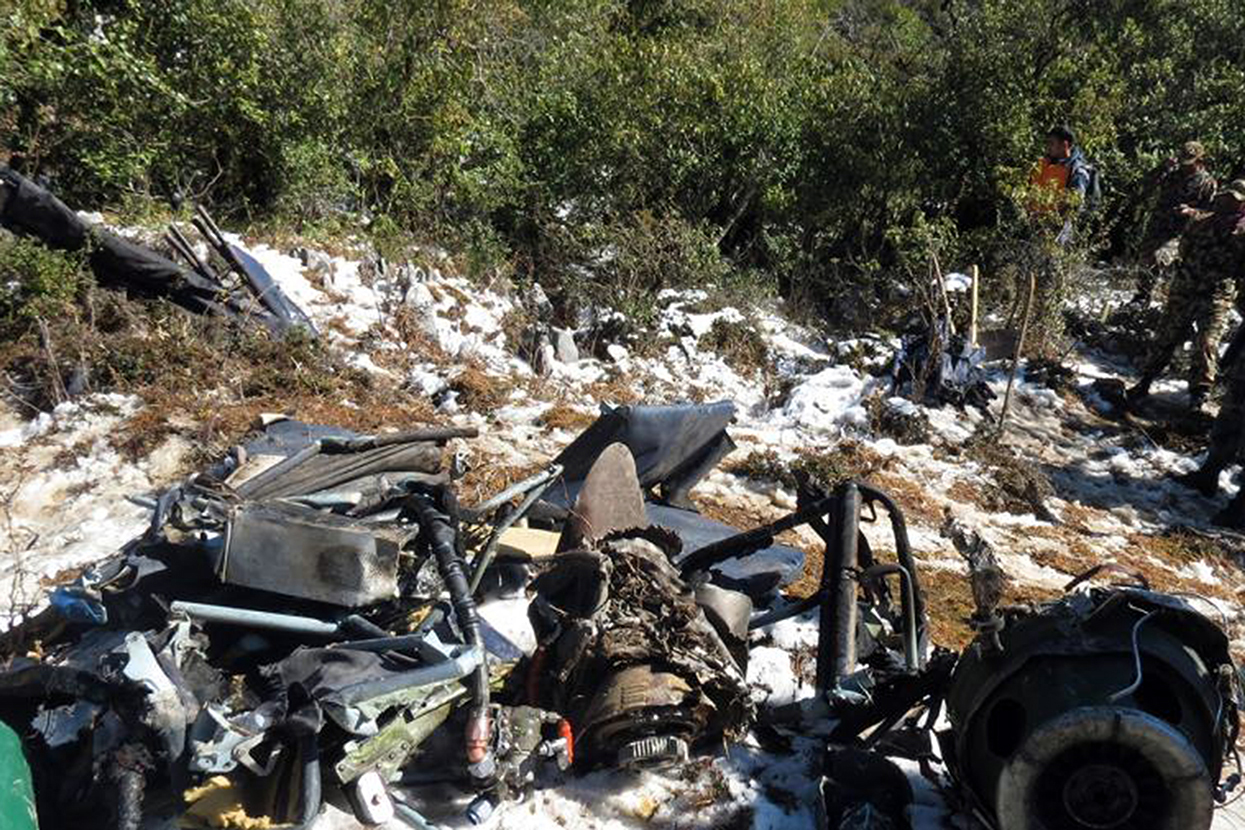
The wreckage was discovered the next day at Masine Lekh in Arghakhanchi. All 18 people on board, including Captain Shankar Shrestha and two crew members, lost their lives in the crash. The aircraft’s black box and remaining parts were later recovered and transported to Nepalgunj.
From wreckage to museum: a preserved legacy
The story of ‘9N-ABB’ did not end with its crash.
After the restoration of democracy in Nepal, efforts were made to preserve historical artifacts related to BP Koirala and the democratic movement. The aircraft’s remains were later proposed to be preserved at the BP Museum in Sundarijal.
However, acquiring the wreckage was not easy. Insurance ownership issues and licensing fees initially demanded around USD 10,000 for the aircraft parts and call sign. After extensive negotiations and documentation of its historical significance, the Canadian insurance company McLarens eventually agreed to transfer the remains for a symbolic cost of just USD 1.
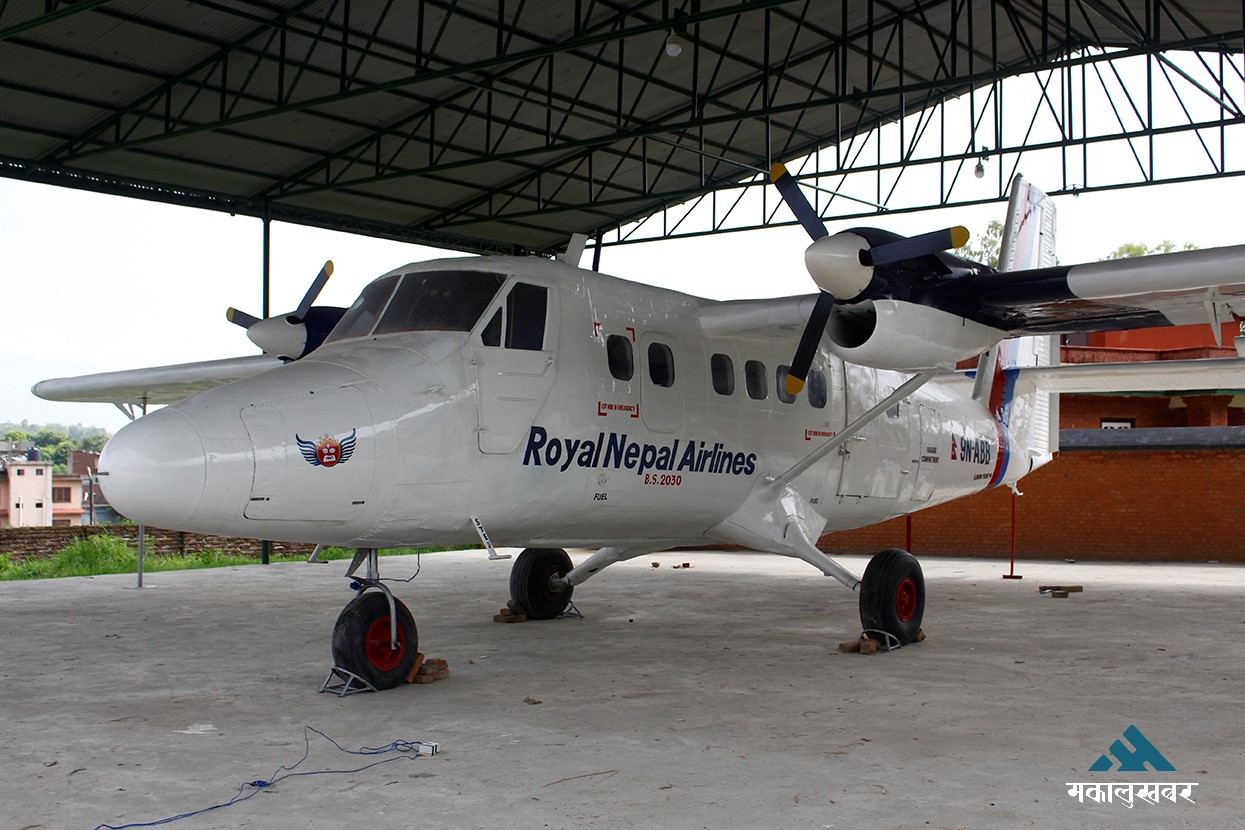
Over a six-month restoration process under aviation engineers’ supervision, the scattered parts of the aircraft were reassembled. Today, ‘9N-ABB’ stands restored—not as a flying machine, but as a powerful historical exhibit.
A silent witness of Nepal’s political and aviation history
Today, the aircraft is preserved at the BP Museum in Sundarijal, alongside artifacts from Nepal’s democratic movement, including weapons, vehicles, and personal belongings of BP Koirala.
The aircraft’s timeline carries a rare coincidence: all three major events in its history—the hijacking, first accident, and final crash—occurred on Sundays. This has made “Sunday” symbolically associated with the aircraft’s dramatic journey.
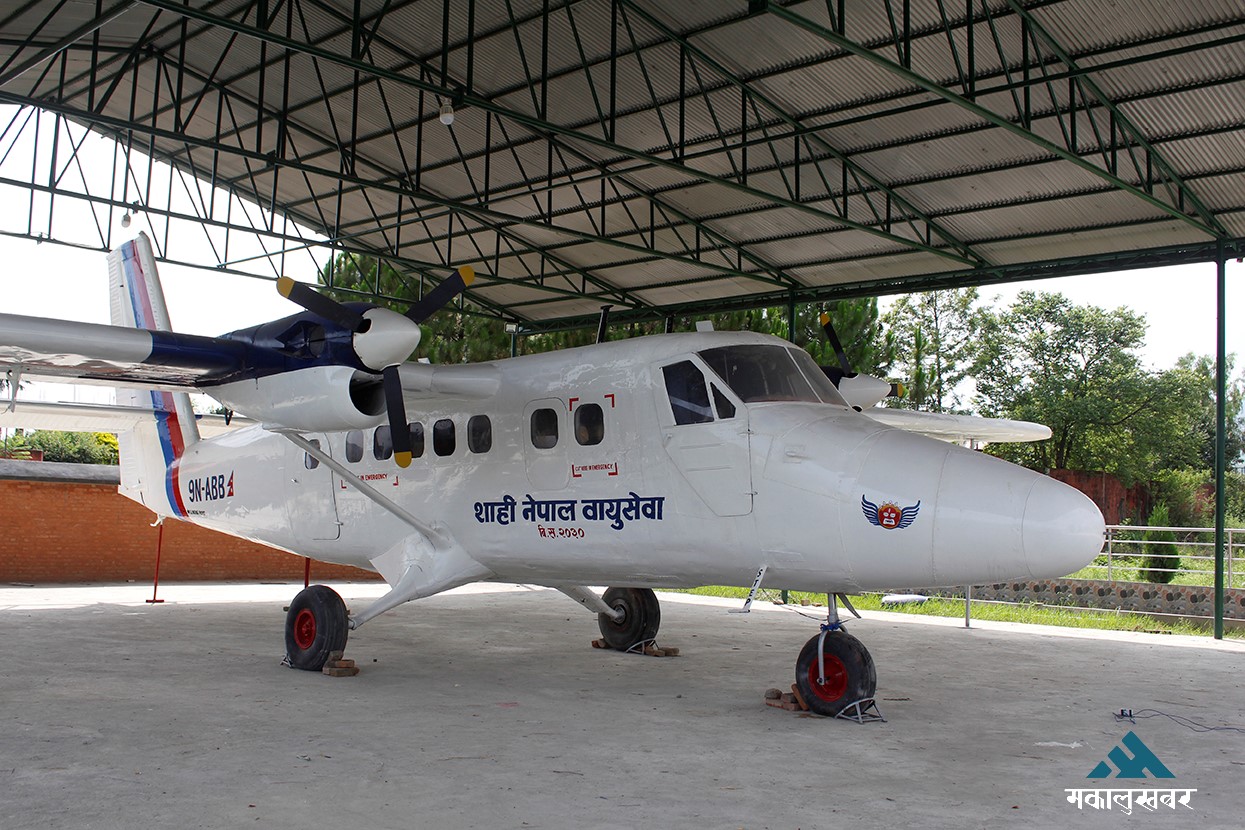
From being Nepal’s first hijacked aircraft to becoming a museum exhibit, ‘9N-ABB’ remains a silent yet powerful witness to Nepal’s aviation evolution and political history.
-Saroj Basnet