Nepali Intellectuals condemn India-China Lipulekh deal
Nepal was neither consulted nor informed prior to the agreement, sparking widespread criticism in the country’s political and intellectual circles.

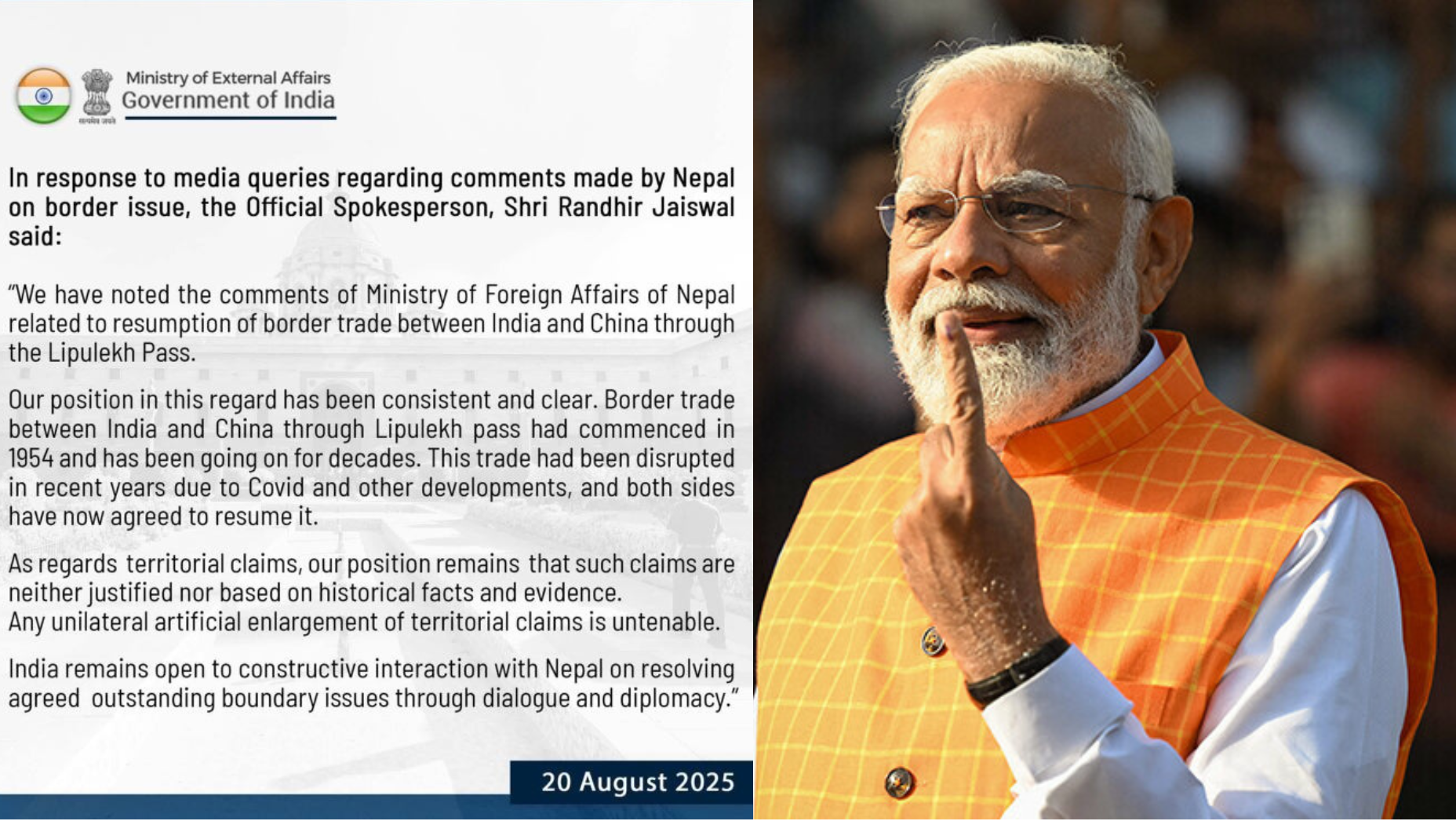
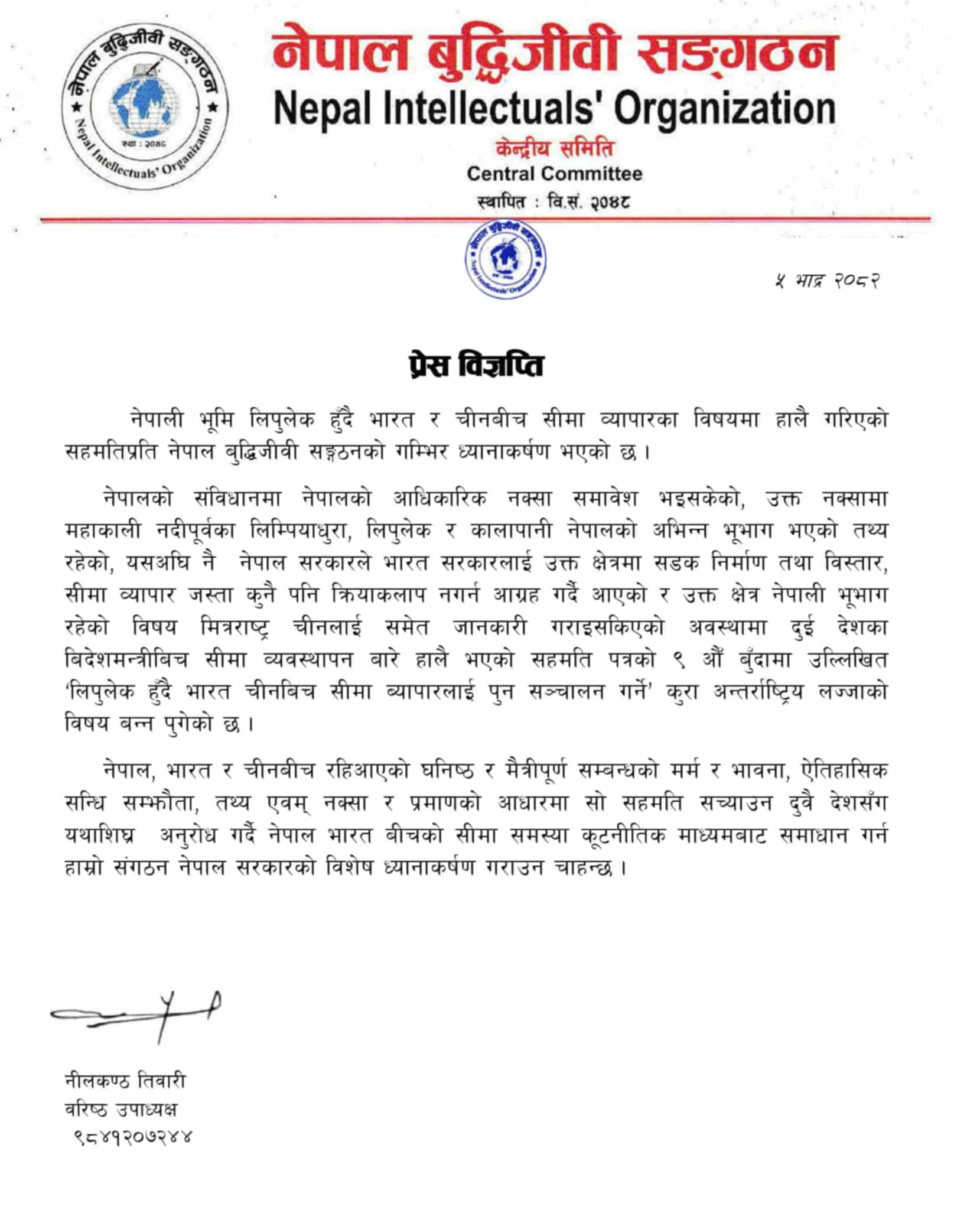
KATHMANDU: The Nepal Intellectuals’ Organization has strongly objected to the recent agreement between India and China to resume cross-border trade through Lipulekh, calling it an “international disgrace” that undermines Nepal’s sovereignty and territorial integrity.
The organization issued a statement demanding that both neighboring countries immediately rectify the decision, which was announced following talks between Chinese Foreign Minister Wang Yi and his Indian counterpart S. Jaishankar during Wang’s recent visit to India.
Nepal was neither consulted nor informed prior to the agreement, sparking widespread criticism in the country’s political and intellectual circles.
Senior Vice President of the organization, Neelkantha Tiwari, noted in the press release that Nepal’s constitution explicitly recognizes Limpiyadhura, Lipulekh, and Kalapani as its integral territories. “Despite Nepal’s official map already being incorporated into the constitution, where these areas east of the Mahakali River are marked as part of Nepal, the reference to Lipulekh for India-China border trade in the ninth clause of the joint statement has become an international embarrassment,” the statement said.
The organization recalled that Nepal had already urged India not to construct or expand roads in the disputed area and had also informed China about Nepal’s territorial claims.
It argued that the new agreement undermines the long-standing spirit of friendship among Nepal, India, and China.
This is not the first time Lipulekh has triggered controversy. In 2015, Nepal protested after India and China agreed to open the route for trade.
In 2020, Nepal issued a new political and administrative map incorporating Limpiyadhura, Lipulekh, and Kalapani—popularly known as the “Chuche Map”—which was unanimously endorsed by the parliament and enshrined in the constitution.
The intellectual group’s protest is being seen as a reflection of Nepal’s broader national sentiment.
Lawmakers from both ruling and opposition parties have also rejected the India-China agreement in unison, urging the government to take decisive diplomatic action.
The statement further urged the governments of India and China to correct the agreement based on historical treaties, documents, maps, and evidence.
It also called on Nepal’s government to immediately initiate diplomatic measures to resolve the border issue with India permanently.
The development has heightened pressure on Nepal’s Prime Minister to prioritize the boundary dispute during his upcoming visits to India and China.