Mundum Trail blooms into rhododendron paradise
The flowering season has especially elevated the beauty of the region around Tawa Bhanjyang in Khotang’s Sakela Rural Municipality, where blooming rhododendrons, magnolias, and Himalayan flora blanket the hills and open grazing fields.

KATHMANDU: The famed Mundum Trail, listed among Nepal’s 100 tourist destinations, has transformed into a breathtaking spring wonderland as hillsides and alpine meadows burst into bloom with vibrant rhododendrons.
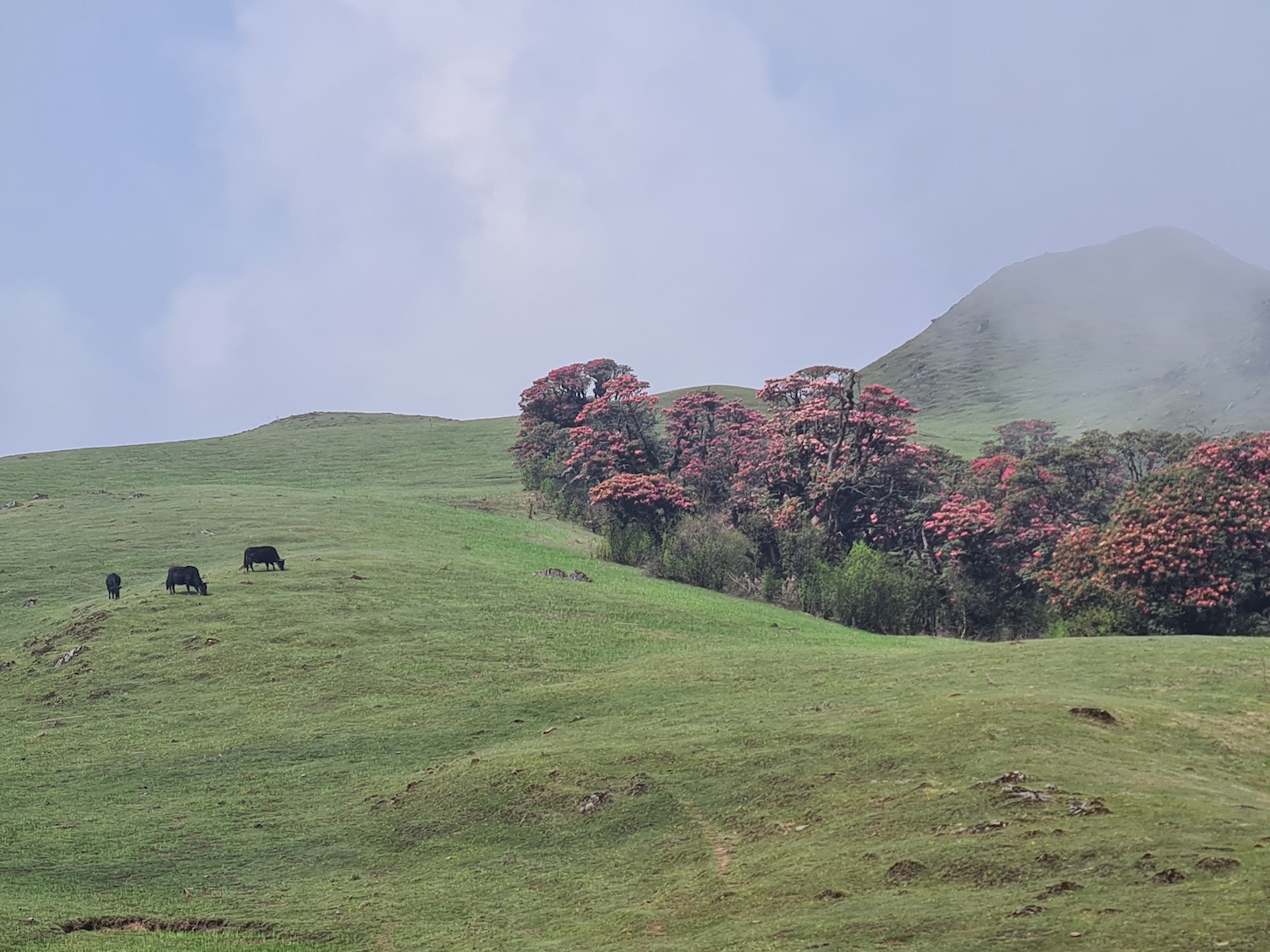
Forests and grasslands surrounding the trail are currently covered with dazzling shades of red, pink, and white rhododendrons, creating mesmerizing landscapes that are drawing increasing numbers of domestic and international visitors to eastern Nepal.
Stretching across the borders of Khotang, Bhojpur, Solukhumbu, and Sankhuwasabha districts, the Mundum Trail has emerged as one of Nepal’s most scenic trekking routes, celebrated for its pristine nature, rich Kirat culture, biodiversity, and panoramic Himalayan views.
The flowering season has especially elevated the beauty of the region around Tawa Bhanjyang in Khotang’s Sakela Rural Municipality, where blooming rhododendrons, magnolias, and Himalayan flora blanket the hills and open grazing fields.
A trekking team led by travel enthusiast Ojanbabu Acharya, popularly known as “Hidne Manchhe” (The Walking Man), recently completed the four-day trek and described the region as “nature’s unmatched masterpiece.” Photos shared by the group on Facebook and Instagram showcasing colorful rhododendron-covered landscapes have rapidly gone viral, inspiring more travelers to visit the trail this spring.
“Unlike other places where rhododendrons bloom mostly on forested slopes, here they blossom across vast grasslands, creating a surreal landscape,” Acharya said. “During autumn, alpine flowers dominate the hills, while spring belongs entirely to the rhododendrons. Mundum Trail is truly a paradise for nature lovers.”
Researchers have identified at least 18 species of rhododendrons in the Maiyung region along the trail, with studies suggesting even more species may exist in the area.
The trail also offers visitors a rare opportunity to experience traditional highland life. Travelers can enjoy locally produced yak milk, ride horses across expansive meadows, and stay in upgraded “Goth-Stay” accommodations operated by local herders. These community-run shelters serve authentic local dishes including millet and buckwheat dhido, organic potatoes, mustard greens, local chicken, and dairy products.
Local shepherds and yak herders move their livestock to the high-altitude grasslands every spring, adding to the unique cultural charm of the route. Vast meadows in Maiyung, Merung, and Dhodre have long served as seasonal grazing grounds for sheep, yaks, and horses.
Closely tied to the oral traditions and spiritual heritage of the Kirat community, the Mundum Trail passes through significant cultural landscapes including Temke Danda (3,165m), Maiyung, Salpa Pokhari (3,750m), and Silichung Peak (4,165m).
The full trail trek typically takes around 10 days for Nepali travelers and up to 13 days for foreign visitors.
Beyond its rhododendron forests, the region is also home to red pandas, Himalayan thar, diverse bird species, wild honey cliffs, medicinal herbs, dense forests, and dramatic Himalayan scenery.
Tourism promoters say the blooming season has made the trail even more attractive for travelers seeking peace, adventure, and close contact with untouched Himalayan nature.
“With snow-capped mountains in the background and rhododendrons carpeting the hills, trekkers barely feel the fatigue of the journey,” said Ramesh Rai, chairman of the Maiyung–Temke–Salpa–Silichung Tourism Promotion Center. “Mundum Trail is becoming one of Nepal’s most extraordinary eco-tourism destinations.”