Lawmakers raise concerns over inflation, sanitary pad tax & landless settlers


KATHMANDU: Members of Parliament on Tuesday raised a wide range of public concerns in the House of Representatives, including the plight of landless settlers, taxation on sanitary pads, rising inflation, healthcare shortages, and weak governance.
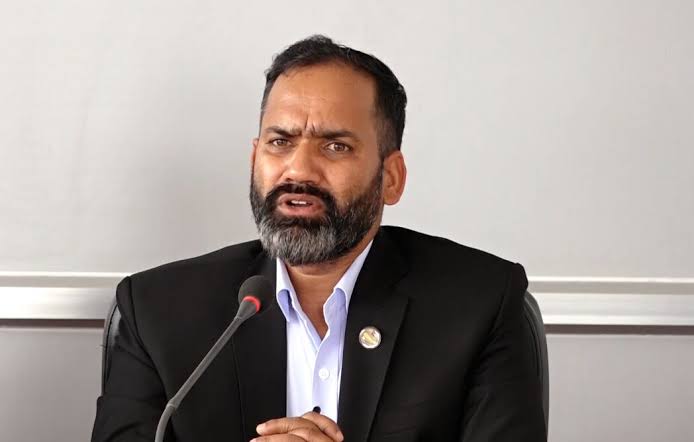
Speaking during Tuesday’s House meeting, Devaraj Pathak of the Rastriya Swatantra Party urged the government to immediately end what he described as an atmosphere of fear being created against landless squatters and unmanaged settlers through notices issued by local governments and state agencies.
Pathak also expressed sorrow over the suicide of Darchula school principal Baldev Singh Dhami, saying the incident had exposed deep-rooted political interference in the education sector. He demanded strict action against those responsible for abetting the tragedy, arguing that attacks on the dignity of honest individuals were leading to such unfortunate incidents.
While welcoming the government’s policy commitments on public service reform, diaspora investment, and Nepal’s graduation to a middle-income country, Pathak warned that weak administrative mechanisms and legal complexities could obstruct implementation.
Drawing attention to problems in his constituency, Dang-1, he said the region remained far behind in development despite being geographically located in the Tarai. He stressed that while the government was preparing long-term solutions for landless communities through a dedicated authority, local-level actions were instead spreading fear among vulnerable citizens.
Pathak also highlighted severe healthcare challenges in Dang-1, noting that nearly 240,000 residents were forced to travel to Butwal or Nepalgunj for treatment due to the absence of even a single hospital in the constituency. He called on the federal government to take ownership of the under-construction trauma center and bring it into operation immediately.
He further urged the government to prevent the decades-long Badkapath Praganna Irrigation Project from meeting the same fate as the Melamchi project and demanded adequate budget allocation for erosion control along the Rapti and Babai rivers, technical education expansion, and infrastructure development.
Meanwhile, Purushottam Yadav of the Rastriya Swatantra Party called on the government to abolish taxes imposed on sanitary pads, describing menstruation as a natural necessity rather than a luxury.
Addressing the House through the Speaker, Yadav said access to safe menstrual hygiene products was a fundamental right tied to women’s dignity and health. He questioned the government’s “double standards,” arguing that a state that treats menstruation as a source of revenue has no moral authority to speak about gender equality and women’s empowerment.
He suggested increasing “sin taxes” on products harmful to public health, such as cigarettes and alcohol, while removing taxes on sanitary pads, which are directly linked to women’s wellbeing.
“One the one hand, the government delivers grand speeches on women’s empowerment and gender equality, while on the other it taxes basic necessities like sanitary pads,” Yadav said, calling the policy contrary to social justice principles and demanding a complete removal of the tax.
Similarly, Saraswati Lama of the Rastriya Prajatantra Party accused the government of failing to control soaring inflation, saying the rising cost of living had made daily life increasingly difficult for ordinary citizens.
Speaking in the House, Lama said prices of essential commodities — including rice, lentils, vegetables, petroleum products, and cooking gas — had skyrocketed, while the government had failed to ensure good governance despite commanding a strong parliamentary majority.
She argued that stagnant incomes combined with continuously rising expenses had made survival increasingly difficult for low- and middle-income families. Lama demanded effective market monitoring and strict action against black marketeers and those creating artificial shortages.
She also called for a review of taxes on petroleum products and cooking gas to provide direct relief to the public.
“Inflation has broken the backbone of ordinary citizens, and kitchens across the country are in distress,” Lama said. “Is this the good governance the government promised? Why is the government not taking stronger steps to stop black marketing and provide economic relief to the people?”
Lama further urged the government to strengthen agricultural production and supply chains, reduce dependence on imports, promote local products, regulate arbitrary public transport fares, and expand subsidies in food, education, and healthcare for low- and middle-income households.