Health Minister admits major misuse of health insurance fund
She also accused some service provider institutions of deliberately overcharging the insurance system.

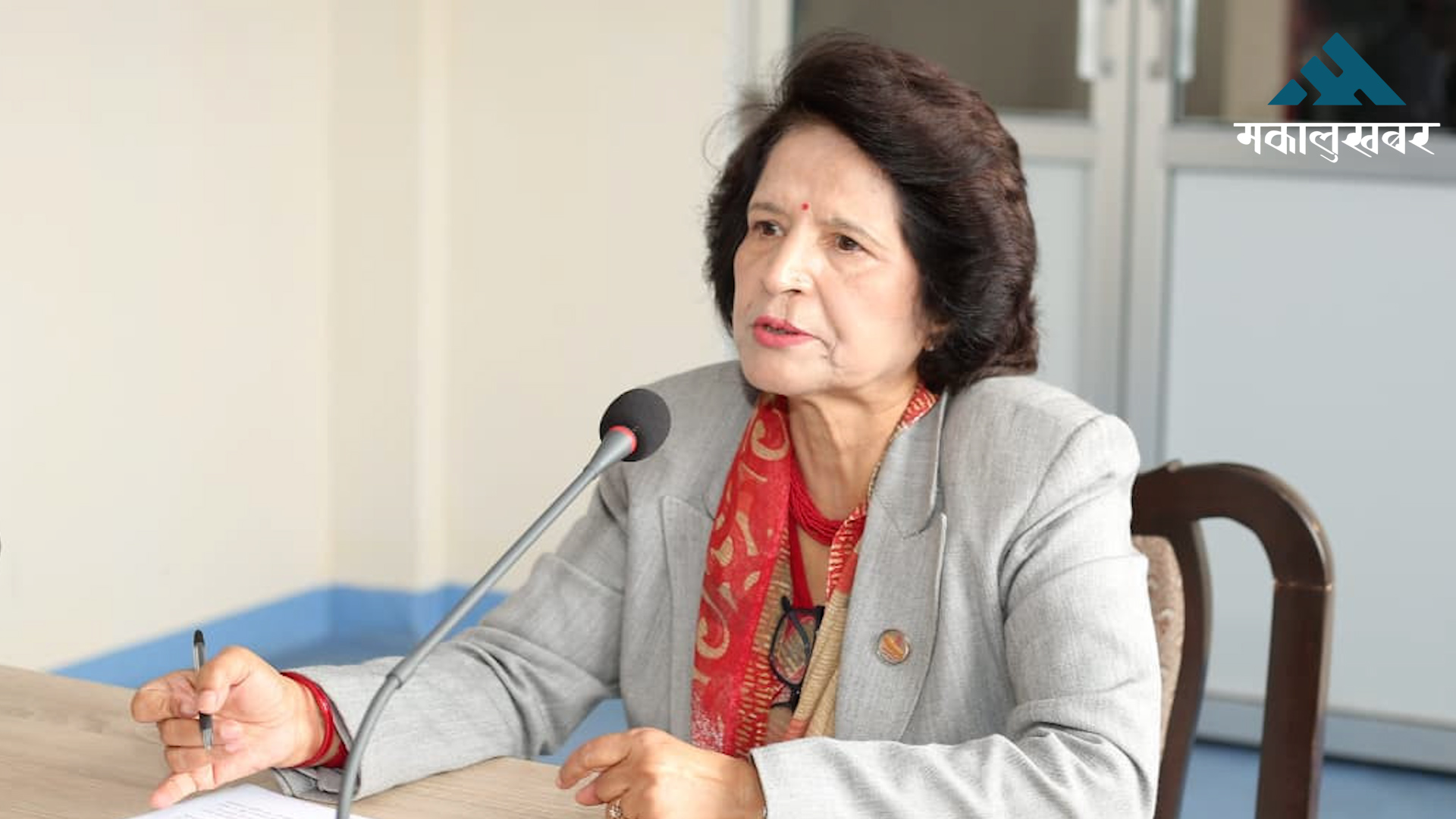
KATHMANDU: Minister for Health and Population, Dr. Sudha Sharma Gautam, has acknowledged widespread misuse of Nepal’s national health insurance premium fund and announced the immediate implementation of strict corrective measures to stop financial leakage and restore sustainability to the programme.
Unveiling the progress of her three-month tenure, Minister Gautam said investigations revealed that the annual insurance ceiling of Rs 100,000 per family has often been exhausted unnecessarily through excessive medical tests and treatments, driven by ill intent.
She also accused some service provider institutions of deliberately overcharging the insurance system.
According to the minister, the financial imbalance of the health insurance programme has emerged as its most critical challenge.
She identified multiple systemic problems, including insurance claims exceeding premium collection, delayed payments, moral hazard caused by unnecessary service consumption, adverse selection with higher participation from high-risk individuals, weak claims management, low participation from the organized sector, and institutional capacity constraints within the Health Insurance Board.
To address these issues, the Ministry of Health and Population and the Health Insurance Board jointly organized a national workshop, resulting in a 19-point action plan aimed at reforming and strengthening the programme.
Key measures in the action plan include:
-
Revision of the benefit package, prioritizing specialist services and treatment of complex diseases
-
Elimination of duplicate services
-
Separate expenditure ceilings for OPD and IPD services
-
Clear referral standards
-
Review of co-payment rates
-
Payment based on the lower of service charges or medicine prices
-
Identification and audit of abnormal claims
-
Mandatory biometric identification of insured patients and SMS alerts to confirm service utilization
To ensure the long-term sustainability of the insurance fund, Minister Gautam emphasized the need for mandatory contributions from all three tiers of government.
While the federal government is currently contributing, provincial and local governments have been urged to contribute wherever possible this year and to make formal budgetary provisions in the upcoming fiscal year.
She also disclosed that the ministry has formally requested the Ministry of Finance to enforce the legal provision requiring at least 25 percent of health tax collected from tobacco products to be deposited into the insurance fund.
At present, less than five percent of the collected amount is being received.
In a bid to mobilize additional resources, the government has proposed imposing a health risk tax on sugary beverages, cheese balls, junk food, and other unhealthy products, with proceeds directed to the insurance fund.
The process of making health insurance mandatory for employees in the organized sector, including civil servants, teachers, police, and the armed forces, has also begun.
Minister Gautam further stated that initiatives are underway to strengthen medicine quality monitoring, establish necessary testing laboratories, and reform procurement and supply management systems.
Nepal’s health insurance programme, launched in 2072 BS, has expanded to all 77 districts and 753 local governments. However, ongoing financial imbalance and misuse have significantly affected its effectiveness.
Highlighting achievements from her first three months in office, the minister said priority was given to the treatment of Gen Z injury cases, maternal and newborn health, mental health services, healthcare access for Nepali migrant workers, improvements in procurement and supply chain management, and reforms in medicine laboratories.
Minister Gautam reaffirmed her commitment to strengthening Nepal’s health system by prioritizing transparency, accountability, and effective service delivery, stating that sustained efforts will continue to restore public trust in the national healthcare system.