Former MP Sunil Sharma: Served nation without accepting a single rupee in salary or benefits
While parliamentary service is commonly associated with remuneration and official benefits, his decision to forgo them has drawn attention as an unusual example in Nepal’s political history.

KATHMANDU: In Nepal’s increasingly polarized political landscape—dominated by debates over corruption, power struggles, and competition for authority—public trust has continued to weaken amid ongoing investigations by the Commission for the Investigation of Abuse of Authority (CIAA), courtroom proceedings, and heated exchanges inside Parliament.
Against this backdrop, a seemingly ordinary official document has raised a broader question: is politics a service or a privilege?
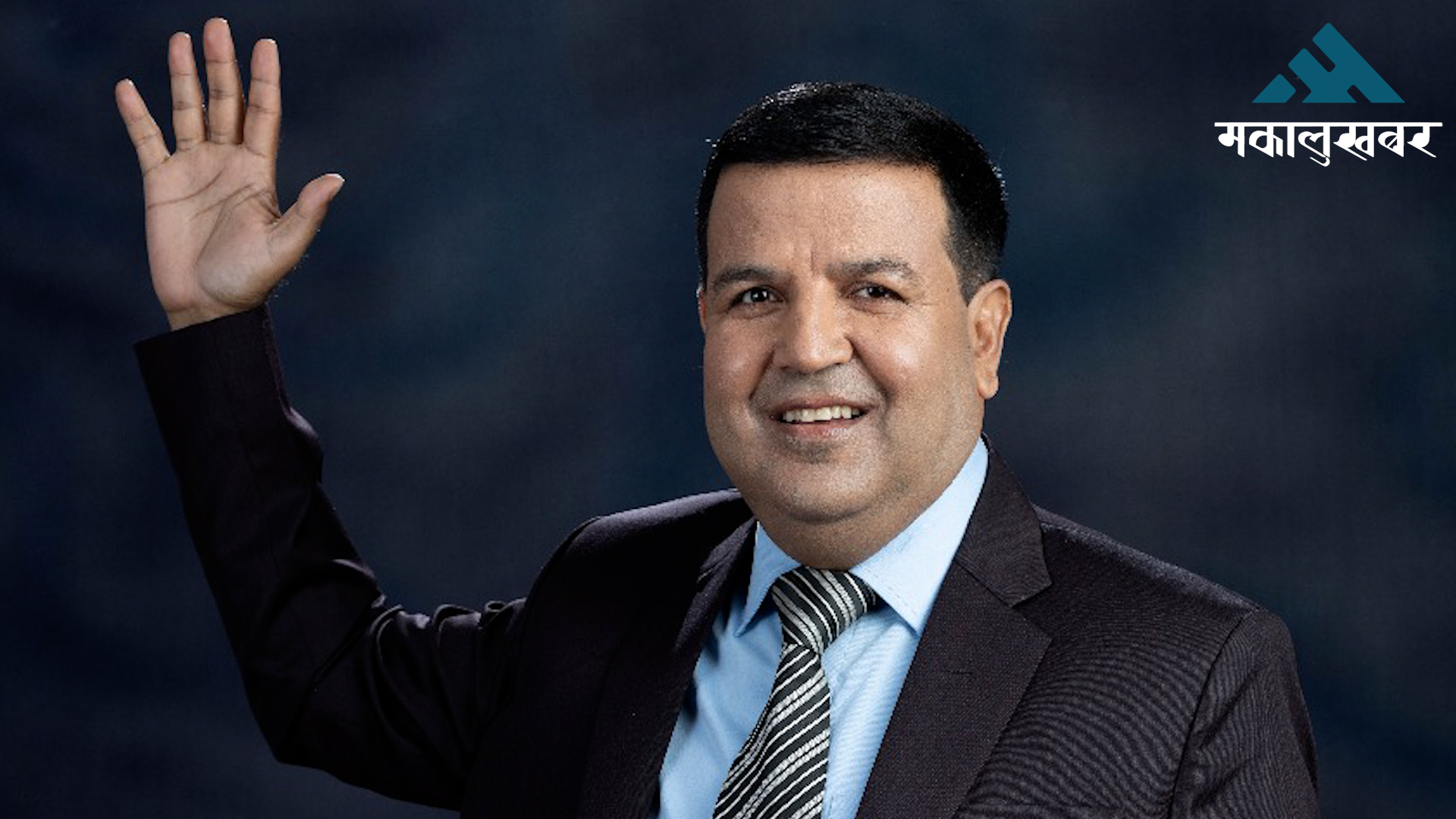
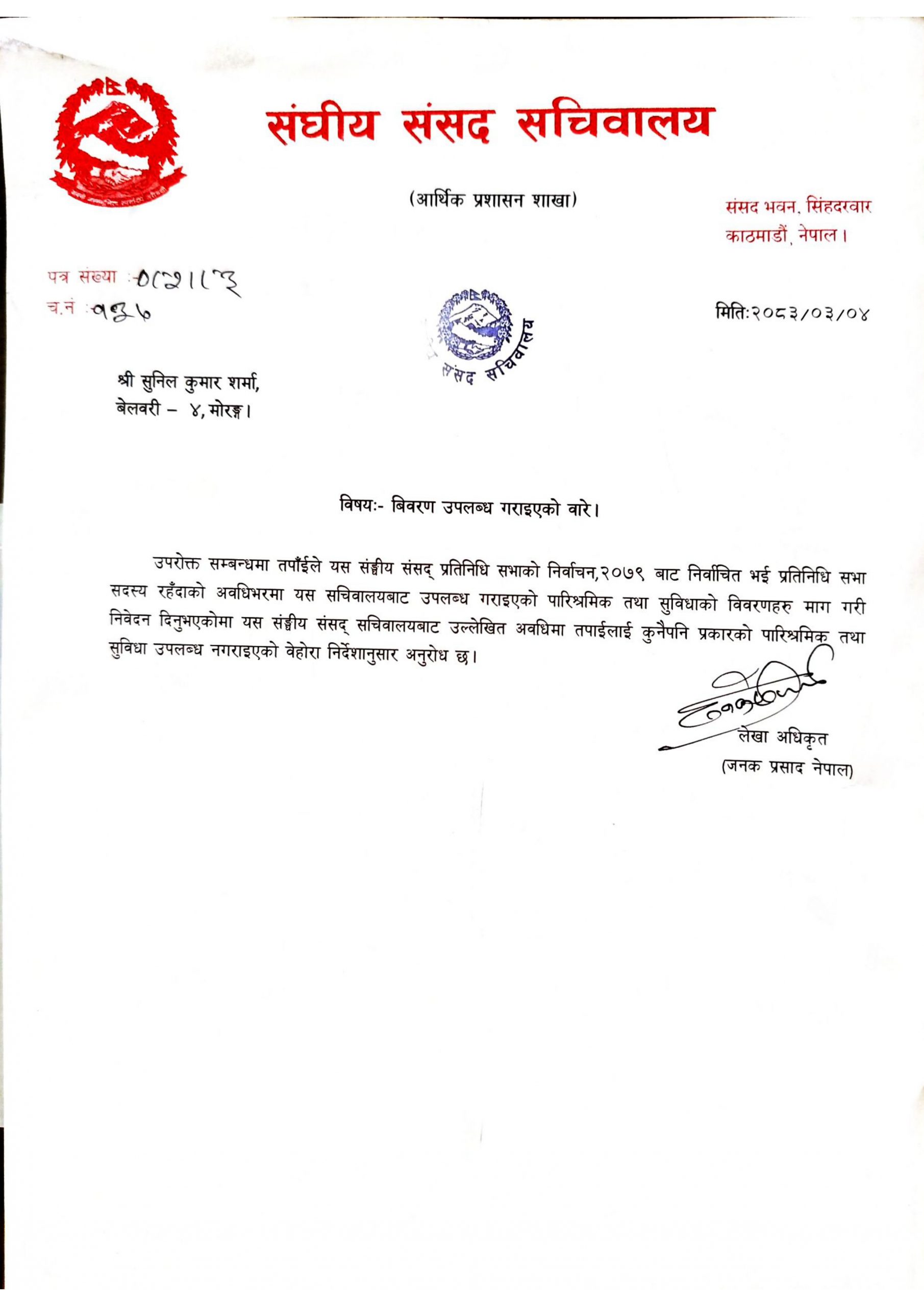
According to a letter issued by the Economic Administration Section of the Federal Parliament Secretariat on Ashar 4 (June 18), former Member of Parliament Sunil Kumar Sharma, elected from Morang Constituency No. 3 in the 2079 BS House of Representatives elections as a Nepali Congress candidate, did not accept any salary, allowances, or benefits provided by the Parliament Secretariat throughout his tenure.
The document states that Sharma did not receive a single rupee in salary or allowances from the state during his time in office.
While parliamentary service is commonly associated with remuneration and official benefits, his decision to forgo them has drawn attention as an unusual example in Nepal’s political history.
Sharma was known as an active parliamentarian, particularly vocal on issues related to healthcare services, expansion of health insurance, access to medical education, and citizens’ fundamental right to health. His parliamentary interventions were largely focused on public welfare concerns.
Alongside his political role, Sharma is also associated with the healthcare sector through Kathmandu Medical College Teaching Hospital.
He has been linked with initiatives supporting patients who are unable to afford treatment, including assistance for kidney transplant cases and emergency medical care for economically disadvantaged individuals.
Reports and public discussions suggest that he has been involved in helping patients facing severe financial hardship, including those requiring critical treatments.
His continued engagement in social service activities has been highlighted by supporters as part of his broader public life beyond parliamentary duties.
Even outside formal political office, Sharma has remained active in public service initiatives, continuing efforts to support vulnerable citizens, particularly in accessing healthcare.
His approach has been described by some as a blend of political participation and social service-oriented work.
At a time when parliamentary and government affairs are often dominated by allegations, disputes, and political rivalry, the Parliament Secretariat’s letter has revived a fundamental debate: is politics ultimately a platform for public service or a means of personal and institutional benefit?
While Sharma’s actions are viewed by some as an example of political integrity and service-oriented conduct, others may interpret them as an individual practice rather than a broader model for political behavior.
Regardless of interpretation, his decision to decline state-provided salary and allowances during his term has drawn public attention.
The case also raises a wider institutional question: should public service rely on personal sacrifice, or should systems ensure transparency, accountability, and standardized practices for all elected representatives?
Ultimately, political actions that deviate from the norm often reignite public debate. Sharma’s case adds another example to the ongoing discussion about the nature of political service, where legacy is shaped not only by position, but by conduct and public perception.