Fikkal sweet shop owner’s 30-year journey from Rs 22,000 to success
Between 2050 and 2058 BS, Tamang’s business flourished. With a monthly rent of just Rs 200, he sold snacks that cost as little as Rs 5, yet managed to steadily grow his income.

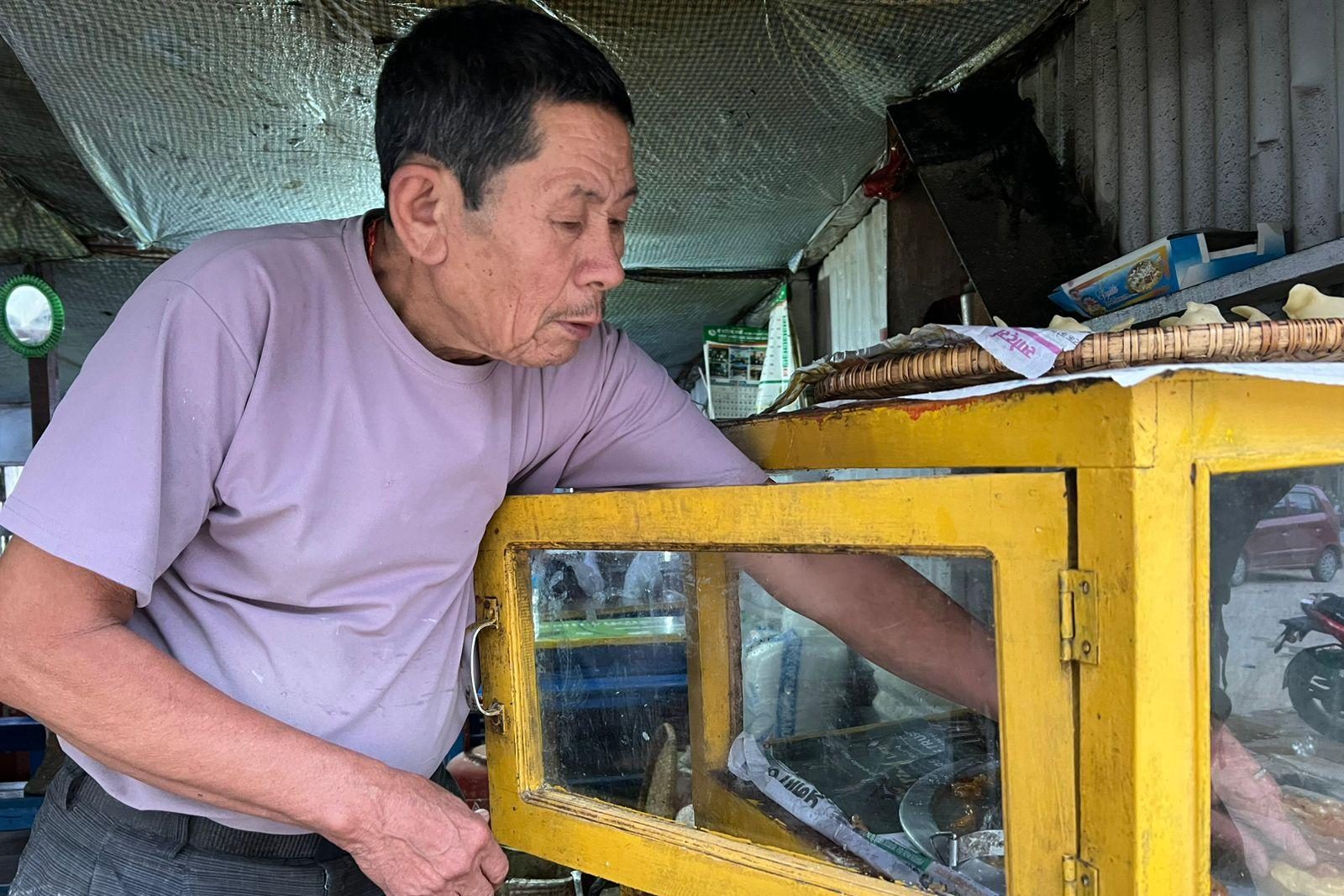
KATHMANDU: What was once a quiet, narrow street with scattered houses in Fikkal Bazaar has transformed over the decades into a busy commercial hub.
But amid the changing landscape, one constant remains — the small but iconic sweet shop run by Haribahadur Tamang.
Back in 2050 BS, when Tamang started his business with just Rs 22,000 investment, Fikkal was nothing like today.
Roads were narrow, settlements sparse, and food stalls were rare.
“Back then, there were no proper roads in the village. There were very few snack shops in the market. People walking to the bazaar used to eat at my shop,” Tamang recalled.
Today, he has been continuously operating his sweet shop — Janata Misthanna Bhandar — in Suryaodaya Municipality–10 for over three decades, building a life shaped entirely by hard work and persistence.
From struggle to stability
Between 2050 and 2058 BS, Tamang’s business flourished. With a monthly rent of just Rs 200, he sold snacks that cost as little as Rs 5, yet managed to steadily grow his income.
“Even with simple food, we earned. I was able to settle my daughters,” he said.
That early success allowed him to invest beyond Fikkal — buying a house in Jhapa’s Birtamod and purchasing land in Naya Chowk. He also supported his children’s education, sending two daughters abroad to the United States and Australia, while funding his youngest daughter’s Chartered Accountancy and BBS studies in Kathmandu.
“I sold my house in Birtamode for my daughters’ education. I have no regrets — I earned happiness by selling sweets,” he said.
Changing times, shrinking margins
Although the shop still runs successfully, Tamang says profits are no longer what they used to be.
“Inflation has increased. Costs are high. Customers still come, but competition has grown. There are many more shops now. Still, I manage to save around Rs 60,000–70,000,” he explained.
Over time, his shop also moved locations within Fikkal, now situated near the Ilam Station area for the past 20 years. Prices have changed drastically too — from Rs 5 snacks to Rs 150 items — reflecting the transformation of the local economy.
The menu now includes samosas, sel roti, puri, laddus, khurma, rasbari, jeri, and bhujiya. Despite expansion in offerings, Tamang has maintained a strict principle: he has never sold alcohol, tobacco, or cigarettes.
“Many shops sell alcohol and cigarettes, but I never did,” he said firmly.
From rickshaw puller to respected entrepreneur
Before entering the food business, Tamang worked as a rickshaw puller in Kakarbhitta around 2042 BS.
He even became the treasurer of a rickshaw union representing hundreds of workers. He later worked in a hotel before finally starting his sweet shop journey.
“I used to pull rickshaws and also worked in hotels before starting this shop,” he said.
A legacy built on sacrifice
Even today, despite aging, Tamang continues to work at the shop daily. His dedication, he believes, is the reason behind his family’s success.
“Without work, nothing is possible. But today’s generation doesn’t want this kind of hard labor,” he said.
Locals also recognize his long-standing contribution. From the historic Gorukhe Bazaar era to modern Fikkal, his shop has remained a familiar stop.
“Even now, whenever we go to Fikkal, we don’t return without eating samosas from Hari’s shop,” said 76-year-old Bir Bahadur Rai, recalling decades of association.
From a modest Rs 22,000 beginning to educating children abroad and sustaining a family legacy, Haribahadur Tamang’s journey reflects the transformation of rural Nepal’s small business economy — built on patience, honesty, and decades of uninterrupted hard work.