Economic Survey 2082/83: Federal govt dominates revenue collection
The survey shows that the integrated revenue collection of the federal, provincial, and local governments increased by 11.4 percent in fiscal year 2081/82, reaching Rs 1.281 trillion.


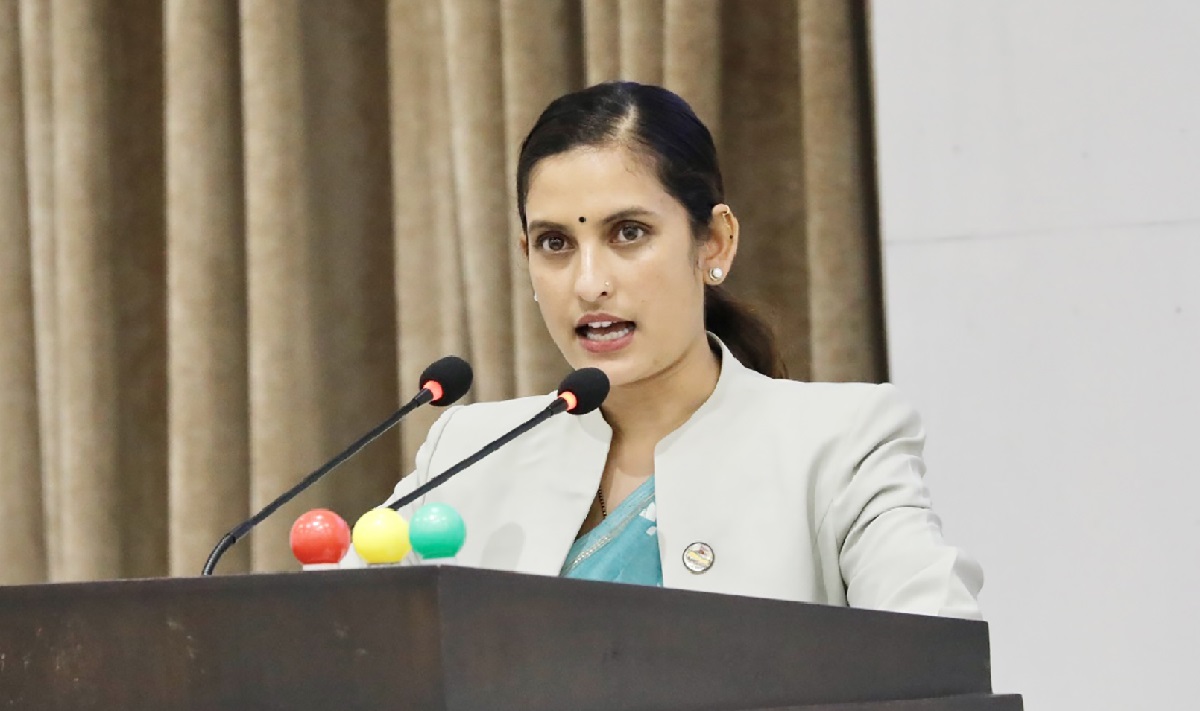
KATHMANDU: The federal government continues to account for the overwhelming majority of Nepal’s revenue collection, according to the Economic Survey for fiscal year 2082/83 presented in the House of Representatives on Wednesday by Finance Minister Swarnim Wagle.
The survey shows that the integrated revenue collection of the federal, provincial, and local governments increased by 11.4 percent in fiscal year 2081/82, reaching Rs 1.281 trillion.
The growth rate is higher than the 10.4 percent increase recorded in the previous fiscal year.
Based on revenue accumulated in the consolidated and divisible funds, the report highlights that the federal government remains the primary pillar of revenue mobilisation in the country.
Of the total collected revenue, the federal government contributed 92.1 percent, while provincial and local governments together accounted for only 7.9 percent.
Tax revenue constituted 87.1 percent of the total revenue collection, whereas non-tax revenue made up 12.9 percent.
The survey further states that revenue deposited in the consolidated funds of all three tiers of government rose by 11.3 percent to Rs 1.272 trillion during the review period. Of this amount, the federal consolidated fund accounted for 81.1 percent, while provincial and local governments held shares of 8.4 percent and 10.5 percent respectively.
Looking at integrated government income excluding pending revenue distribution, total income of the three tiers of government increased by 10.4 percent to Rs 1.326 trillion. Revenue sources contributed 96 percent of the total income, while foreign grants, other receipts, and returns from internal lending made up the remaining four percent. In fiscal year 2080/81, such income had grown by 6.5 percent.
Similarly, total government receipts — including revenue, grants, other income, and public debt mobilisation but excluding grant transfers — climbed by 15 percent to Rs 1.782 trillion. This amount is equivalent to 28.7 percent of the country’s Gross Domestic Product (GDP).
Among the total receipts, the federal government accounted for 86.3 percent, while provincial and local governments held shares of 6.1 percent and 7.6 percent respectively.
Public debt mobilisation represented 25.6 percent of total receipts, whereas revenue, grants, and other income contributed 74.4 percent.
On revenue sharing, the survey notes that divisible revenue among the three tiers of government increased by 12.2 percent in fiscal year 2081/82 to Rs 501.10 billion, equivalent to 8.1 percent of GDP. Out of this amount, Rs 492.16 billion has already been distributed, while Rs 8.94 billion remains pending distribution.
Of the distributed revenue, the federal government received 66.2 percent, provincial governments received 17.1 percent, and local governments obtained 16.7 percent. In the previous fiscal year, divisible revenue had increased by 5.8 percent to Rs 446.46 billion.
Value Added Tax (VAT) remained the largest component of shared revenue, accounting for 68.2 percent of the total distributed amount. Excise duty contributed 24.4 percent, while royalties and other revenues made up the remaining 7.4 percent.
Despite improvements in overall revenue collection, the Economic Survey indicates that the independent revenue-generating capacity of provincial and local governments remains weak.
The continued heavy dependence on the federal government for revenue mobilisation suggests that effective implementation of fiscal federalism remains a significant challenge for Nepal.