Congress heavyweights stay away from campaign after losing tickets
Party President Gagan Thapa has allocated tickets to new leaders in 106 of the 165 constituencies, effectively sidelining many senior figures, who now appear to lack a prominent role.

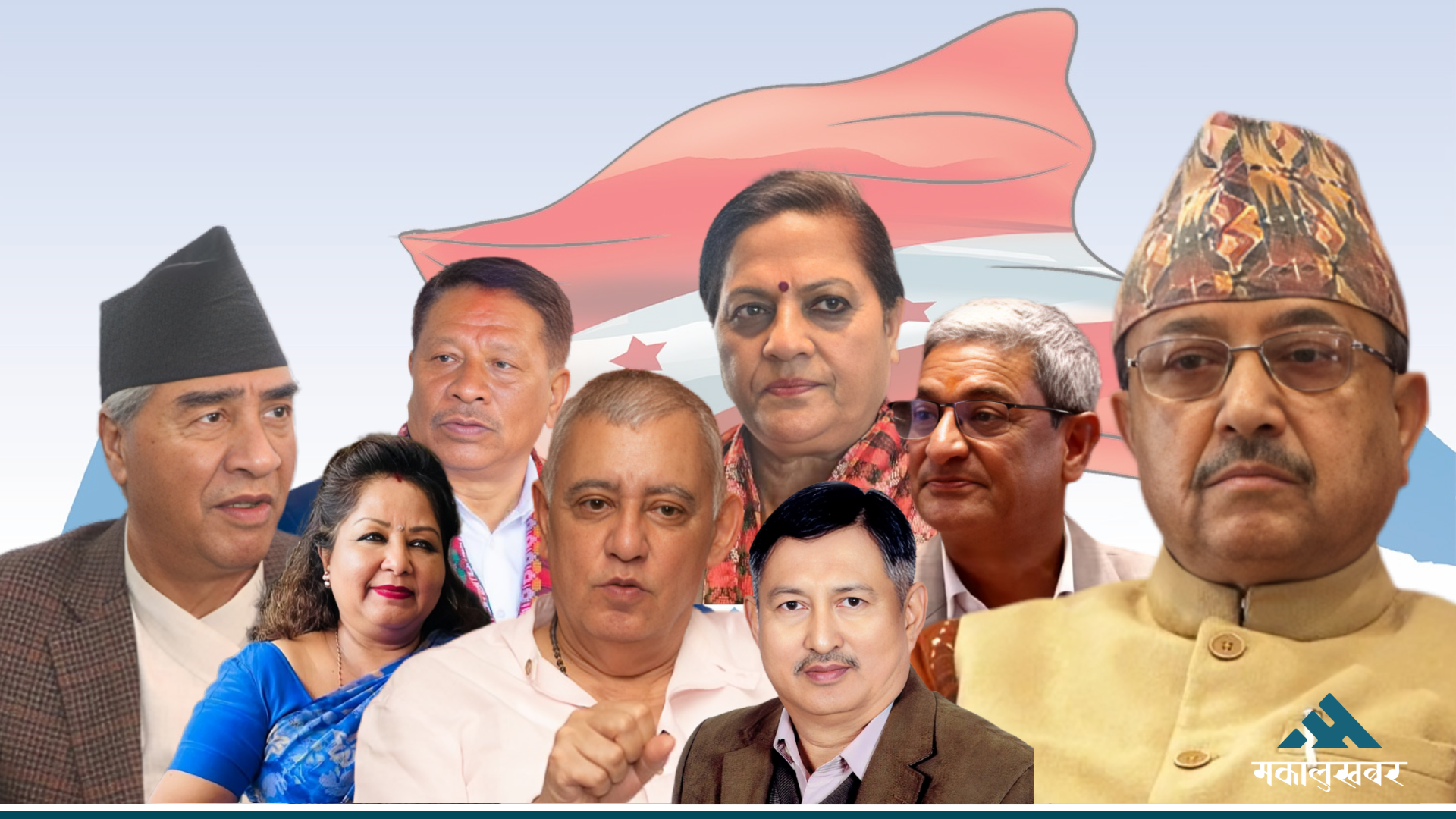
KATHMANDU: With the Nepali Congress unveiling a new strategy for the House of Representatives election scheduled for March 5, the party’s internal dynamics have undergone a significant shift.
Following the 14th General Convention and the subsequent Special Convention, the newly established leadership has fielded a notable number of fresh faces in direct elections, leaving some of the party’s veteran and influential leaders out of the electoral race.
Party President Gagan Thapa has allocated tickets to new leaders in 106 of the 165 constituencies, effectively sidelining many senior figures, who now appear to lack a prominent role.
Analysts have observed that the absence of key leaders from their home districts and responsibilities has slowed the party’s electoral momentum.
Long-serving President Sher Bahadur Deuba, elected continuously from Dadeldhura since 2048 BS, is not contesting this time.
Despite his willingness to compete for the final time, he has stepped aside, with young leader Nainsingh Mahar contesting in his place.
Deuba remains in Kathmandu, and while his secretariat has indicated plans to visit Dadeldhura, no date has been finalized.
Similarly, acting President Purna Bahadur Khadka, former ministers Prakash Man Singh and Dr. Shashank Koirala are also absent from the electoral contest.
Despite their interest in contesting from Kathmandu-1 and Nawalpur-1 respectively, the party leadership did not grant them tickets.
Frustrated leaders who were denied tickets have mostly stayed in Kathmandu, avoiding their home districts.
Among the outgoing deputy ministers, Badri Pandey, Umakanta Chaudhary, and Jeevan Pariyar, only Pandey and Pariyar have been active locally.
Pandey is scheduled to visit Bajura on Saturday, while Pariyar has been leading the campaign in Kaski since Jan 25.
Meanwhile, Vice Presidents Bishwprakash Sharma and Pushpa Bhusal, elected during the Special Convention, are overseeing the Central Election Coordination Committee and busy formulating campaign strategies.
Vice President Sharma is set to address an election rally in Jhapa on Feb 2.
Disputes over leadership changes and candidate selection have reached the Supreme Court. A petition filed by the Deuba–Dr. Shekhar Koirala faction questions the legality of the Special Convention, with the Court seeking a written response from the Election Commission.
After the 15-day deadline on Feb 4, the Court’s decision is expected to determine the party’s future direction and the legitimacy of its current leadership.
While awaiting the court verdict, discontented leaders have shown limited electoral activity, creating uncertainty among local Congress workers.
The absence of influential leaders such as Bal Krishna Khan, Ramesh Lekhak, Bal Bahadur KC, Ramhari Khatiwada, and Sita Gurung is being closely monitored for its potential impact on election results.
President Thapa has defended the party’s strategy, emphasizing the inclusion of “Gen Z” and younger leaders. However, the silence of senior figures could prove costly. In Dadeldhura, Nainsingh Mahar seeks Deuba’s support, while in Kathmandu, Prakash Man Singh’s absence has weakened the campaign’s momentum.
With the election date approaching, President Thapa faces the critical challenge of mobilizing top leaders into the electoral fray and reconciling internal dissent, which could ultimately shape the party’s performance in the polls.