Chaurikharka: Blossoming into a tourist paradise
Chaurikharka offers a perfect escape for those who relish unwinding on lush green hills and immersing themselves in raw Himalayan beauty.

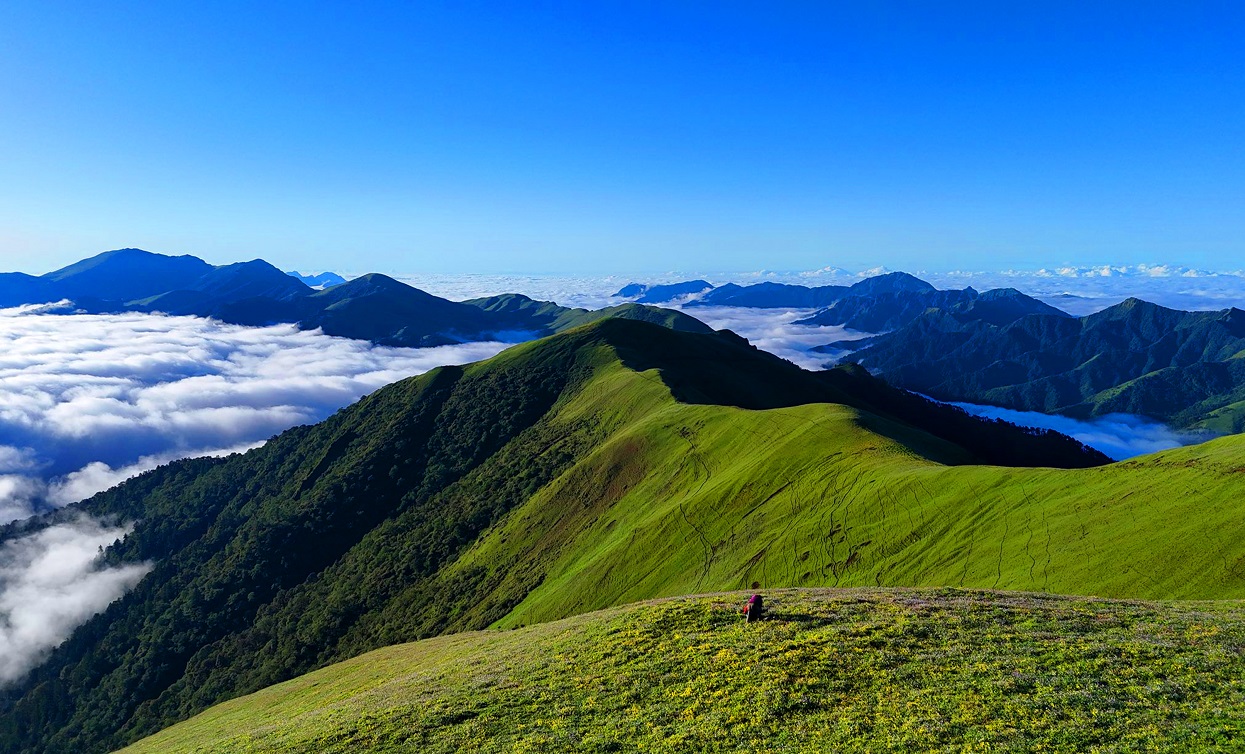
KATHMANDU: A mesmerizing landscape adorned with colorful wildflowers, drifting clouds playing hide-and-seek, and a gentle mountain breeze — these natural wonders are drawing an increasing number of tourists to Chaurikharka, a stunning alpine pastureland nestled on the border of Baglung and Eastern Rukum districts.
Locally known as Chungri, this once-hidden gem is rapidly emerging as a new destination for nature lovers.
Perched at nearly 4,000 meters above sea level, Chaurikharka offers a perfect escape for those who relish unwinding on lush green hills and immersing themselves in raw Himalayan beauty.
With panoramic views of snow-capped peaks to the north and grazing flocks of sheep and goats dotting the slopes, visitors often find themselves enchanted. Until recently, this area was largely unfamiliar to outsiders. However, growing coverage by media and social networks has turned Chaurikharka into a rising hotspot.
The area has become easily accessible due to the construction of the Mid-Hill Highway under Nepal’s National Pride Projects. From the trailhead at Patihalne, it takes about 30 minutes by vehicle followed by a 2.5-hour hike to reach Chaurikharka.
The region’s cool climate and rich pastures have long made it a seasonal haven for herders from Baglung, Eastern Rukum, Rolpa, and Myagdi. Now, their peaceful alpine retreat is bustling with visitors.
“It used to be just us herders up here,” recalls Bhagbir Gharti Magar, a local herder from Nisikhola-6, Baglung. “Now, we see up to 100 tourists a day. On holidays, the entire ridge is full of people — taking photos with the flowers, the sheep, the huts, and even with us!”
Magar noted a noticeable rise in visitor numbers since last year, when a small group of around 15 tourists first visited during the late monsoon. This year, he estimates hundreds have already arrived by mid-summer, some staying in tents overnight.
To support growing interest, a 5-kilometer trekking trail was built last year, connecting Raniwas–Paipa to Chaurikhark, according to Tourism Division Office Chief Tankanath Khanal.
The trail was developed with a budget of Rs 1 million. For this year, the Lumbini Province Government has allocated Rs 2.5 million to further develop infrastructure and promote the region.
“Visitor numbers are clearly rising,” Khanal said. “We are working to promote Chaurikharka as a prime eco-tourism destination by improving trails, constructing rest stops, and creating informative signage.”
For travelers like Paras Neupane from Tulsipur, Dang, the journey was well worth it. Escaping the scorching heat of the plains, he traveled via Butwal, Gulmi, Burtibang, and Nisikhola to reach Chaurikharka. “This place is absolutely serene. The cool air, the landscape, everything is rejuvenating,” he shared.
Neupane believes the experience could be even better if the government adds more signboards and resting areas along the route. “With a few improvements, this could easily become one of Nepal’s top highland getaways,” he said.