NRB act set for modernization
The move is also in line with the fiscal year 2082/83 budget statement, the fourth strategic plan of Nepal Rastra Bank (2022–2026), and the bank’s monetary policy.

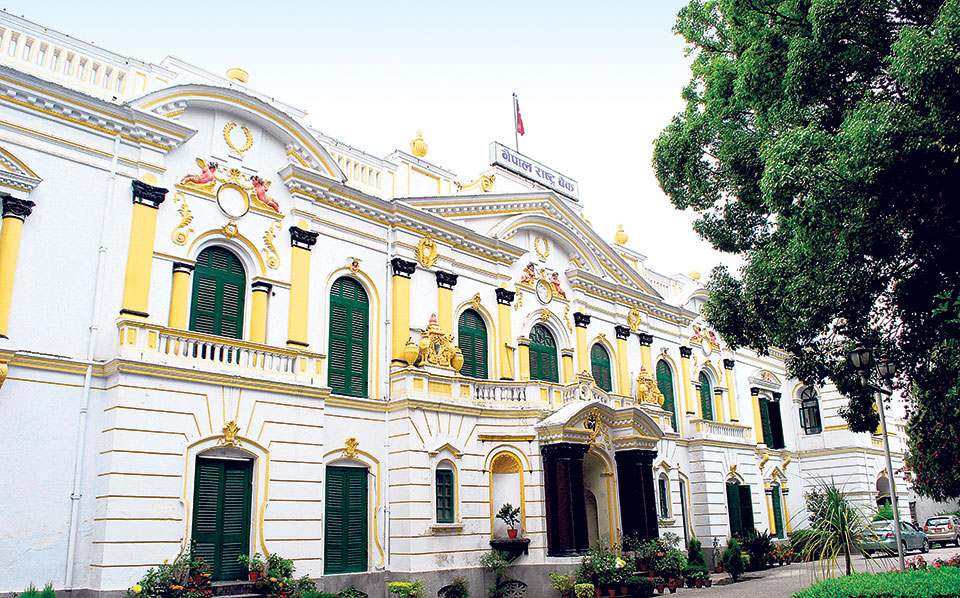
KATHMANDU: The government has prepared a draft bill to amend the Nepal Rastra Bank Act, 2058, aiming to modernize and update the central bank’s legal framework in line with contemporary economic and financial realities.
According to the Ministry of Finance, the amendment seeks to align the objectives and functions of the central bank with internationally accepted concepts of central banking, enhance operational autonomy, and strengthen supervisory and regulatory functions.
The move is also in line with the fiscal year 2082/83 budget statement, the fourth strategic plan of Nepal Rastra Bank (2022–2026), and the bank’s monetary policy.
The proposed amendments focus on clarifying the central bank’s objectives and operational scope, strengthening autonomy, and adapting the Act to current economic and financial circumstances.
Key provisions include:
-
Recognizing and regulating digital banks and digital currencies.
-
Promoting risk-based supervisory systems.
-
Reinforcing mechanisms for inflation control.
-
Aligning the central bank’s role with Nepal’s federal structure.
-
Modernizing reporting and accounting systems according to international standards.
-
Clarifying rules for the liquidation and management of banks and financial institutions.
The draft proposes revisions to Section 2 of the Act to redefine “financial institution,” now including financial holding companies, banks established for agricultural, cooperative, industrial, or other economic purposes, and institutions providing payment services or remittance operations.
The government can designate additional institutions as financial entities through a gazette notification.
In line with the rise of digital banking and online payment systems, the draft defines a “digital bank” as a licensed financial institution operating entirely through digital channels, without physical branches.
The definition of “currency” has also been expanded to include postal orders, checks, drafts, travelers’ checks, credit cards, and other similar monetary instruments designated by banks through public notifications, encompassing digital currencies.
Proposed amendments to Section 10 allow the bank to coordinate with national and international public bodies, including agencies, provincial governments, local levels, cooperatives, and industries.
Section 27 is also being revised to ensure continuity in leadership: in the absence, resignation, or suspension of the governor, the senior deputy governor will serve as acting governor.
The Ministry of Finance is currently collecting public feedback on the draft, which will be submitted to Parliament for consideration.
The amendment aims to make Nepal Rastra Bank more effective, autonomous, and adaptable to the evolving financial landscape.