1994 vs 2026 World Cup: Bigger, pricier, more global
The country first hosted the tournament in 1994, a landmark edition that significantly boosted soccer’s popularity in the U.S. and set attendance records at the time.

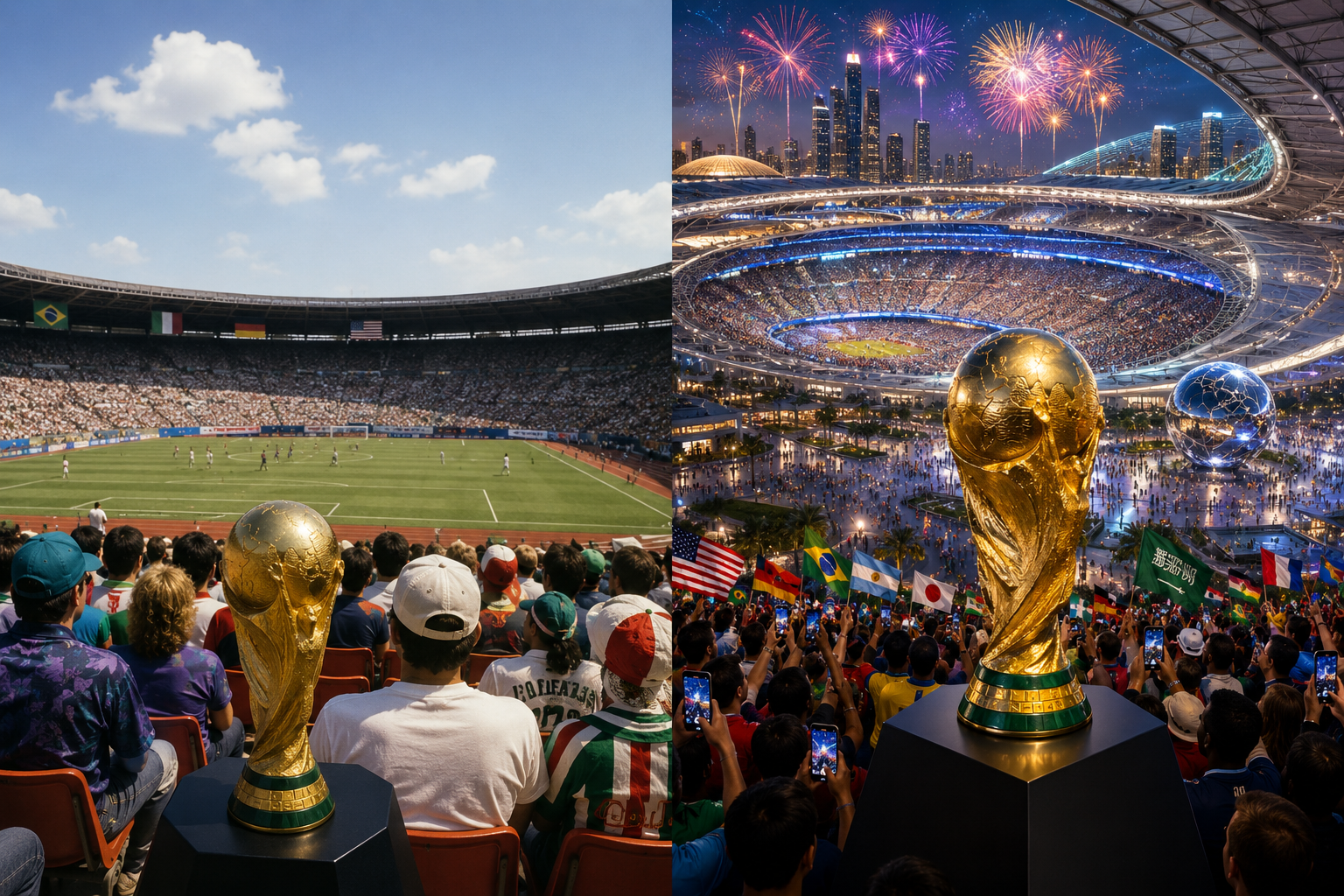
KATHMANDU: The FIFA World Cup has returned to the United States after 32 years, marking a historic moment for global football.
The country first hosted the tournament in 1994, a landmark edition that significantly boosted soccer’s popularity in the U.S. and set attendance records at the time.
The 2026 edition, however, reflects how dramatically the sport has evolved over the past three decades.
From tournament scale and commercial value to stadium infrastructure and player welfare, nearly every aspect of the World Cup has expanded and modernized.
Tournament nearly doubled in size
One of the biggest differences between the two editions is the number of participating teams. The 1994 World Cup was the last to feature 24 teams. The format expanded to 32 teams in 1998.
In 2026, FIFA has further expanded the tournament to 48 teams, making it the largest World Cup in history. The number of matches has also increased significantly, and the eventual champion will now need to play eight matches, compared to seven in previous editions.
Sharp rise in ticket prices
Ticket pricing has seen a dramatic increase over the past 32 years. In 1994, group-stage tickets ranged between $25 and $75, while tickets for the final at Pasadena’s Rose Bowl were priced between $180 and $475.
In contrast, for 2026, group-stage tickets range approximately from $140 to $2,735, while final match tickets have been sold between $4,185 and $8,680. FIFA later raised the highest category price for the final to nearly $10,990.
For the first time, FIFA has also introduced a dynamic pricing system, where ticket costs fluctuate based on demand and popularity. While this model reflects modern event pricing trends, it has also faced criticism for making the tournament less accessible to average fans.
A tri-nation hosting format
The 1994 World Cup was hosted exclusively in the United States across nine stadiums. In contrast, the 2026 tournament will be jointly hosted by three countries: the United States, Mexico, and Canada.
Matches will be played across 16 stadiums, including 11 in the U.S., three in Mexico, and two in Canada. FIFA’s goal is to make the tournament more global and commercially expansive through this multi-country format.
However, all quarter-final matches and beyond will be held in the United States.
Notably, Chicago—one of the host cities in 1994—is not included in 2026, reportedly due to disagreements over financial guarantees with FIFA.
Record-breaking attendance expected
The 1994 World Cup remains one of the most attended tournaments in history, with 3.59 million total spectators across 52 matches, averaging nearly 69,000 fans per game.
With the expanded format of 104 matches in 2026, total attendance is projected to reach between 6 and 7 million spectators, potentially setting a new all-time record.
Modern stadium infrastructure
In 1994, matches were held in NFL stadiums, including several venues that no longer exist, such as Giants Stadium, Foxboro Stadium, Pontiac Silverdome, and RFK Stadium.
In 2026, all U.S. venues are modern NFL stadiums equipped with advanced facilities, luxury suites, premium seating, and enhanced spectator comfort.
Iconic 1994 venues such as the Rose Bowl, Cotton Bowl, Citrus Bowl, and Stanford Stadium are not part of the 2026 lineup.
Improved player safety and facilities
Player welfare has seen major improvements since 1994. Back then, teams often played in extreme heat conditions without mandatory cooling breaks, and weather frequently became a major challenge.
In 2026, mandatory three-minute water breaks per half have been introduced. These not only allow players to recover but also give coaches additional time for tactical instructions.
Pitch standards have also been fully standardized according to FIFA regulations. In 1994, some stadiums used narrower fields, but all pitches in 2026 have been adjusted to meet uniform global standards.
Greater squad flexibility
Substitution rules have also evolved significantly. In 1994, teams were allowed only two substitutions, with limited exceptions.
In 2026, teams can make five substitutions during regular time. If the match goes into extra time, a sixth substitution is allowed, along with additional changes permitted in cases of concussion injuries.
These updates allow better player workload management, reduce injury risks, and help maintain a higher match intensity throughout the tournament.