Visa scam heat: Calls grow for Home Minister Lekhak’s resignation
Lekhak has refused to step down, stating he would leave politics entirely if the charges are proven but sees no reason to resign without evidence.

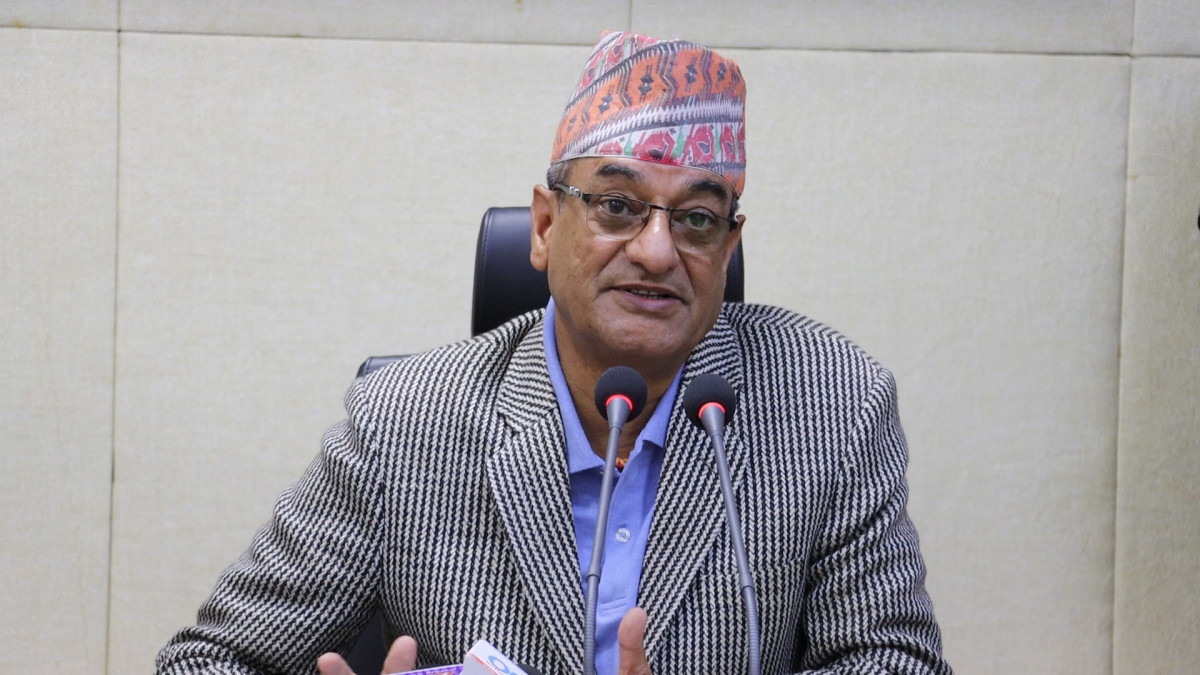
KATHMANDU: Amid rising allegations of an organized racket extorting money for visit visas at Tribhuvan International Airport’s Immigration Office, calls for the resignation of Home Minister Ramesh Lekhak are intensifying—not only from opposition parties but also from within his own Nepali Congress party.
Despite growing political pressure, Lekhak has refused to step down, stating he would leave politics entirely if the charges are proven but sees no reason to resign without evidence.
However, senior Nepali Congress leader Dr. Shekhar Koirala has urged Lekhak to step aside in order to pave the way for an impartial investigation. “He should say: ‘I am clean, I resign, now form a probe committee.’ That would show moral integrity,” said Koirala.
Opposition parties including the CPN (Maoist Centre), Rastriya Swatantra Party (RSP), Rastriya Prajatantra Party (RPP), CPN (Unified Socialist), Janamat Party, and JSP-Nepal have united in demanding Lekhak’s resignation on ethical grounds. RSP even warned of obstructing parliamentary proceedings if the demand is not fulfilled, reminding the public that Lekhak himself had demanded resignations in similar cases in the past.
Maoist General Secretary Dev Gurung emphasized that individuals under investigation must step aside to ensure democratic norms. “There are reports linking the Home Minister’s secretariat. Once questions arise, a thorough investigation is a must. Until then, the accused must vacate the position for an independent probe,” Gurung said.
The Commission for the Investigation of Abuse of Authority (CIAA) has already launched an investigation, prompted by reports that Lekhak’s secretariat was directly involved in increasing illegal collections from visit visa applicants. CIAA has taken into custody several middlemen, including former Immigration Chief and Joint Secretary Tirtharaj Bhattarai.
Three mobile phones and a laptop were seized from Bhattarai—one of the phones was reportedly used solely for coordinating the operation. Preliminary CIAA findings suggest the syndicate collected up to Rs 5 million daily, with structured distribution of the money among involved officials.
Home Minister Lekhak, meanwhile, maintains the allegations are baseless and has pledged to provide a detailed explanation to the House of Representatives on May 26. The Ministry of Home Affairs has also issued a statement denying the Minister’s involvement and promising full cooperation with the CIAA investigation.
The scandal has drawn comparisons to the infamous Bhutanese refugee scam two years ago, which similarly implicated a sitting Home Minister.
Both cases suggest deep-rooted, institutional corruption within the Home Ministry, once again placing its leadership under intense scrutiny.