Valley air pollution hits unhealthy level, 7th most polluted city globally
According to global rankings, Kathmandu currently stands as the seventh most polluted city in the world.

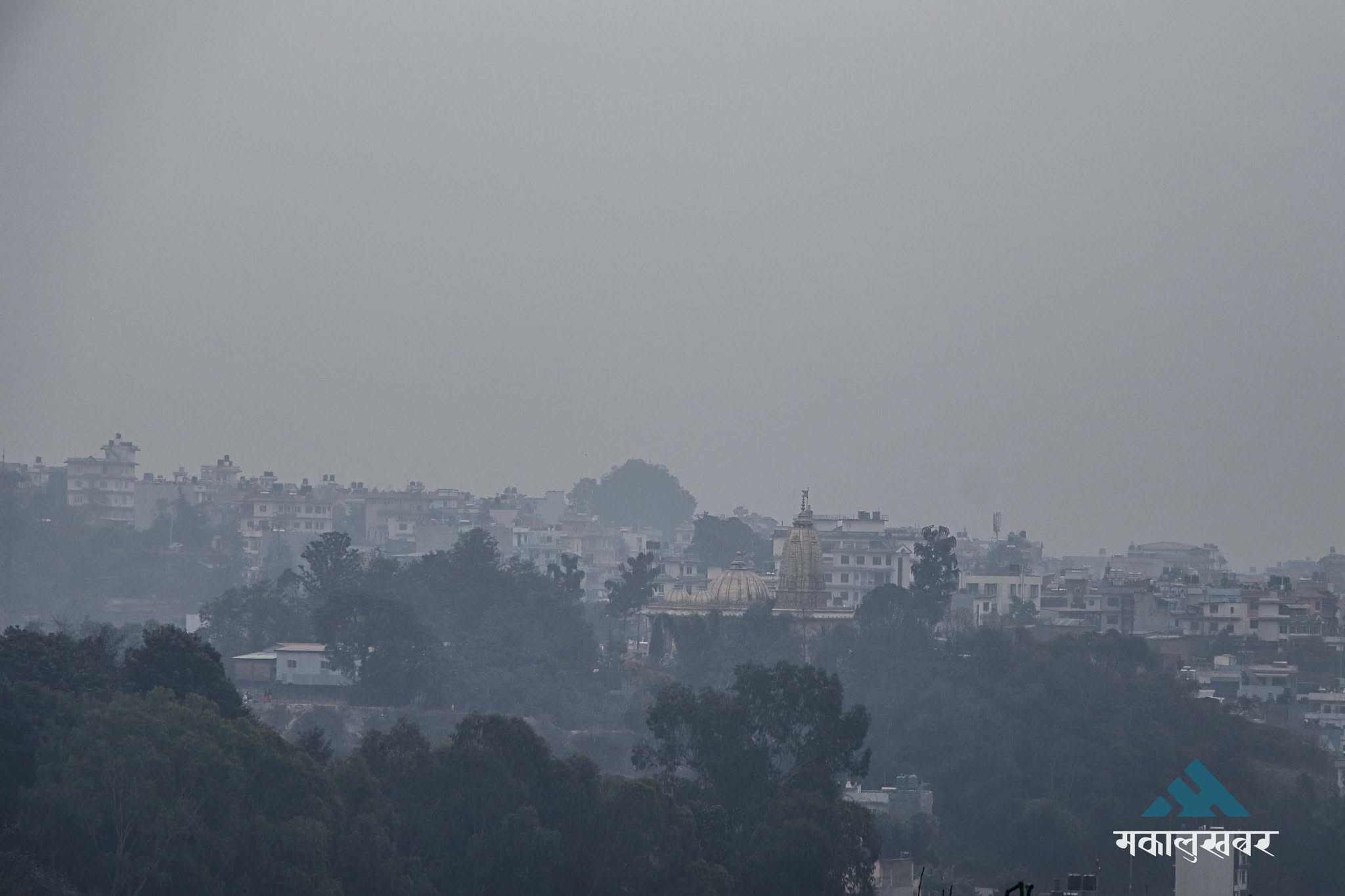
KATHMANDU: Kathmandu Valley’s air pollution reached unhealthy levels today, with the Air Quality Index (AQI) hitting 175 by noon.
According to global rankings, Kathmandu currently stands as the seventh most polluted city in the world.
At the same time, Cairo, Egypt, recorded the world’s highest pollution level with an AQI of 273.
Director General of the Department of Environment, Gyanraj Subedi, attributed the rising pollution to dry weather, lack of wind, industrial operations, and rapid construction activities.
“Emissions from industrial activities, cross-border pollution, and pollutants drifting in from neighboring India have all contributed to this situation,” Subedi explained. “Unless it rains, pollution levels are likely to increase further.” He also emphasized the need for environmentally friendly development and urged concerned agencies to prioritize it.
Disaster management expert Dr. Dharmaraj Upreti explained the AQI scale: 0–50 is considered good (green), 51–100 requires caution (yellow), 101–150 is unhealthy for sensitive groups such as those with respiratory or heart conditions, 151–200 is unhealthy for everyone, 201–300 is very unhealthy, and above 300 is considered hazardous.
According to the Air Quality Management Action Plan, 2076, the Nepal government considers an AQI above 300 a disaster.
To mitigate such emergencies, the plan recommends stopping waste burning, increasing the use of street sweepers and vacuum machines, and issuing public advisories urging children, senior citizens, and patients to take extra precautions.
The National Environment Policy, 2076, also outlines government strategies to reduce pollution, including setting national standards for water, air, soil, noise, electromagnetic waves, radioactive radiation, and hazardous chemical pollutants, and implementing them nationwide.
Moreover, monitoring centers will be established in major cities, industrial zones, and high-risk areas to map air, water, and noise quality, helping to inform and protect the public.