Poverty falls, life expectancy rises as Nepal economic survey shows mixed growth


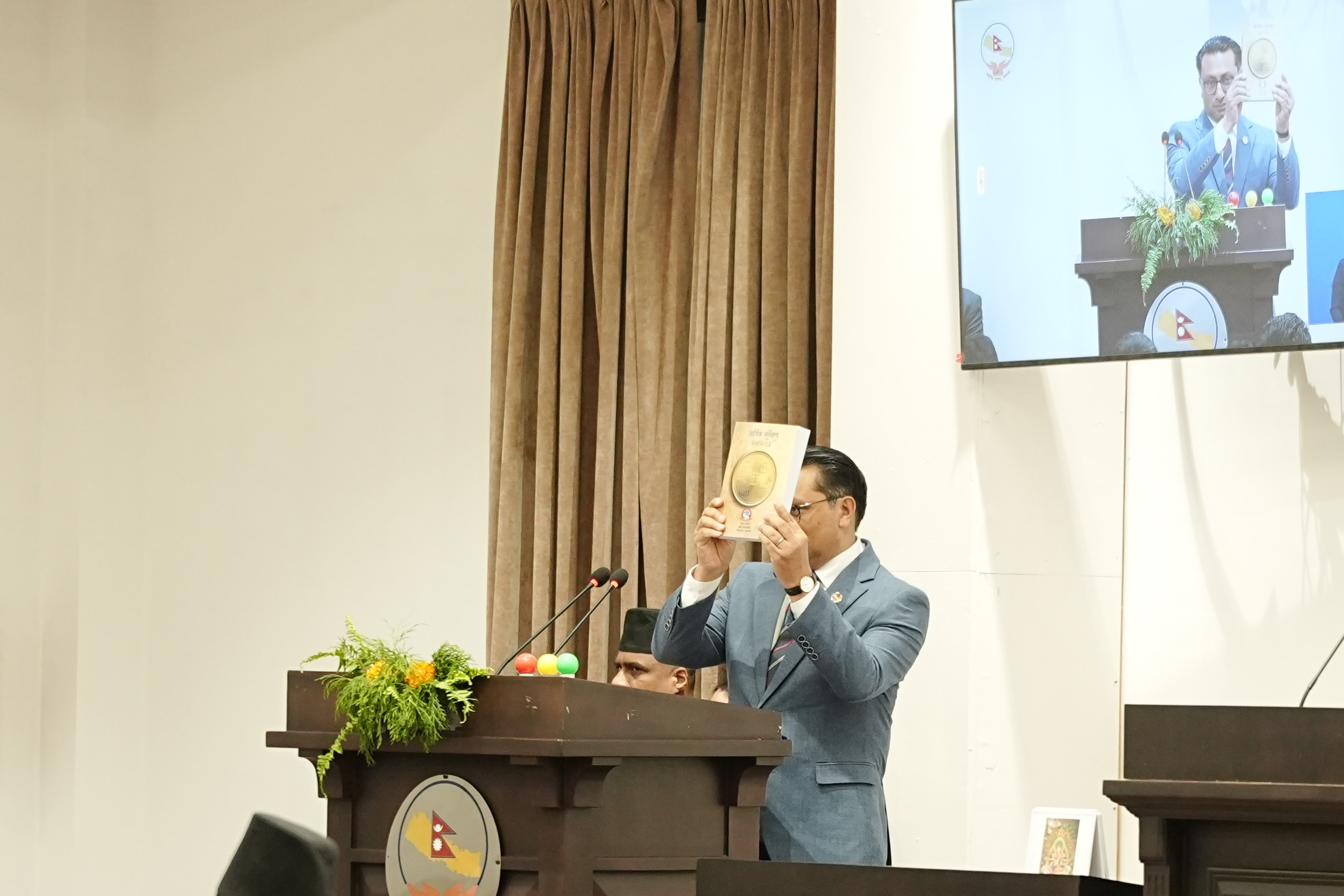
KATHMANDU: Nepal’s poverty levels have declined while life expectancy has improved, according to the Economic Survey 2082/83 presented in Parliament on Wednesday by Finance Minister Dr. Swarnim Wagle.
The survey shows that the proportion of people living below the absolute poverty line has dropped to 20.27%, while multidimensional poverty has decreased to 17.4%, reflecting gradual improvements in living standards across the country. Supported by advancements in healthcare, the average life expectancy has risen to 71.3 years.
Despite these gains, the report highlights uneven economic performance. While progress is evident in education, health, social security, energy, banking, and infrastructure sectors, agriculture has shown signs of slowdown.
Agriculture’s contribution to GDP continues to decline as non-agricultural sectors expand. Adverse weather conditions, including drought during rice plantation and excessive rainfall during harvest, have significantly affected production. Agricultural value-added growth is projected to slow to 1.58% this fiscal year, down from 3.05% last year. Rice production is also expected to fall by 4.16%.
In education, the youth literacy rate (ages 15–24) has reached 94.2%, while the net secondary school enrolment rate stands at 51.6%, indicating steady progress in human capital development.
Public enterprises present a mixed picture. Out of 45 operating state-owned enterprises, 27 are profitable, 16 are running at a loss, and 2 remain inactive. The government’s total investment in these enterprises has reached Rs 798.56 billion, including Rs 370.25 billion in equity and Rs 428.31 billion in loans.
Social protection coverage has expanded significantly, with 3.64 million beneficiaries receiving social security allowances. Additionally, 2.85 million workers are now enrolled in the contribution-based social security fund.
Labor migration remains a major feature of the economy. More than 6.9 million Nepalis have obtained labor permits for foreign employment, including 273,000 new permits and 251,000 renewals during the current fiscal year.
Health indicators show continued improvement. Maternal mortality has declined to 151 per 100,000 live births, while infant mortality stands at 31. Around 2.148 million citizens are enrolled in health insurance schemes. The number of government hospitals has reached 8,976.
Infrastructure and connectivity have expanded significantly. Nepal’s road network has grown to 104,906 kilometers, telephone density has reached 103.2%, and internet penetration stands at 145.7%, reflecting multiple device ownership.
The energy sector shows strong progress, with electricity access reaching 99.1% of the population and installed capacity rising to 4,105 MW. Nepal exported 2,918 GWh of electricity to India during the review period.
Investment inflows also remain strong. The Department of Industry and the Investment Board approved projects worth Rs 492 billion during the current fiscal year.
Tourism is expected to recover further, with an estimated 1.162 million international arrivals in 2025, and an average stay of 16.34 days per visitor.
The financial sector continues to expand. By mid-February, banks and financial institutions had reached 62 million deposit accounts and 2.04 million loan accounts. Mobile banking users have approached 30 million. Deposits grew by 6.64%, while private sector credit increased by 4.4%. However, non-performing loans rose to 5.42%.
In the capital market, the NEPSE index stood at 2,820.45 points, with total market capitalization reaching Rs 4.744 trillion. Demat account holders have increased to 7.639 million, representing about 26% of the population.
Overall, the Economic Survey reflects steady social progress and infrastructure expansion, while also highlighting challenges in agriculture and financial sector stability.