NC faction demands special convention, sets ultimatum to party leadership
The statement comes amid speculation that party general secretaries Gagan Thapa and Bishwprakash Sharma had postponed the regular convention to prepare for a special convention.

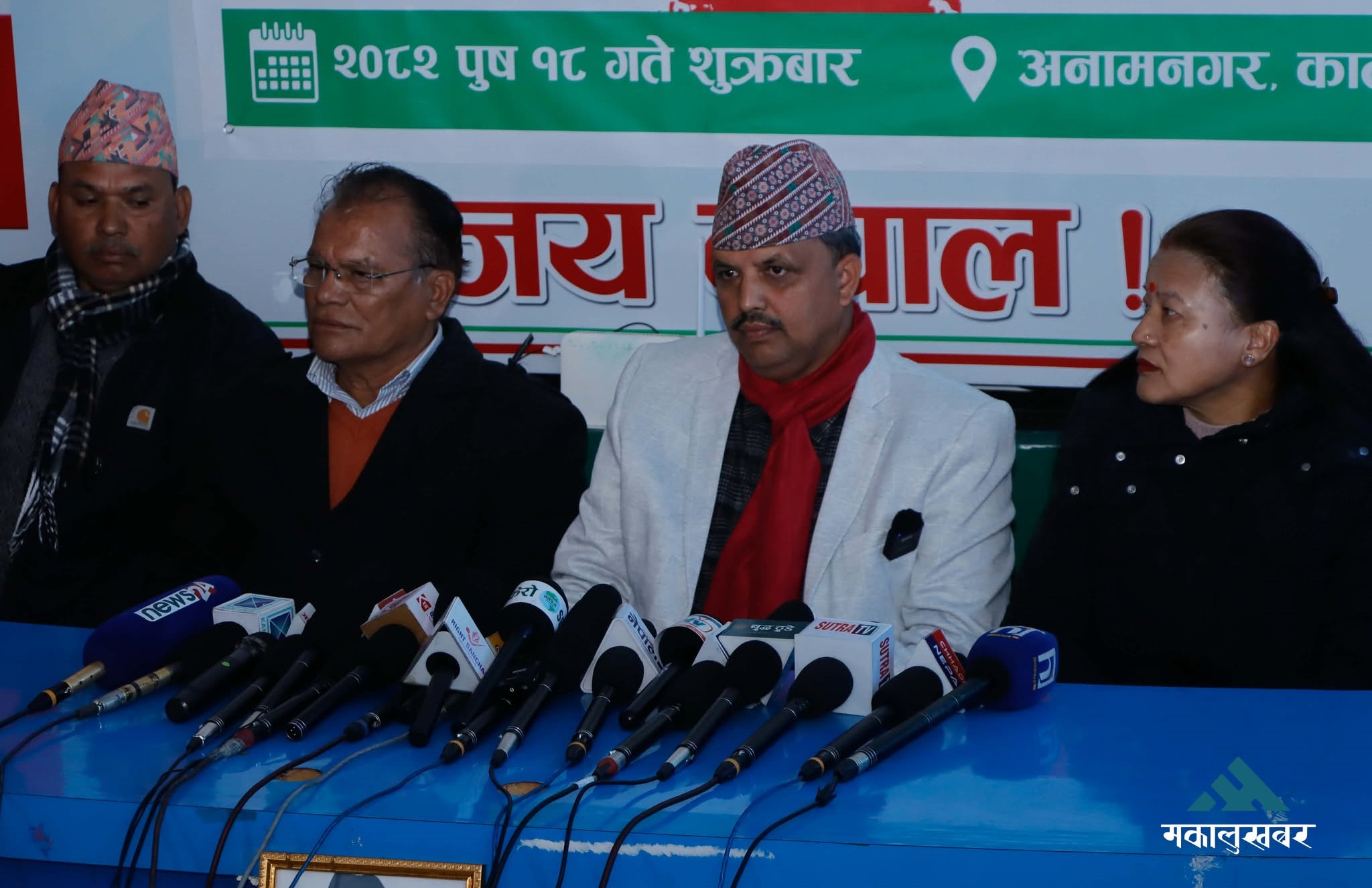
KATHMANDU: Amidst an ongoing tug-of-war within the Nepali Congress over whether to hold the regular 15th General Convention or a special convention, a group of convention delegates has issued an ultimatum to the party leadership.
The faction, dissatisfied with the party’s founding wing for failing to advance the regular convention process on schedule, has demanded that a special convention be held on Poush 27 and 28.
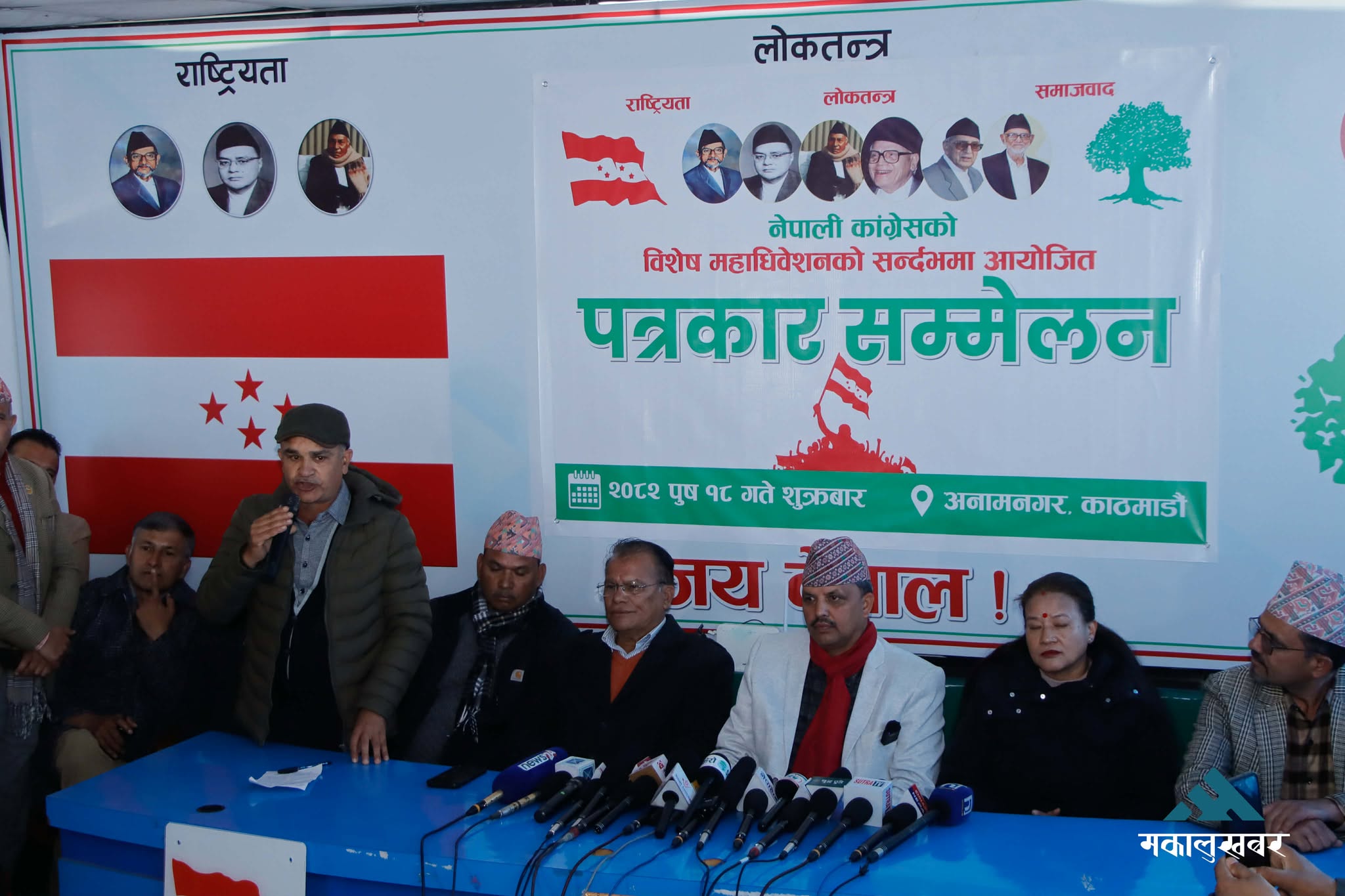
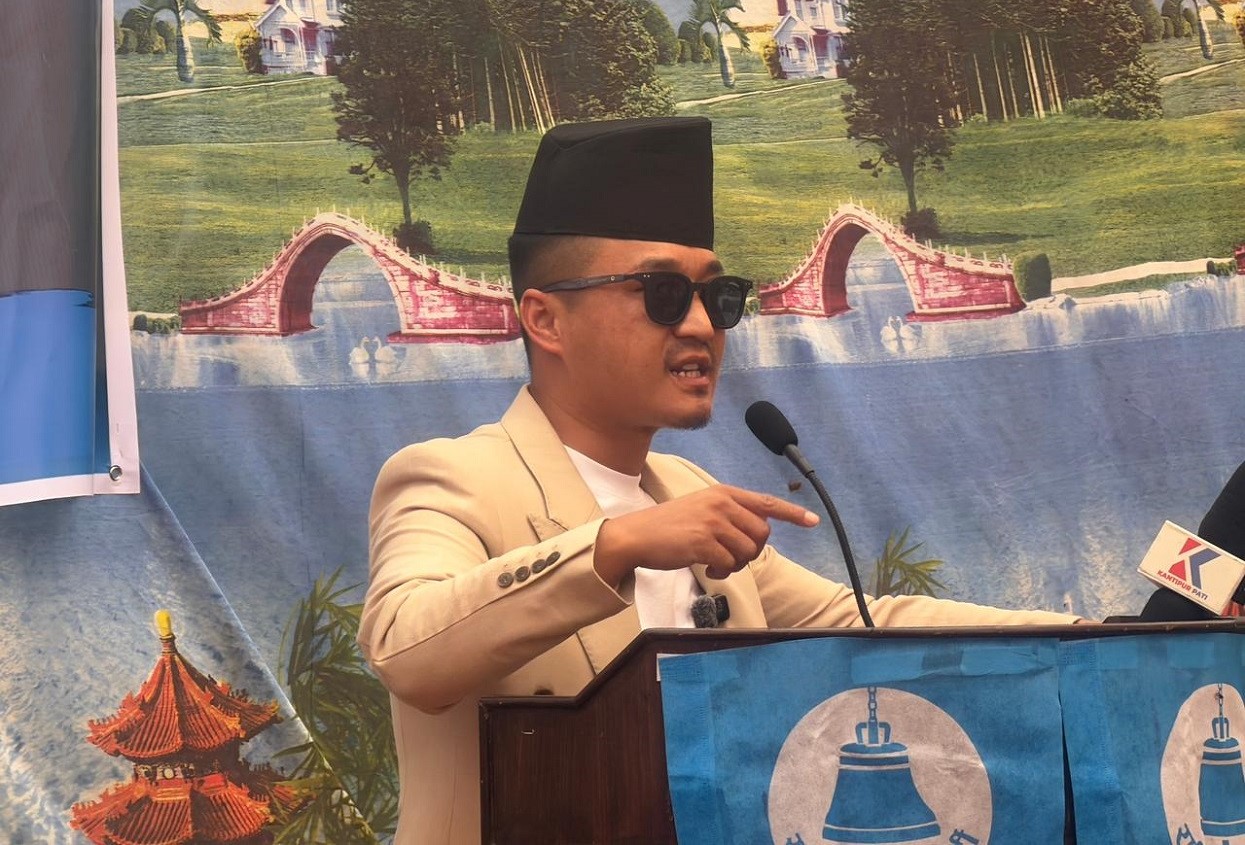
In a press conference held on Friday in Anamnagar, the delegates, speaking on behalf of the “Special Convention Demand Delegates,” released a statement citing Article 17 (2) of the party statute, insisting that there is no alternative to holding a special convention. The statement comes amid speculation that party general secretaries Gagan Thapa and Bishwprakash Sharma had postponed the regular convention to prepare for a special convention.
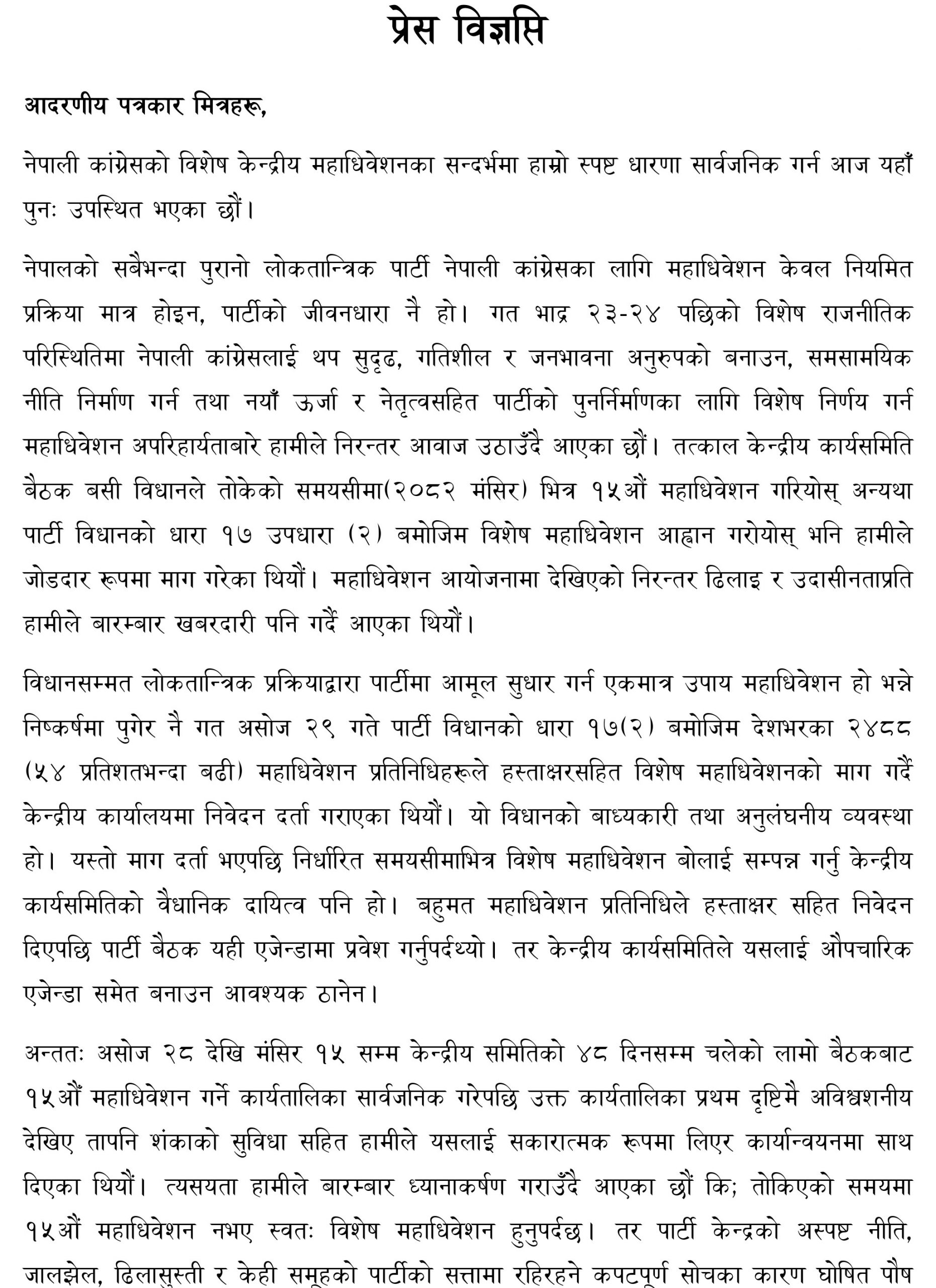
The statement sharply criticized the party leadership, accusing them of vague policies, manipulation, and deceitful tactics to prolong their hold on power. It further alleged that the ward conventions scheduled for Poush 16 were blocked and the schedule for the 15th General Convention has been left in limbo. The delegates recalled that the demand for a special convention was formally submitted on Asoj 29 with signatures from 2,488 delegates nationwide (over 54%), emphasizing: “If the 15th General Convention is not held on the scheduled date, a special convention must automatically take place. Now, Nepali Congress has no option other than a special convention.”
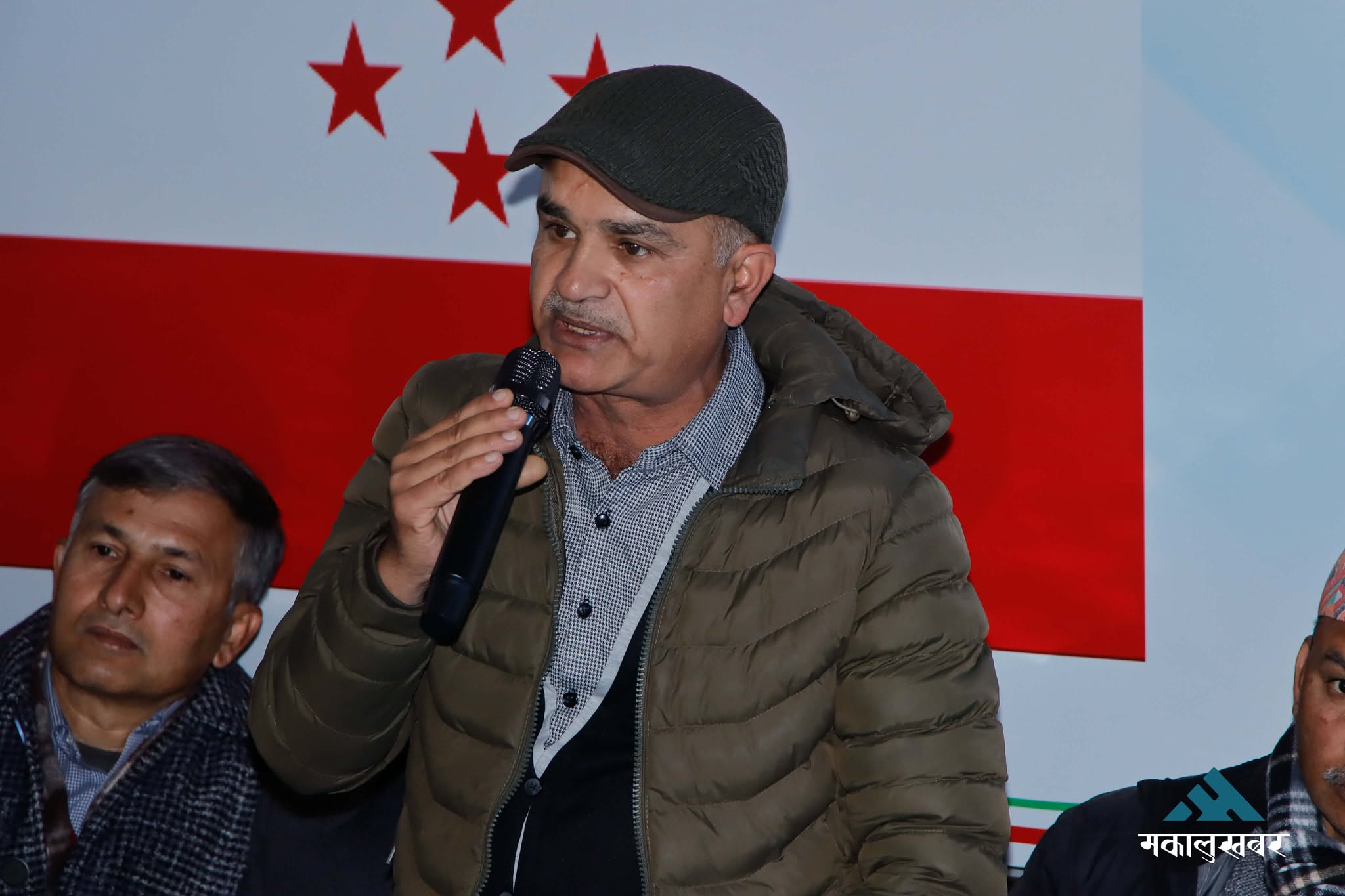
The delegates proposed the dates Poush 27 and 28 to comply with the party statute, which mandates that a special convention must be conducted within three months of the submission of the demand (by Poush 28, 2082). They warned the leadership, stating: “No one stands above the party statute. If its mandatory provisions are not respected, how can the moral ground of advocating constitutional and legal governance to the citizens remain intact?”