Mass Shatbeej offering at Pashupatinath on Balachaturdashi
According to religious belief, offering Shatbeej helps ancestors attain moksha, cross the mythical Baitarani River, and find eternal peace.

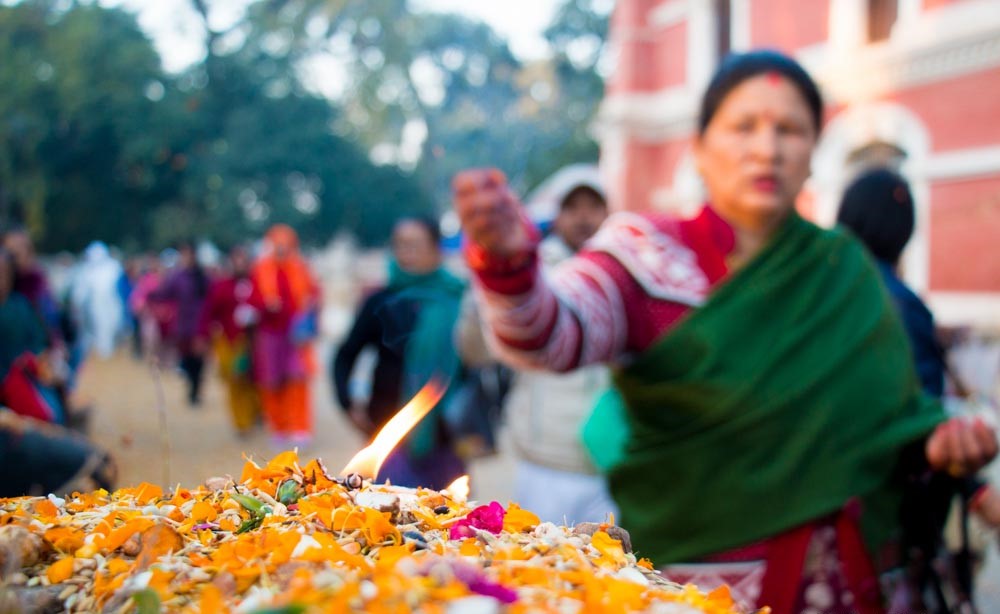
KATHMANDU: On the sacred occasion of Margashirsha Krishna Chaturdashi, thousands of devotees gathered at the Pashupatinath Temple and Shiva shrines across the country early this morning to perform the traditional Shatbeej offering, praying for the peace and salvation of their departed ancestors.
After an overnight vigil of deepdan (lamp offering), devotees reached Pashupatinath at dawn and scattered Shatbeej—a mixture of seven sacred grains: paddy, barley, wheat, chickpeas, sesame, finger millet, and maize—across holy sites including Mrigasthali and Sleshmantak Forest. As the sun rose, the grains spread across the sacred grounds created an ethereal scene filled with chants of “Om Namah Shivaya.”
According to religious belief, offering Shatbeej helps ancestors attain moksha, cross the mythical Baitarani River, and find eternal peace.
The Pashupati area witnessed a massive influx of devotees, with long queues forming since early morning.
Pilgrims from Kathmandu Valley and various parts of the country took part in deepdan, puja, and the Shatbeej rituals in memory of their deceased family members.
The Balachaturdashi festival holds special significance for ensuring the salvation of ancestors. Following tradition, devotees also performed rituals at Basuki and Guhyeshwari Temple.
The Pashupati Area Development Trust had arranged special management measures, deploying security personnel and volunteers to handle the large crowds.
However, religious scholars reminded the public that individuals who lost a parent within the past year—those still in the barshi (mourning period)—are traditionally advised not to perform deepdan or Shatbeej.