Last Kusunda family struggles to preserve heritage
Living in a small, single-room house on three aana of land gifted by neighbors in Tehra Kilo, he shares the home with his two sons, daughter-in-law, and grandchildren.

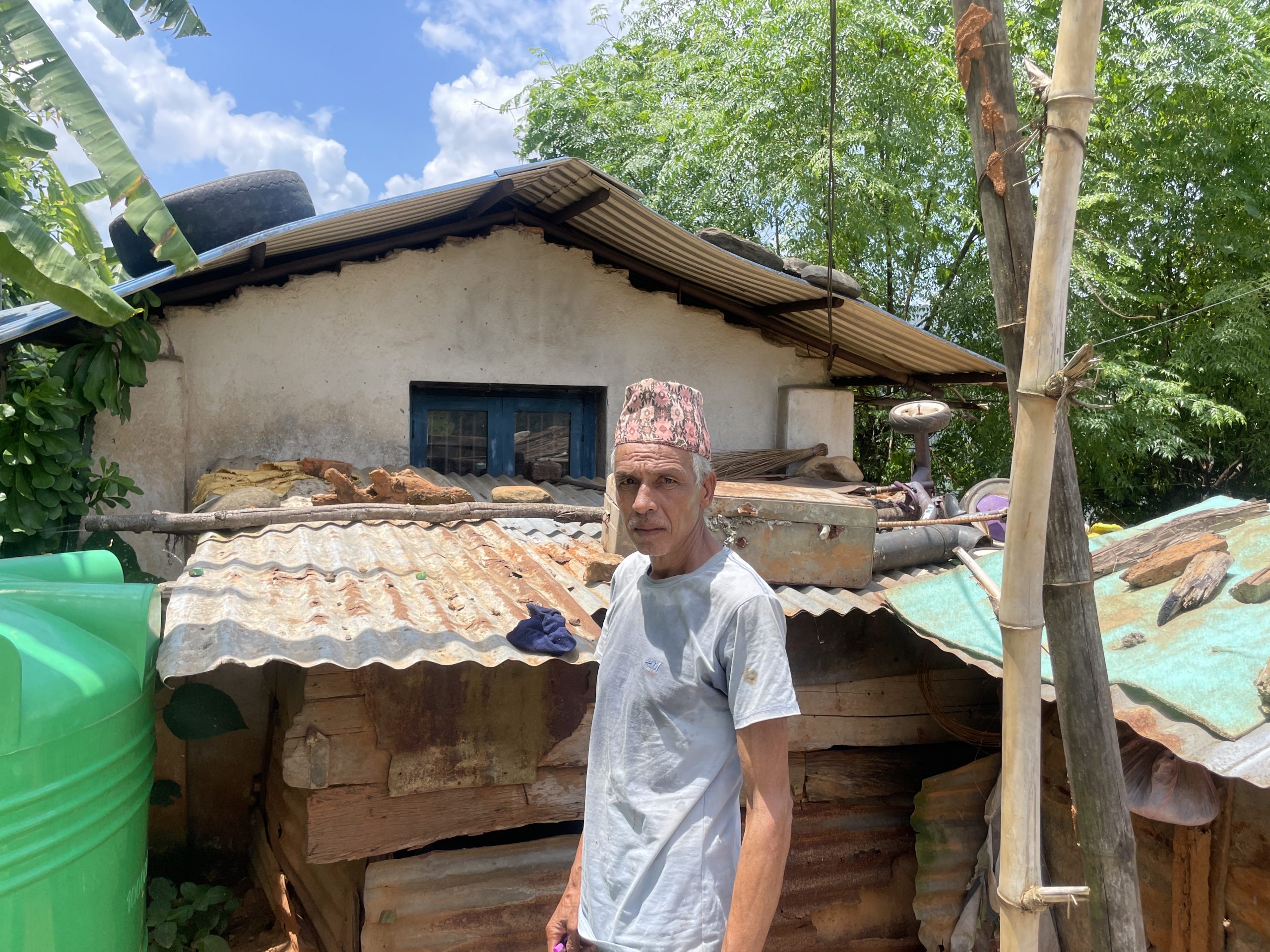
KATHMANDU: As the monsoon season nears its end, farmers in Gorkha district are busy planting paddy, millet, and harvesting maize. Yet, for 55-year-old Chet Bahadur Kusunda, there is little concern about crops or the fields.
His days are spent with his family, sharing the hard-earned food from daily labor, far removed from the anxieties of farming.
Chet Bahadur belongs to the Kusunda community, one of Nepal’s most endangered indigenous groups, and the only household of this community in Gorkha.
Living in a small, single-room house on three aana of land gifted by neighbors in Tehra Kilo, he shares the home with his two sons, daughter-in-law, and grandchildren.
“Not a patch of land is truly ours,” he says. “Even the small house built by the government and a few chickens are all we own. The chickens must be penned; otherwise, they wander onto other people’s land.”
According to the 2021 National Census, only 256 Kusundas remain in Nepal, eight of whom reside with Chet Bahadur’s family in Gorkha.
He moved to Tehrkilo from Palungtar as a child with his mother Sumitra Vanakirani Kusunda. “My father passed away when I was ten. I remember the hunger and struggle vividly. After my mother sold our belongings in Palungtar, we moved here. Life has always been unstable, shifting from one rented house to another,” he recalls.
The family settled in Tehrkilo to be close to his married sisters, who had wed into local Chhetri families.
Chet Bahadur himself married Kamala Gharti from nearby Pandhrakilo, and later traveled abroad twice to Qatar and once to Saudi Arabia in search of work.
The couple has three children—two sons and a daughter. Their eldest son drives a private vehicle, the daughter married into a local Magar family, and the youngest son is currently working abroad.
The small house the family currently occupies was built under the government’s public housing program.
Yet, Chet Bahadur admits that he has lost touch with his heritage. He neither speaks the Kusunda language nor practices traditional customs, nor has he met other Kusundas. Still, seeing a Kusunda model displayed at the Gorkha Durbar Museum brought him some happiness.
“I’ve heard that the remaining Kusundas speak their own language. We know nothing of it. If we had lived with our parents, we might have learned about our culture, religion, and traditions,” he says.
Despite this, the family continues to celebrate mainstream Hindu festivals alongside neighbors, observing Dashain, Tihar, and other local rituals, including their traditional Kulaayan worship, which requires the sacrifice of a ram.