Giribhundu Tea Estate defends legal land ownership amid court dispute
Giribhundu Tea Estate representatives expressed concerns over attempts to politicize and legalize a dispute regarding a land exchange deal that was executed according to legal provisions.

KATHMANDU: Representatives of the Giribhundu Tea Estate have asserted that the land acquired by the company cannot be considered as “granted by the government,” stating it was lawfully purchased under existing land regulations.
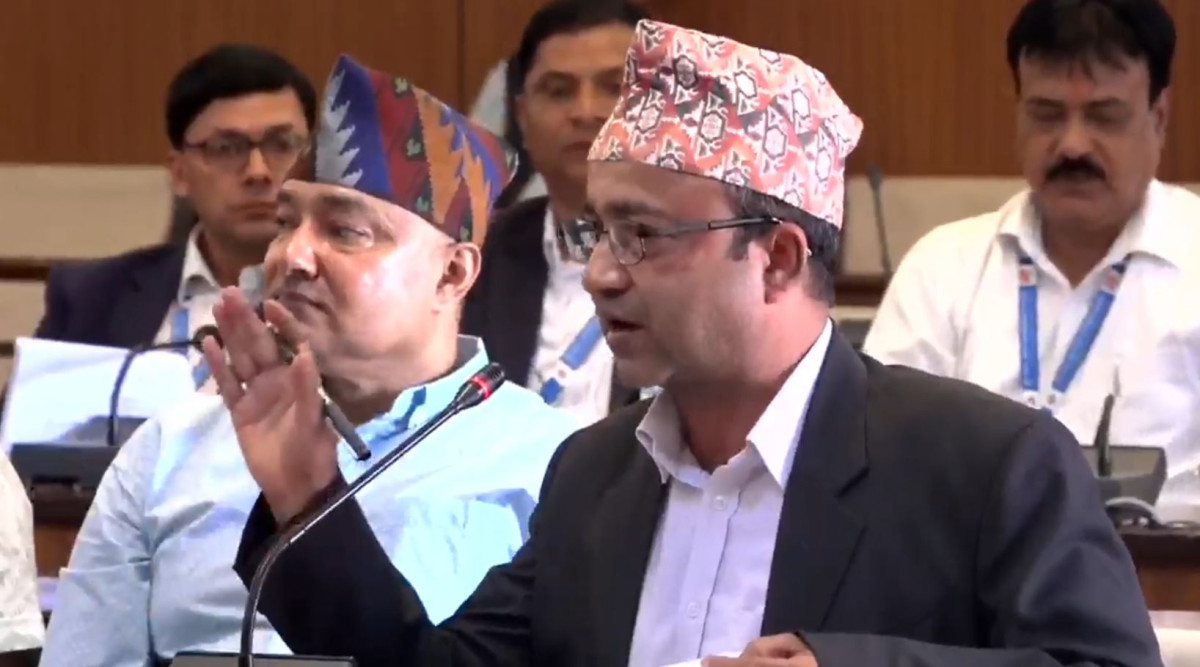
During a meeting of the Agriculture, Cooperatives, and Natural Resources Committee held today at Singha Durbar, Giribhundu Tea Estate representatives expressed concerns over attempts to politicize and legalize a dispute regarding a land exchange deal that was executed according to legal provisions.
Krishna Prasad Bhandari, a representative of the estate, explained that the land was acquired in line with Section 12, Sub-section (b) 2 of the Land Act, which exempts companies, industries, and organizations from ceiling limits when the land is purchased for purposes such as tea farming and production.
“The government, or any other entity, did not grant us this land. We purchased 353 bighas of land as private property for tea cultivation, strictly following the provisions under the Land Act,” Bhandari clarified. “There is no law that allows the government to just hand over land to a private company.”
According to Bhandari, the Land Act initially limited ownership to 10 bighas per individual or company. However, due to the impracticality of operating large-scale tea farming and production on such small land parcels, the government had issued a special order permitting companies to acquire up to 500 bighas. Giribhundu acquired its land under this very exemption.
Furthermore, Section 12 (ga) 2 of the Act provides for legal land swaps if justified with sufficient reasoning and approved by the government under specified conditions. Bhandari emphasized that the estate had followed all legal procedures and secured the necessary approvals for such a land exchange.
Despite this, the matter was soon challenged in the Supreme Court. Bhandari claimed the Constitutional Bench upheld the revised provision in principle but noted some technical faults in the Cabinet’s approval process. The court, he said, instructed that land swaps may proceed if specific conditions and corrections are applied.
“The law is clear,” Bhandari concluded. “If an estate cannot operate from a location due to genuine agricultural or environmental reasons, a legally justified land swap is allowed. We complied with that, yet the issue was unnecessarily dragged into legal controversy.”