Fertilizer crisis will persist, says Agriculture Minister Ramnath Adhikari
He revealed that although the Ministry of Agriculture was allocated a budget of Rs 27.95 billion last year, only around 450,000 metric tons of fertilizer were imported.

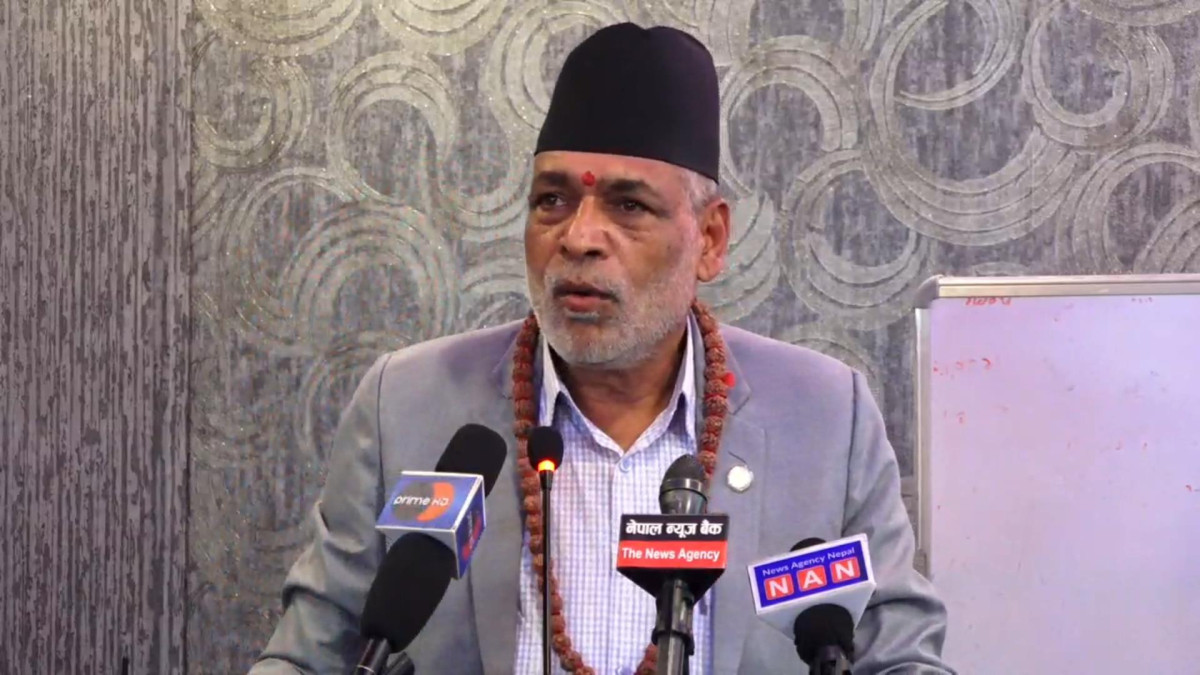
KATHMANDU: Agriculture and Livestock Development Minister Ramnath Adhikari has stated that the fertilizer crisis in Nepal is a recurring issue that is likely to continue.
Speaking at a program organized by the Nepal Dairy Association to promote the traditional dish Dahi Chiura (curd and beaten rice), Minister Adhikari highlighted the ongoing fertilizer shortage and expressed concern over the systemic challenges faced by farmers.
He revealed that although the Ministry of Agriculture was allocated a budget of Rs 27.95 billion last year, only around 450,000 metric tons of fertilizer were imported.
In contrast, the national demand stands between 1.1 million to 1.3 million metric tons.
He admitted that with only a quarter of the required fertilizer being supplied, it is impossible to ensure timely delivery to farmers.
“The crisis is structural. No matter who the minister is, the fertilizer shortage will remain unless we overcome the broader economic constraints,” said Adhikari.
He added that despite ambitious goals and a desire to implement reforms, the government’s limited financial capacity severely restricts action.
Minister Adhikari also lamented the long-standing issue of delayed payments to dairy farmers. “We’ve been consuming milk on credit for years but haven’t been able to pay farmers. That’s the reality. Still, we must stand among the people with a smile,” he remarked.
He urged all stakeholders to refrain from exploiting or neglecting farmers at the grassroots level. “Raising even a single cow or buffalo is a struggle. Let us not betray those working at the bottom. Regardless of our profession, we must not compromise our integrity.”
The minister further pointed out challenges related to cold storage facilities, agricultural insurance, and the broader crisis affecting the sector.
He stressed the need for structural reforms and collaborative efforts to improve the lives of Nepal’s farmers.