Everest Summit 2025 calls for global unity to protect himalayas
Minister Pandey underscored the need to safeguard Himalayan culture and ensure the mountains remain protected for future generations.

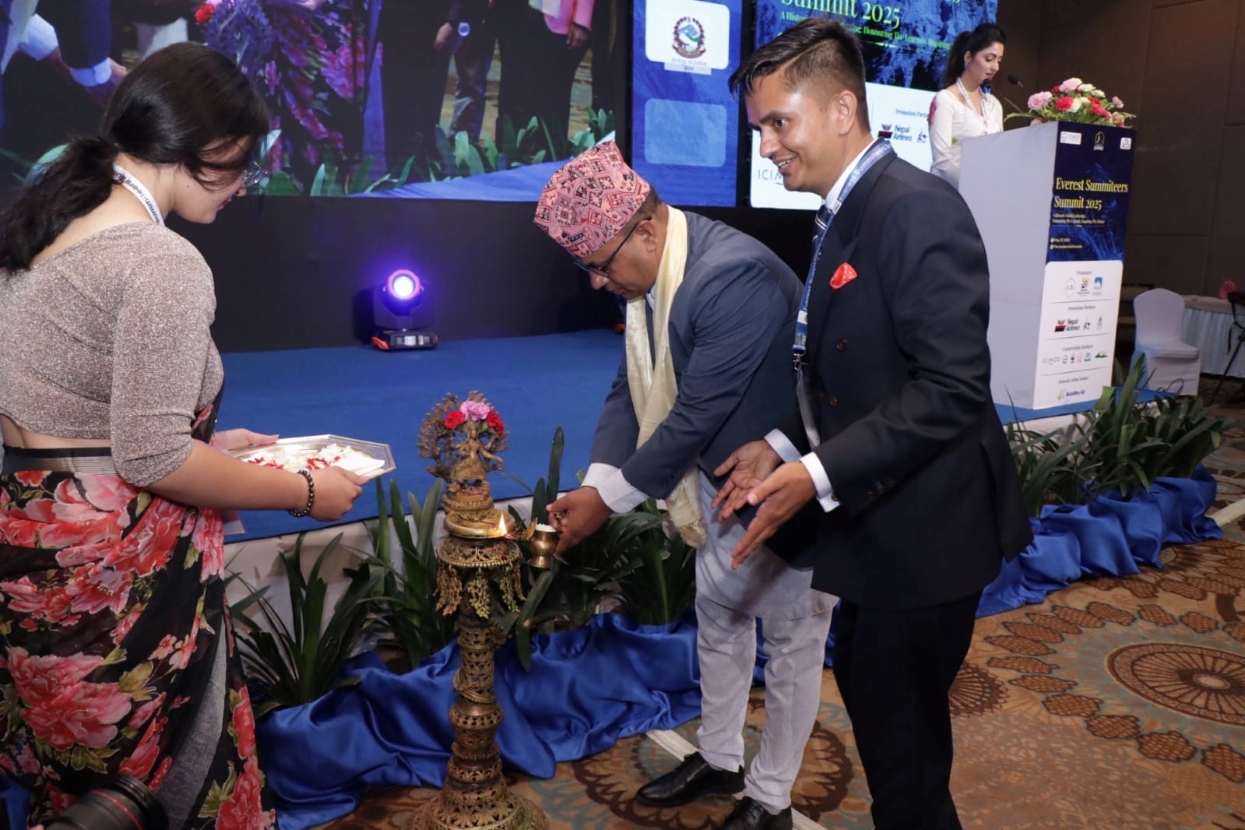
KATHMANDU: Minister for Culture, Tourism and Civil Aviation, Badri Prasad Pandey, has stressed that the preservation of the Himalayas is a collective responsibility of all humanity.
Inaugurating the International Everest Summiters Summit–2025 held today in Kathmandu, Minister Pandey underscored the need to safeguard Himalayan culture and ensure the mountains remain protected for future generations.
“We are not here merely to congratulate those who have reached the summit of the world, but to honor their courage, dedication, and resilience,” said Pandey, offering special recognition to the Sherpa community, guides, rescue teams, and all those who work tirelessly in the Himalayan region.
He noted that their contributions have made mountain expeditions safer, more meaningful, and environmentally conscious.
Highlighting the government’s efforts, the minister stated that infrastructure development, training, and environmental protection are national priorities for promoting mountaineering tourism.
He further affirmed the government’s commitment to improving the livelihoods and prosperity of local mountain communities.
Calling the Himalayas more than just geographical structures, Pandey described them as “bridges of civilization, culture, and coexistence,” adding, “These mountains are sacred, and preserving them is our shared duty.”
Addressing the threats posed by climate change and global warming, he said, “The time has come to protect our Himalayas with wisdom, care, and reverence.” He expressed hope that the summit would inspire global communities to renew their commitment to mountain preservation.
During the summit, several national and international climbers were honored for their achievements. Among them, Kancha Sherpa, the last surviving member of the first Everest expedition in 1953 alongside Sir Edmund Hillary, received the Lifetime Achievement Award. Notable climbers including Mingma Sherpa and Hari Bahadur Budha were also recognized.
Deepak Raj Joshi, CEO of the Nepal Tourism Board, remarked that mountaineering, especially climbing Mount Everest, significantly enhances Nepal’s identity as a premier destination for adventure tourism. Similarly, Member Secretary of the National Sports Council, Tanka Lal Ghising, expressed confidence that the summit would boost Nepal’s reputation as a hub for adventure tourism.
Dambar Parajuli, President of the Everest Summiteers Association, highlighted the summit’s relevance in promoting the pride and recognition of Everest climbers globally.
Organized for the first time in Kathmandu by Everest Alliance Nepal, the summit has brought together over 300 seasoned climbers from 25 countries, including India, China, the USA, Pakistan, the UK, Italy, Norway, Iran, Singapore, Australia, Lebanon, Morocco, and the UAE.
According to Everest Alliance President Sudarshan Nepal, the event aims to foster sustainable tourism, environmental conservation in the Himalayas, and uplift local mountain communities.
The summit provides a platform for mountaineering experts, policymakers, conservationists, tourism stakeholders, local communities, Sherpas, trekkers, and cultural representatives to engage in meaningful dialogue and international cooperation.
One of the key highlights of the summit is the gathering of Everest climbers from across the world to share inspiring stories, moments of struggle, and lessons learned from their journeys.
With the theme “Sagarmatha – Our Pride, Our Identity, Our Responsibility”, the summit calls global attention to the growing environmental threats to the Himalayas, the importance of responsible climbing practices, and the urgent need for international collaboration.
Organizers believe the event will play a vital role in positioning Nepal as a safe and sustainable mountaineering destination, advancing environmental awareness, and strengthening global mountaineering networks.