
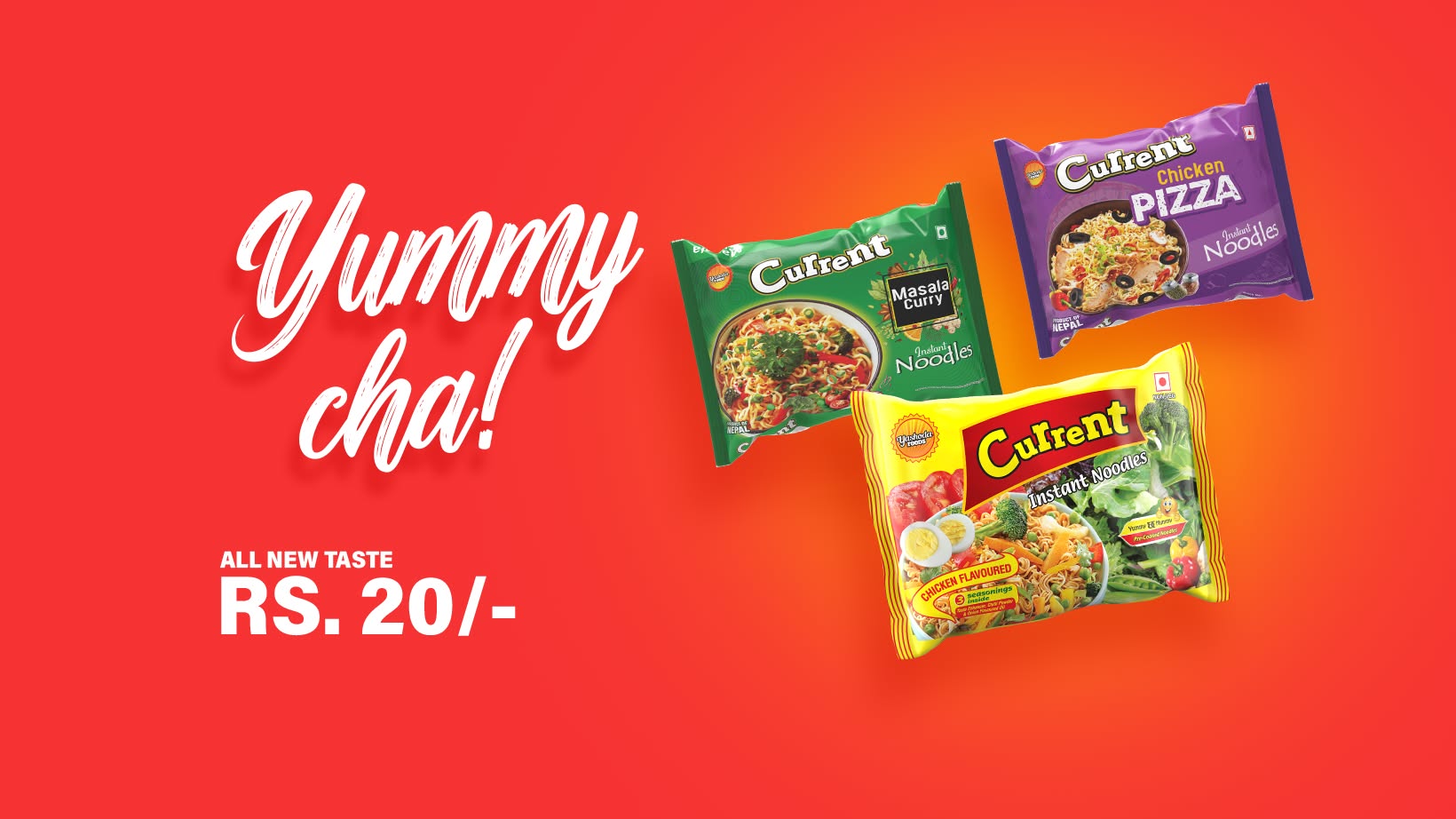
When Yashoda Foods launched the ‘Current’ brand on Baisakh 24, 2074, many dismissed it as just another noodle product.
Today, it stands among Nepal’s most iconic and consumer-friendly brands, a testament to quality, innovation, and national pride.
A Clear Mission from the Start
The idea behind Current was rooted in a simple but powerful vision: to create high-quality noodles that reflect authentic Nepali taste. Embracing the signature heat of akbare khursani (round chili), the brand set itself apart by offering a bold, fiery flavor that resonated deeply with local preferences.
This unique approach—infusing noodles with locally sourced chilies—redefined consumer expectations and built a loyal fanbase across all walks of life.
More Than a Snack: A Daily Essential
For many, Current noodles have become more than just a quick snack—they are part of their lifestyle. Krishna Yadav, a laborer from Biratnagar, shared how Current noodles became a staple during the brick kiln season. “We didn’t have time to cook elaborate meals,” he said. “But Current was quick, tasty, and filling. My family and I would just make soup with it—it was enough like a full meal.”
Although he initially found the noodles pricey, he later realized the value. “When you make soup, it satisfies your hunger like a proper meal. Now it’s my favorite snack,” he added.
Sabina Tamang, a 19-year-old student from Bhaktapur, describes Current as the definition of “spicy-delicious.” After trying it at a friend’s house, the chili kick stayed with her. “Now whenever I crave something spicy and flavorful, I go for Current. My whole family loves it,” she shared. Her personal favorite: the Double X variant.
In Nagarkot, Dil Maya Thing found that the snack was also a hit with the laborers working in her fields. “Instead of giving them traditional snacks like chiura or roti, I serve them Current noodles. They love it, and it’s easy for me to prepare too,” she explained.
These individuals are just a few examples among thousands who’ve made Current a part of their daily lives. It has energized laborers, satisfied students, and simplified the lives of homemakers—without compromising on taste or quality.
A Symbol of Nepali Taste and Self-Reliance
What many brands struggle to achieve over decades, Current has accomplished in just a few years. It is no longer just a noodle brand—it is a symbol of Nepal’s unique flavor and growing self-reliance.
At a time when foreign brands dominated the market, Current brought a homegrown product to the global stage. Today, it is exported to over two dozen countries, including the U.S., Australia, and India. This success is a powerful reminder that with the right mix of local ingredients, agricultural support, and vision, Nepal can create world-class products.
Economic Powerhouse
Yashoda Foods’ economic growth mirrors the brand’s rising popularity. In 2022, the company recorded a turnover of Rs 3.43 billion, which surged to over Rs 5.86 billion by 2024.
This growth is not just a commercial achievement but a reflection of trust and value created over time.
The company currently provides direct and indirect employment to over 15,000 Nepalis. It has also made significant contributions to agriculture. More than 30 hectares of land are dedicated to cultivating akbare khursani, with assured market guarantees for farmers. Around 10,000 farmers across five districts are now part of Current’s supply chain.
Unused land in Makwanpur has also been brought under chili cultivation, further promoting agricultural productivity. The company claims that the health benefits of akbare khursani, retained in the noodles, contribute to Current’s appeal.

A Complete Package: Taste, Employment, and Impact
Current is not just a product—it’s a movement that blends local flavor with global aspirations. From supporting farmers and creating jobs to satisfying consumers with a unique and memorable taste, the brand exemplifies what’s possible when local innovation meets national pride.
In just a few years, Current has redefined the noodle market in Nepal and beyond. It is a story of transformation—of taste, livelihoods, and economic empowerment. And above all, it is a reminder that Nepali soil, skill, and spirit can conquer global markets.