Buddha Air’s Kathmandu-Bharatpur flight operating as per regulations
Only after completing all mandatory safety checks and receiving CAAN’s clearance did Buddha Air begin regular operations on the route.

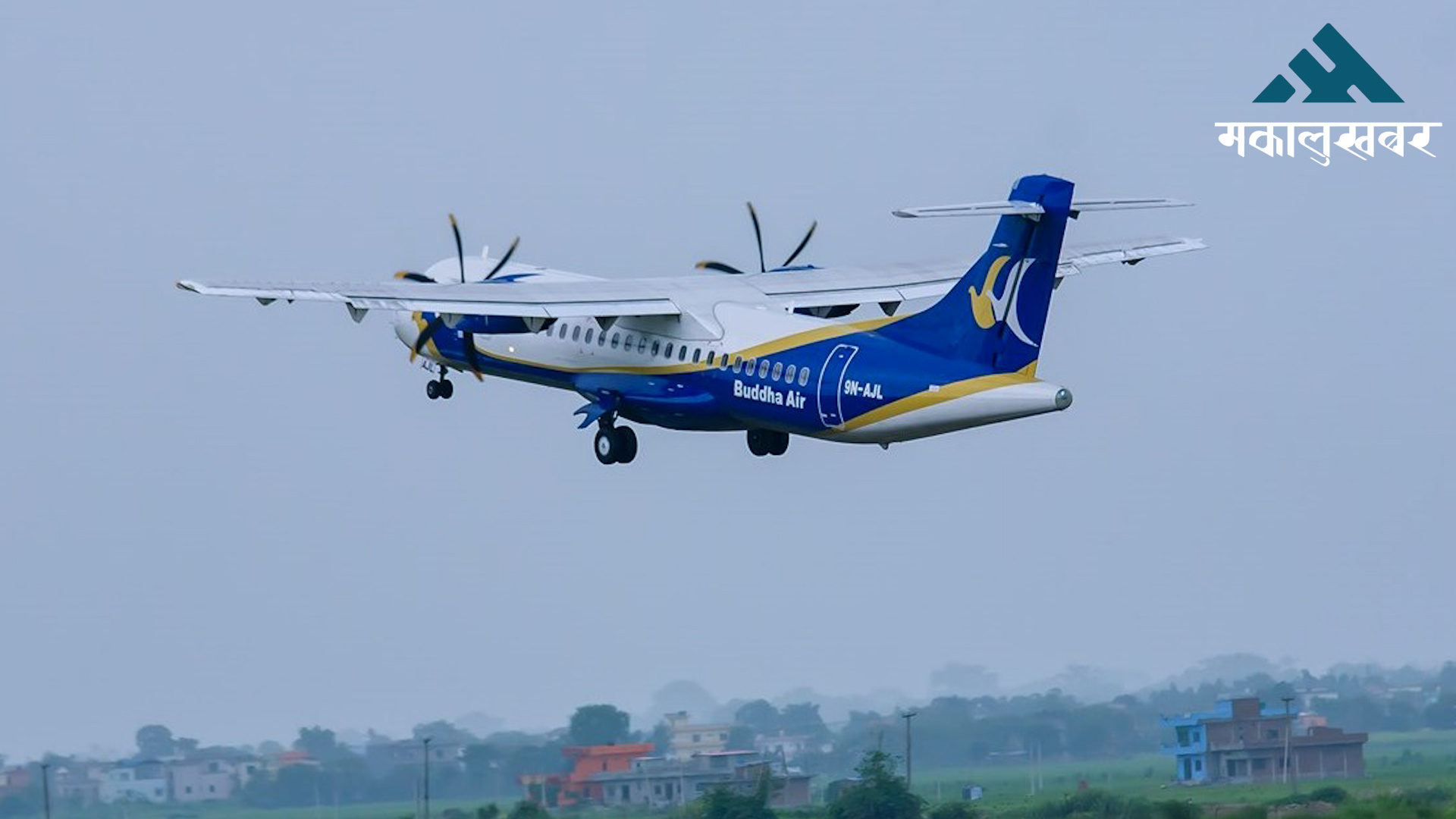
KATHMANDU: Nepal’s leading domestic airline, Buddha Air, has successfully conducted a test flight of its 72-seat ATR-72 aircraft on the Kathmandu–Bharatpur route on Jestha 8 (May 22) paving the way for regular commercial operations.
The test flight was carried out in the presence of senior officials from the Civil Aviation Authority of Nepal (CAAN) and was followed by technical evaluation and regulatory approval.
Only after completing all mandatory safety checks and receiving CAAN’s clearance did Buddha Air begin regular operations on the route.
The airline has strongly refuted claims circulating on social media alleging that passenger safety was compromised or that flights were launched without proper authorization.
Buddha Air stated that such allegations are misleading and baseless, emphasizing that no aircraft or route is approved for commercial operation without CAAN-mandated test flights and compliance with strict safety standards.
“Any new aircraft type or route requires a compulsory test flight approved by CAAN. In the case of Bharatpur, the test flight was successfully completed on Jestha 8 with high-level CAAN officials present,” a Buddha Air official said, reaffirming the airline’s commitment to flight safety.
Upgrade from ATR-42 to ATR-72
Buddha Air had been operating the 42-seat ATR-42 aircraft on the Bharatpur route for years. With rising passenger demand, improved scheduling efficiency, and service enhancement in mind, the airline upgraded to the ATR-72, which belongs to the same aircraft family.
Aviation experts note that the ATR-72 and ATR-42 share similar technical design, operational procedures, and safety systems, making claims that a larger aircraft inherently increases risk technically unfounded.
Enhanced Precautions at Bharatpur Airport
Although Bharatpur Airport is classified as a sensitive airport, Buddha Air stated that it operates flights there with additional caution.
Measures include deploying experienced captains, continuous weather monitoring, strict load and balance management, and full adherence to all safety protocols.
Globally, adjusting passenger numbers based on weather conditions, runway status, and aircraft limitations is a standard aviation practice.
Buddha Air confirmed that it follows the same internationally accepted safety procedures.
Call for Stronger Preventive Aviation Safety
Stakeholders in Nepal’s aviation sector stress that safety reforms should focus not only on post-accident responses but also on preventive risk assessment and stronger regulation.
They emphasize the need for continuous coordination, monitoring, and improvement between CAAN and airline operators to further strengthen aviation safety.
Bharatpur Airport Upgrade Stalls
Meanwhile, the upgrading of Bharatpur Airport remains sluggish. Despite repeated federal budget allocations to extend the runway and install infrastructure for night operations, progress has been minimal.
Plans to relocate the Nepali Army’s horse breeding center at Shaktikhor, located near the airport and considered crucial for expansion, have also yet to be implemented.
Despite being only about 30 minutes from Hetauda, the capital of Bagmati Province, the airport has failed to modernize in line with current needs.
During winter, flight operations are often forced to conclude as early as 4:00 PM, limiting connectivity and efficiency.