Brick Kiln laborers & their mules: Lives of hard work, dust, and neglect (photos)
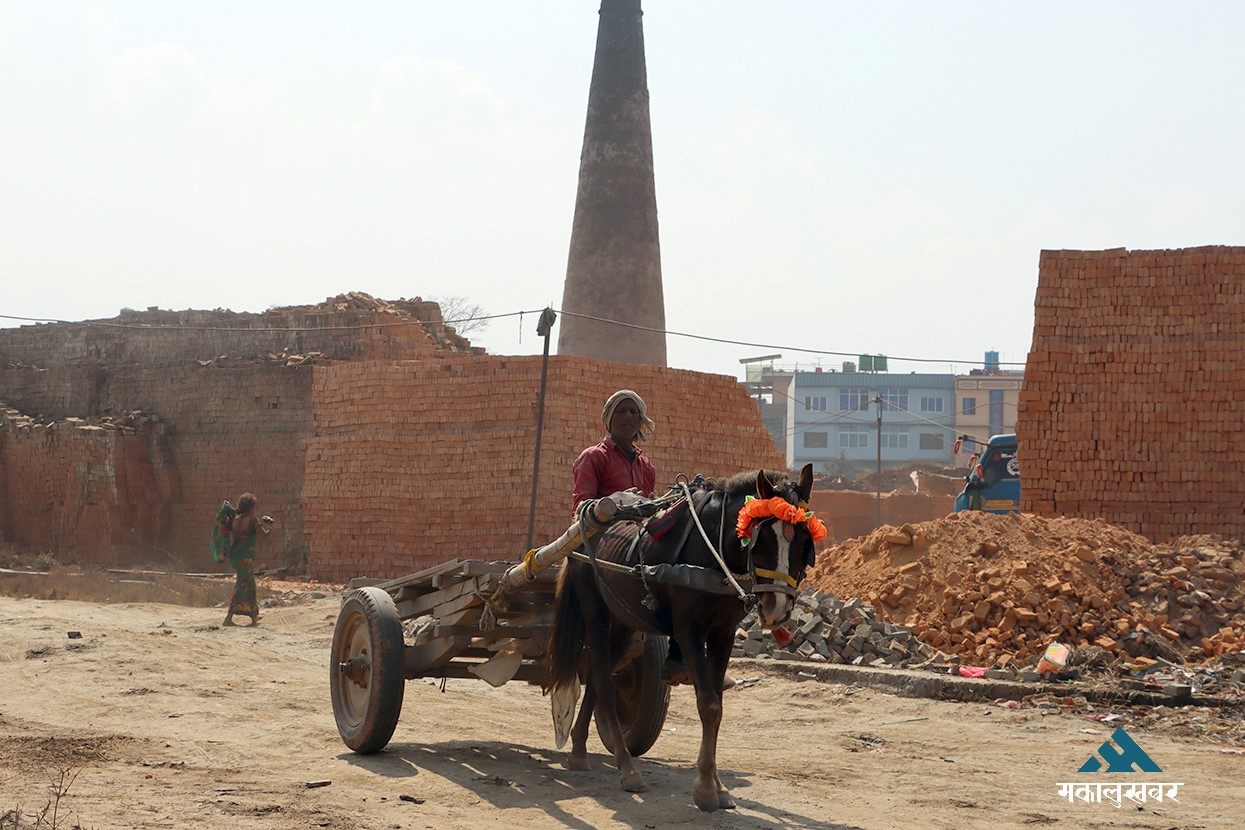
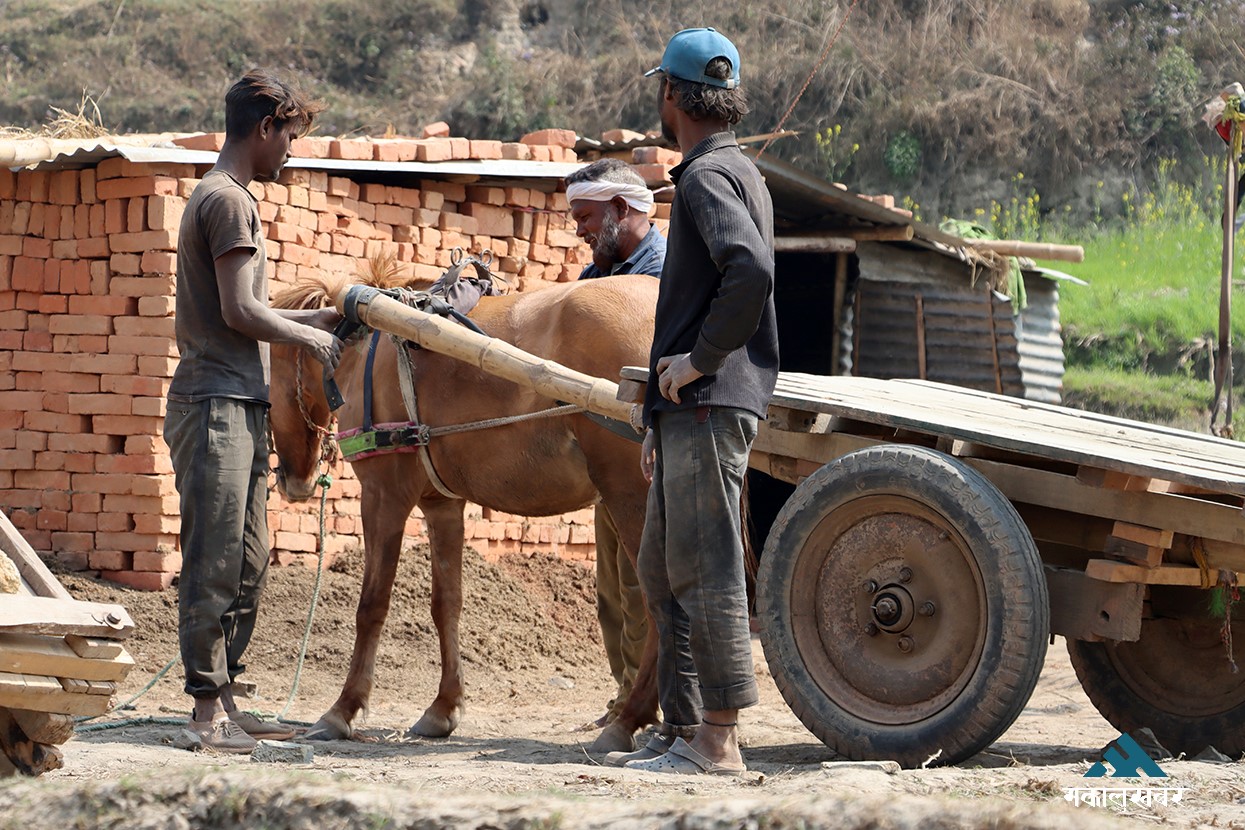
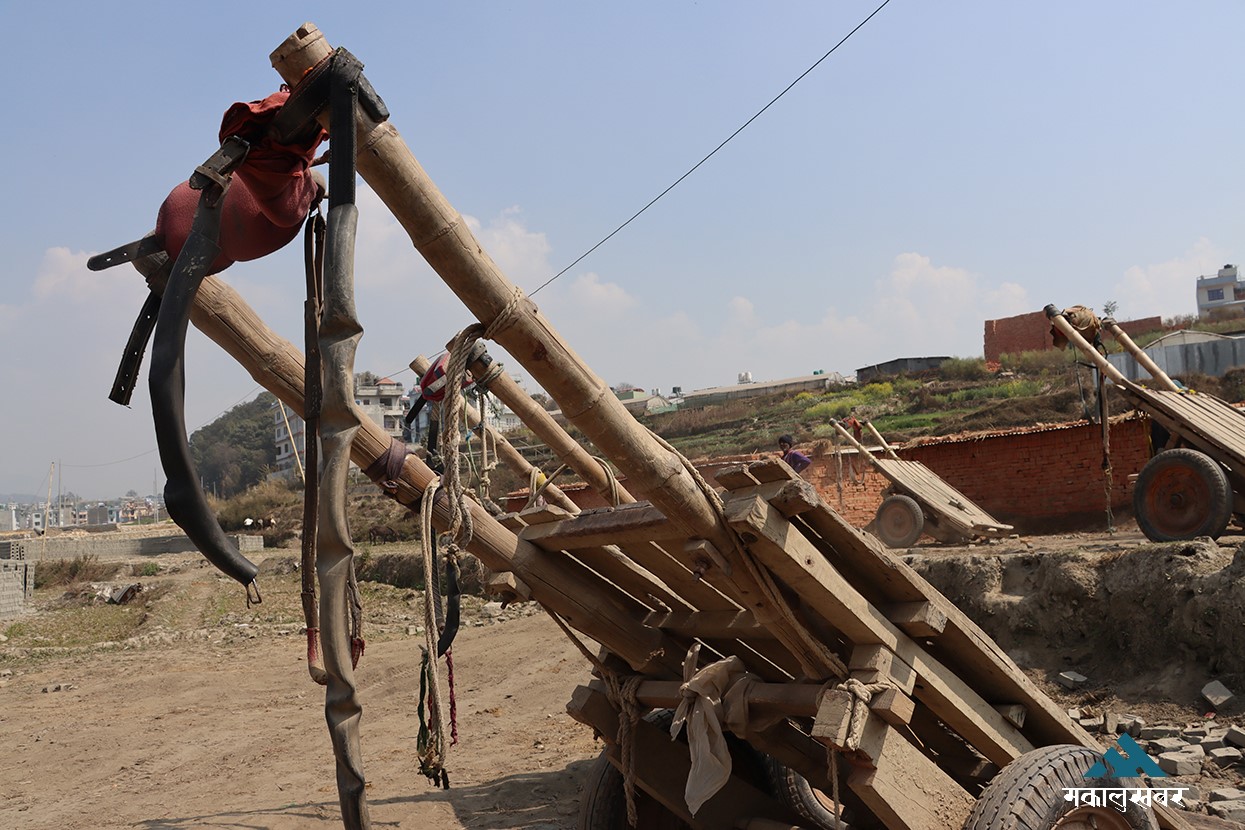
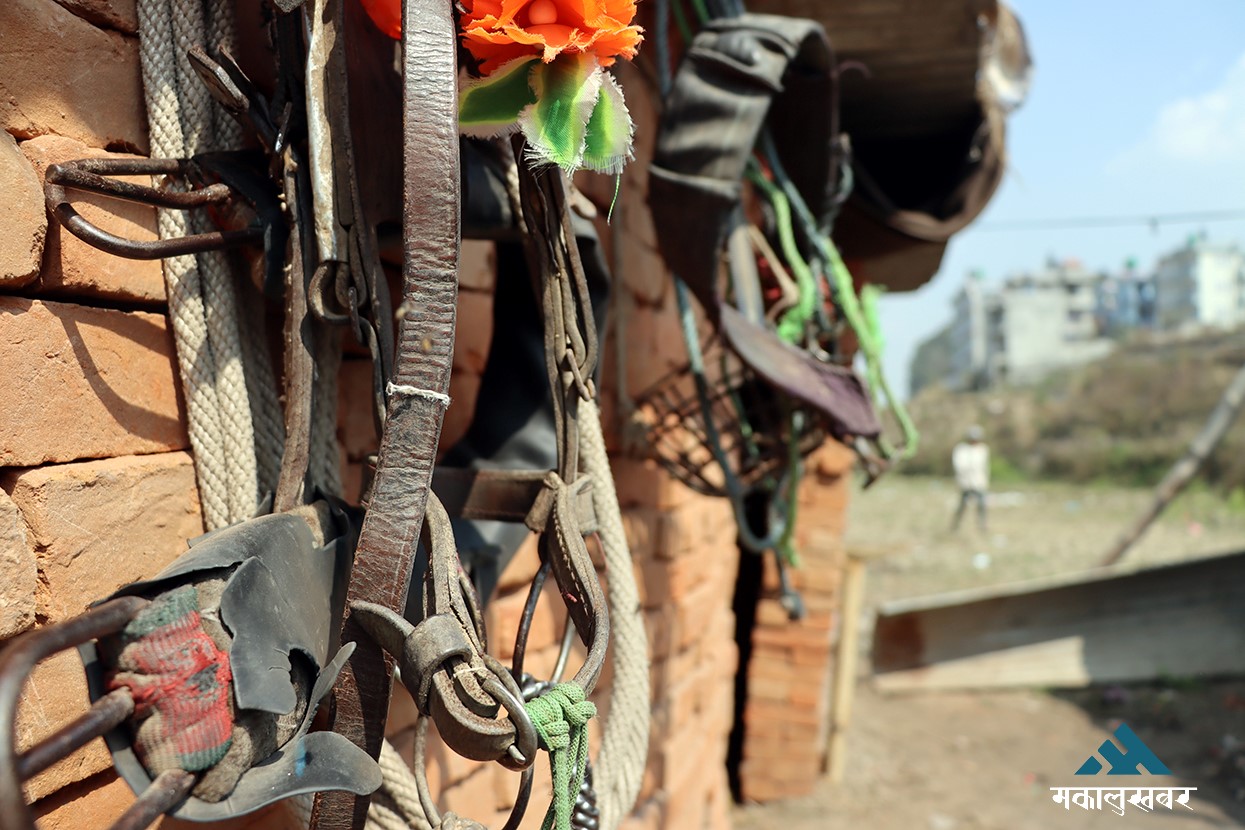
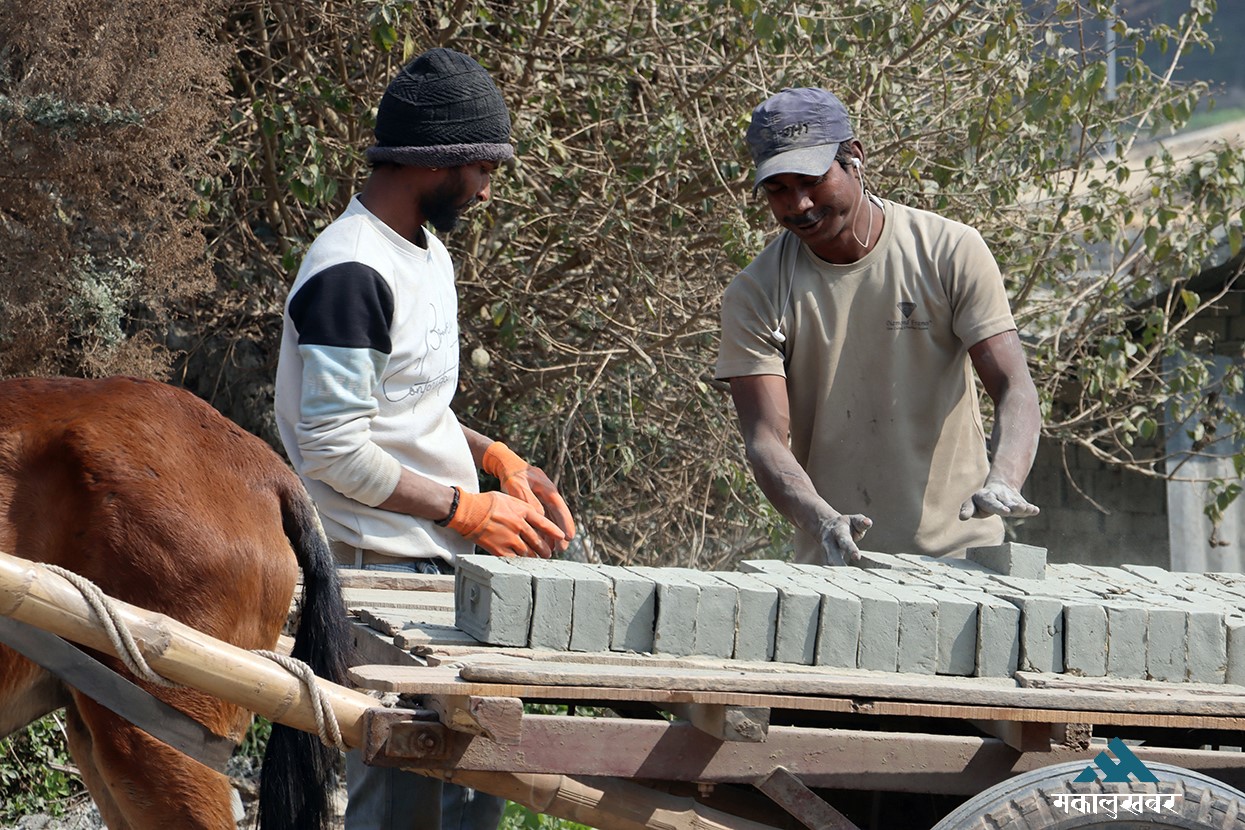
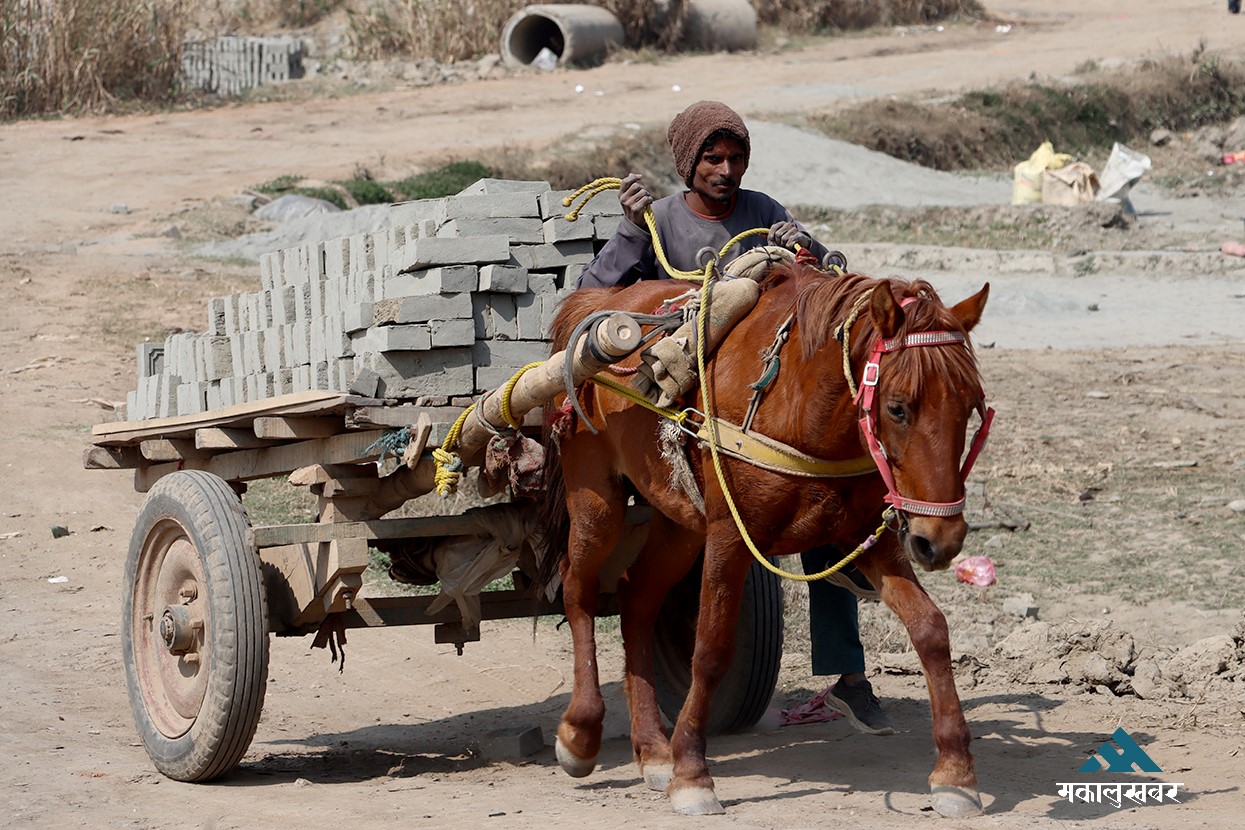
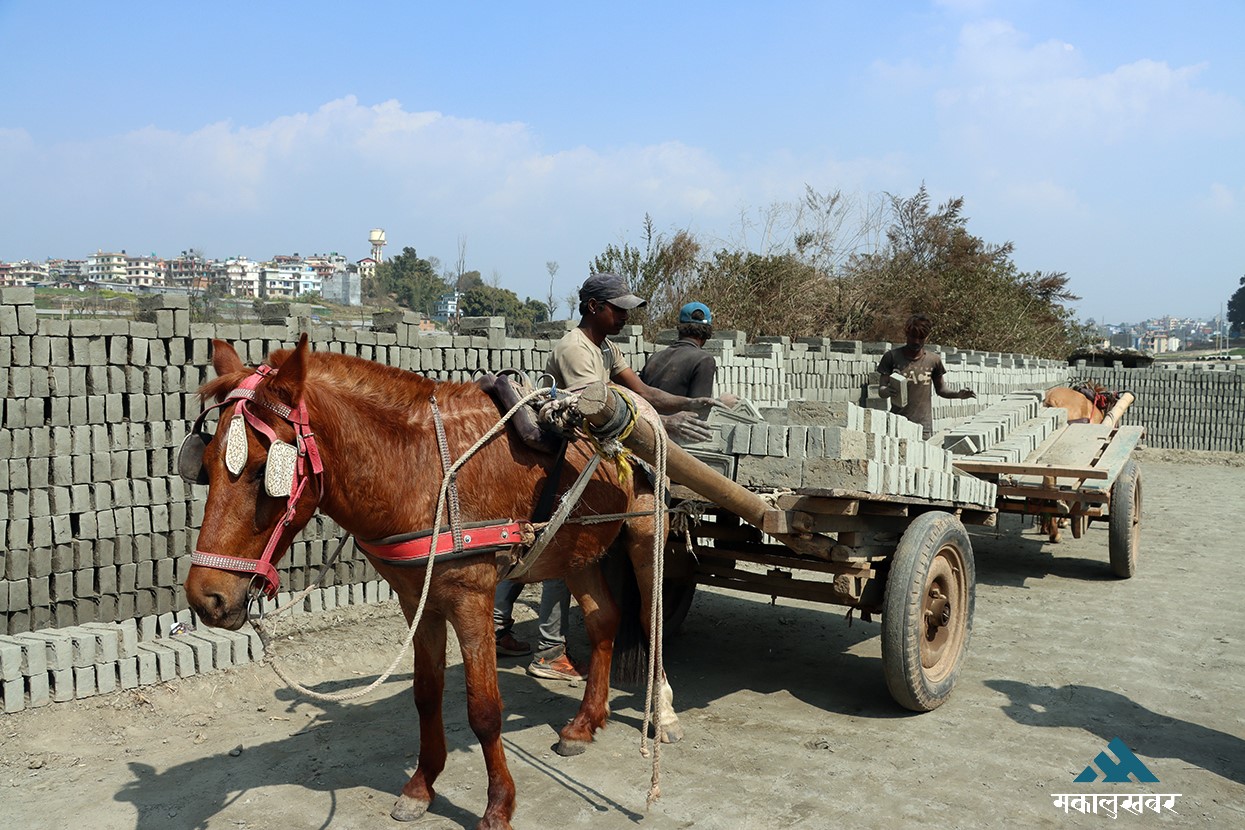
Each mule is guided by one or two handlers, carefully carrying fragile bricks stacked on their backs from the kiln yard to the chimneys, where the bricks are unloaded in heavy heaps.

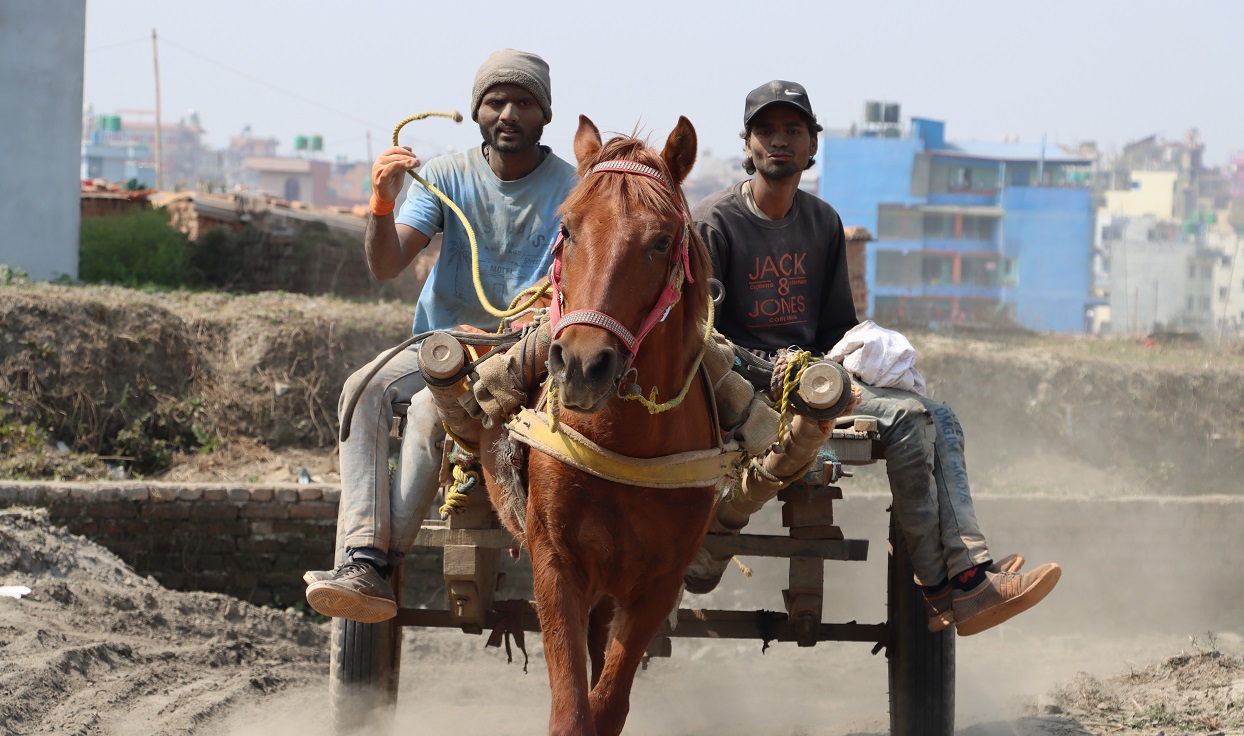
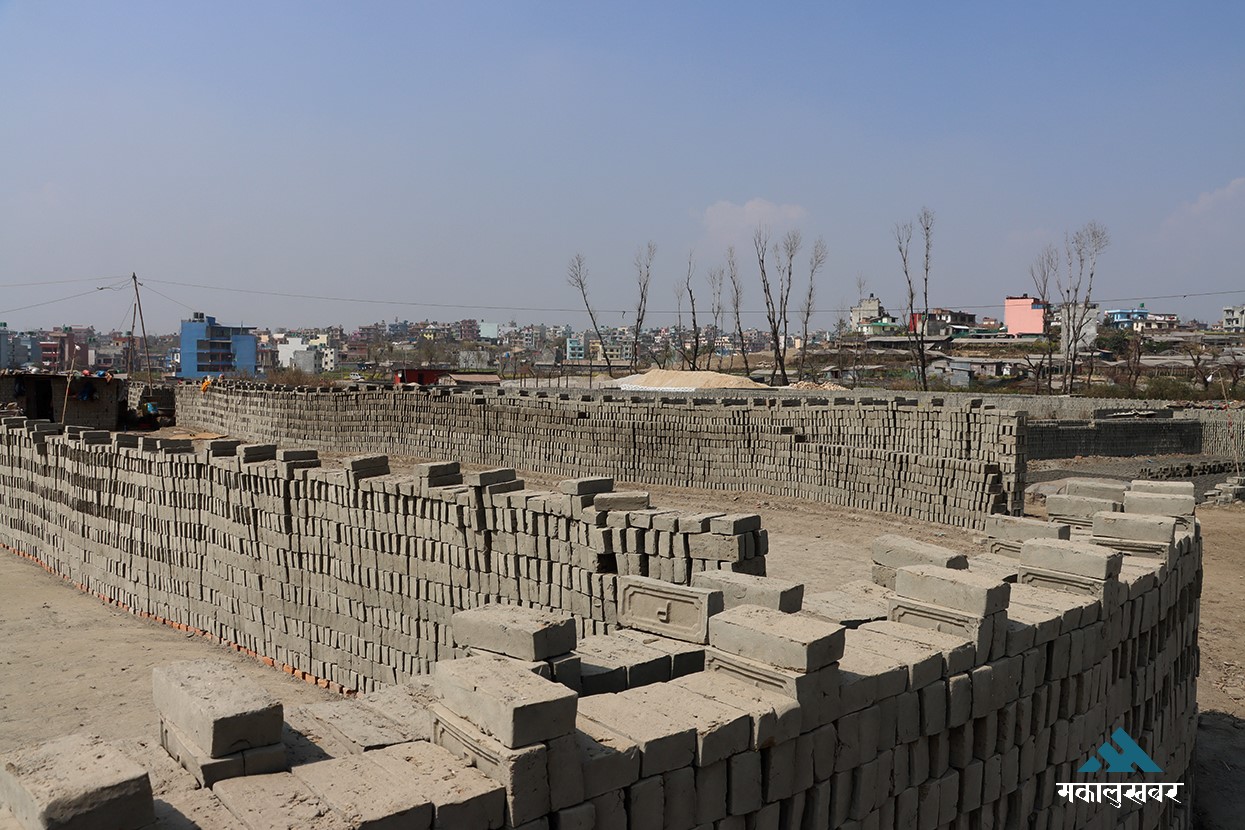
BHAKTAPUR, Duwakot: From early morning around 8 a.m., a melodic clanging fills the air at a local brick kiln—not from temple bells, but from small bells tied around the necks of mules.
Mixed with the soft whistles of the wind comes another persistent sound: “Hut! Hut!”—the commands of the mule handlers driving their animals forward.
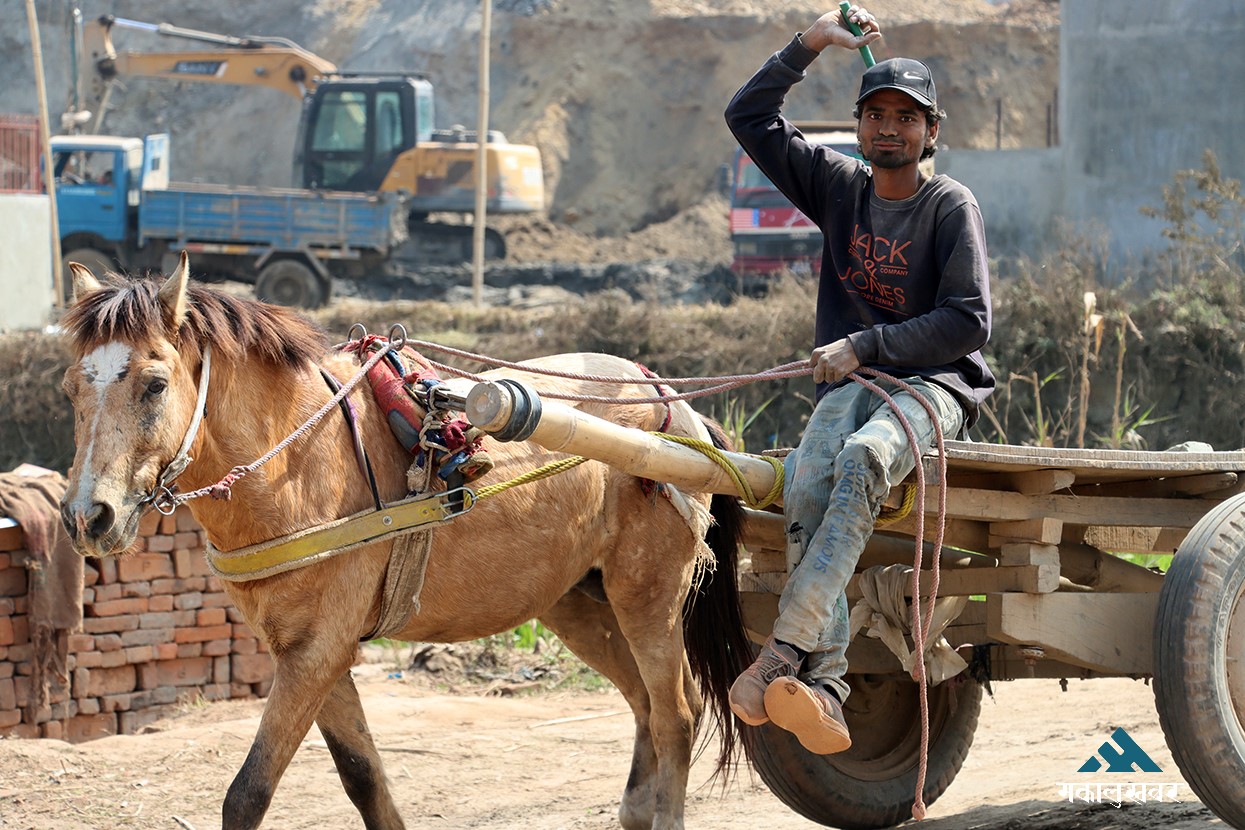
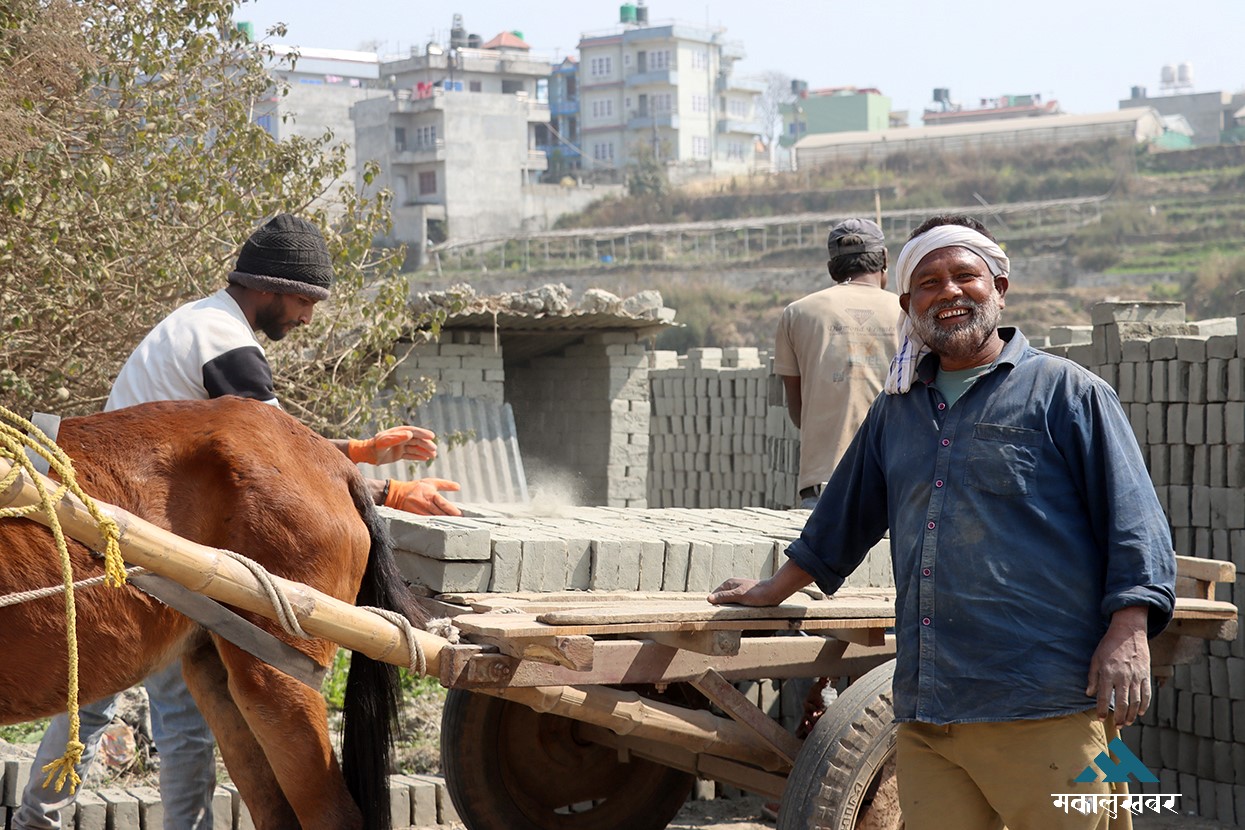
At this kiln, 65-year-old Ramzan Pathan from Banke owns 12 horses and 27 mules.
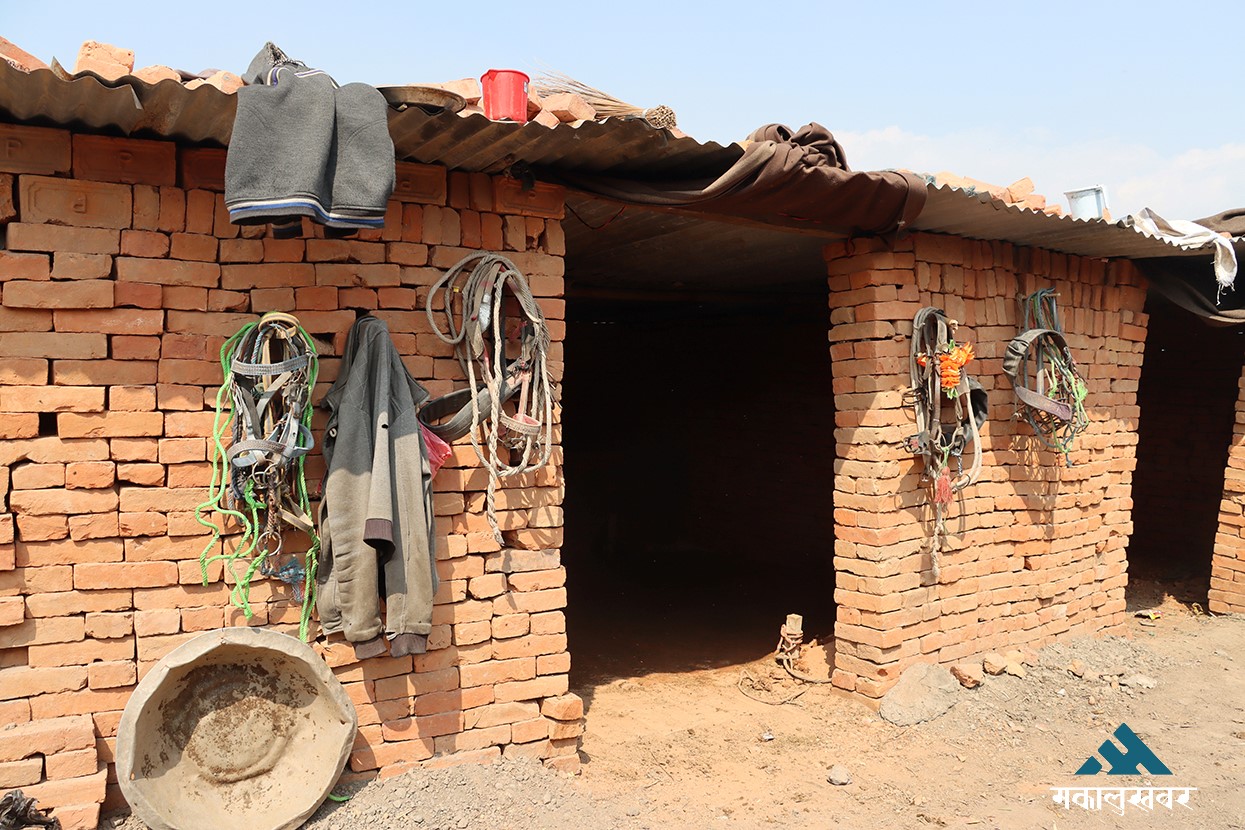
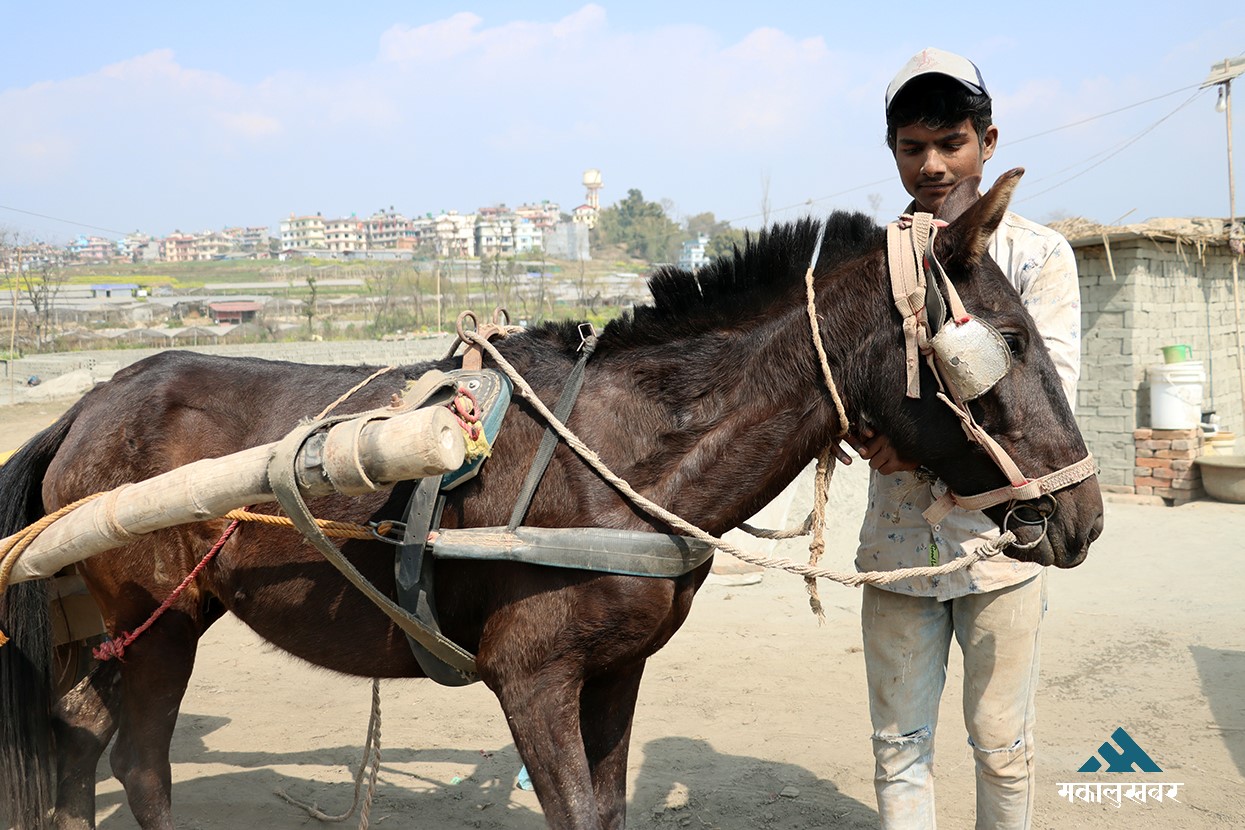
Having worked in this trade for decades, he treats his animals like family, giving them affectionate names such as Raja, Bete, Kallu, Adiyal, Rani, and Kajal.
Each mule is guided by one or two handlers, carefully carrying fragile bricks stacked on their backs from the kiln yard to the chimneys, where the bricks are unloaded in heavy heaps.
The cycle continues throughout the day: the rhythmic bell chimes, the repeated “Hut! Hut!” commands, and the dusty environment surrounding the workers’ labor.
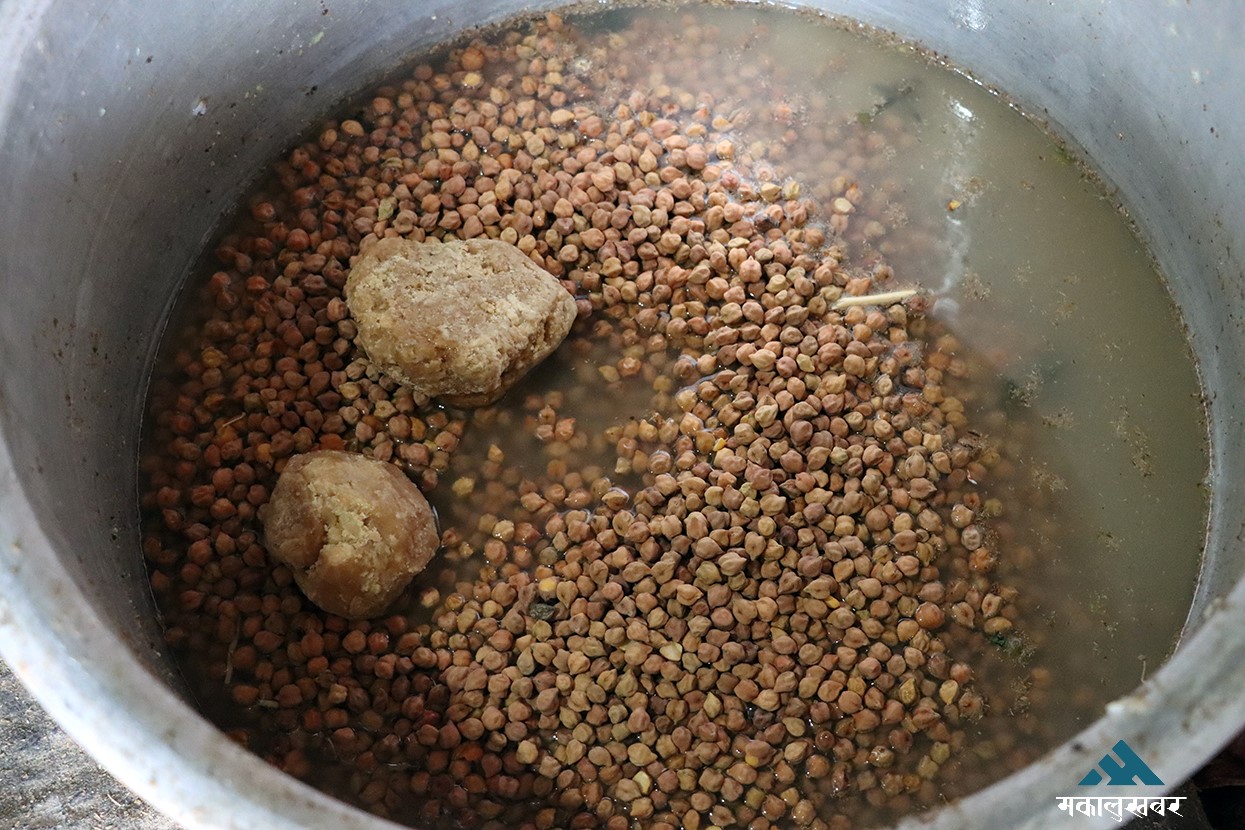
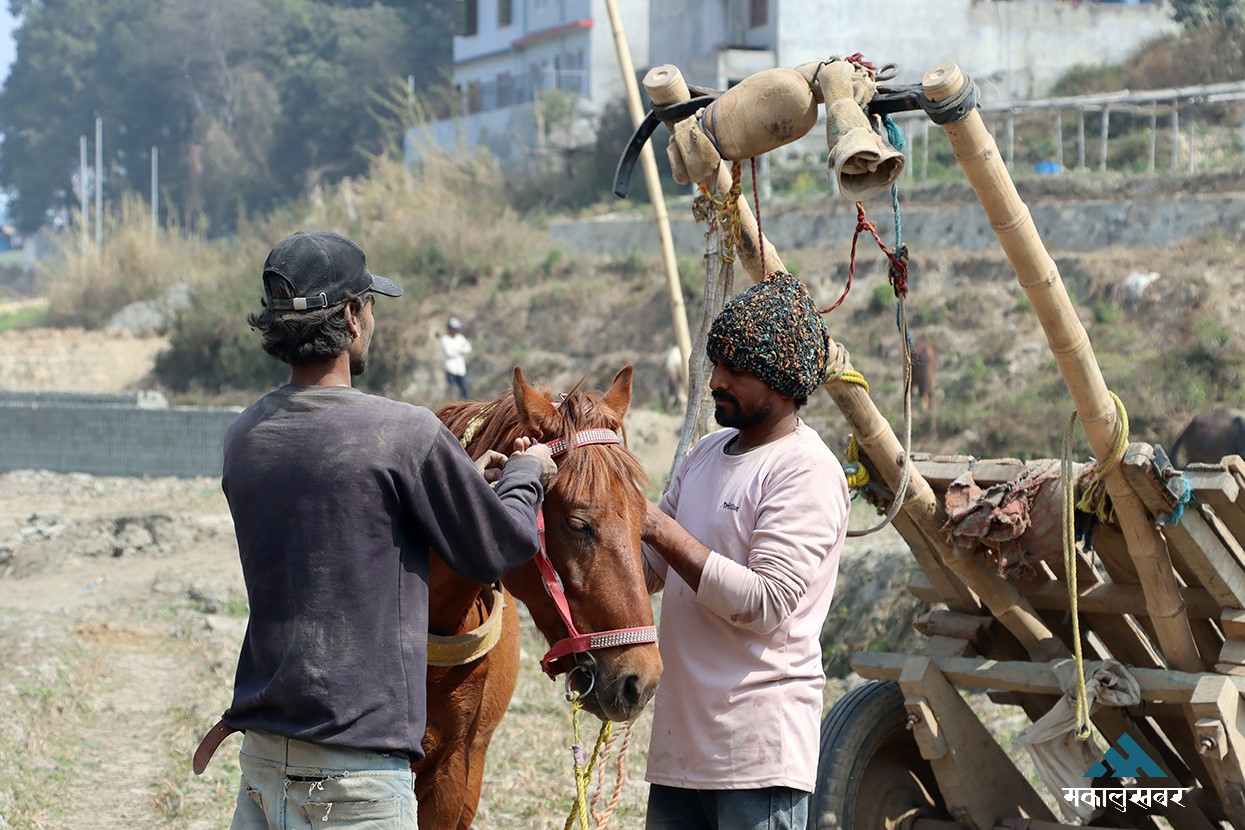
Despite the demanding work, Pathan ensures his animals are well cared for. “They rest on Saturdays. They eat chickpeas, cashews, straw, and sugar. We mix it all and feed them,” he explains. He even bought a nearby field of green wheat for Rs 3,000 to feed his mules, believing that the greens combined with other foods make them strong and healthy.
“The more we work, the more we earn. Some days we make Rs 1,000–2,000, other days up to Rs 5,000,” Pathan adds.
Similarly, Murad Ali, 52, from Nepalgunj, has also been in the ancestral trade of mule handling for 15–16 years.
His group has 11 mules and 22 handlers, each mule carrying around 1,000 bricks for which the workers earn Rs 500. After the brick season ends, Ali transports the mules to a cement store in Nepalgunj to carry loads there.
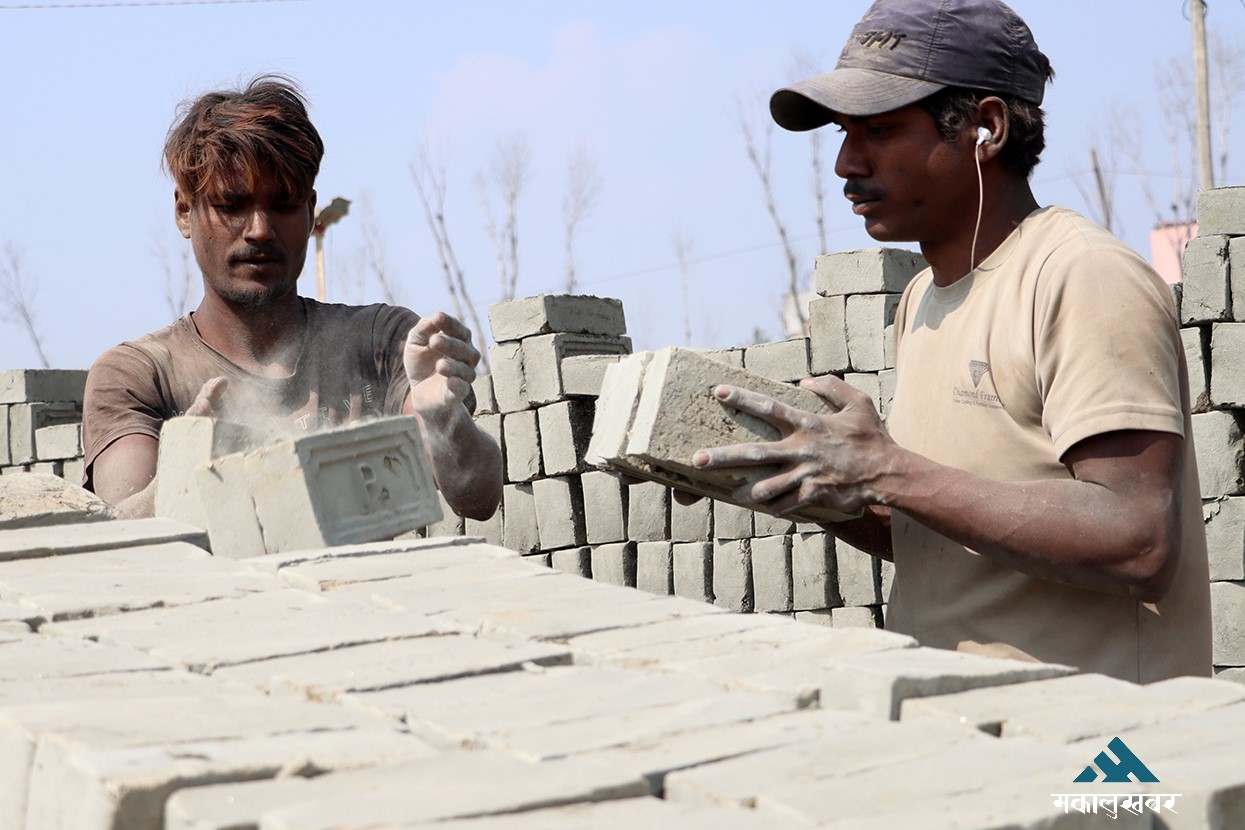
Lives Stuck Between Bricks and Basics
Many young laborers who migrate from Nepalgunj to work at brick kilns struggle even with the language; some cannot speak or understand Nepali and rely heavily on the guidance of experienced supervisors like Pathan.
Despite this, the workers’ knowledge of civic matters is limited. Asked about the upcoming House of Representatives election on March 5, Pathan replied candidly, “What difference does it make to us? Things that cost Rs 10 before the election still cost the same afterward. Big leaders just fill their stomachs. We fill ours only after working.”
He urges the government to provide financial support for mule care and to supply essential rations such as rice and lentils for workers.
While the mules receive careful attention and care, the lives of these human laborers remain largely neglected.
Access to education, healthcare, and basic rights continues to be distant dreams—they remain tied to survival, their lives revolving around rice and lentils.
As the mules are nurtured to stay strong, so too should the state ensure that the laborers’ lives are safe, secure, and dignified.
Photos:
-Tenzing Dolma Tamang