Bollywood icon Dharmendra dies at 89
His family has now reached Pawan Hans Aryaghat in Mumbai to perform his final rites.

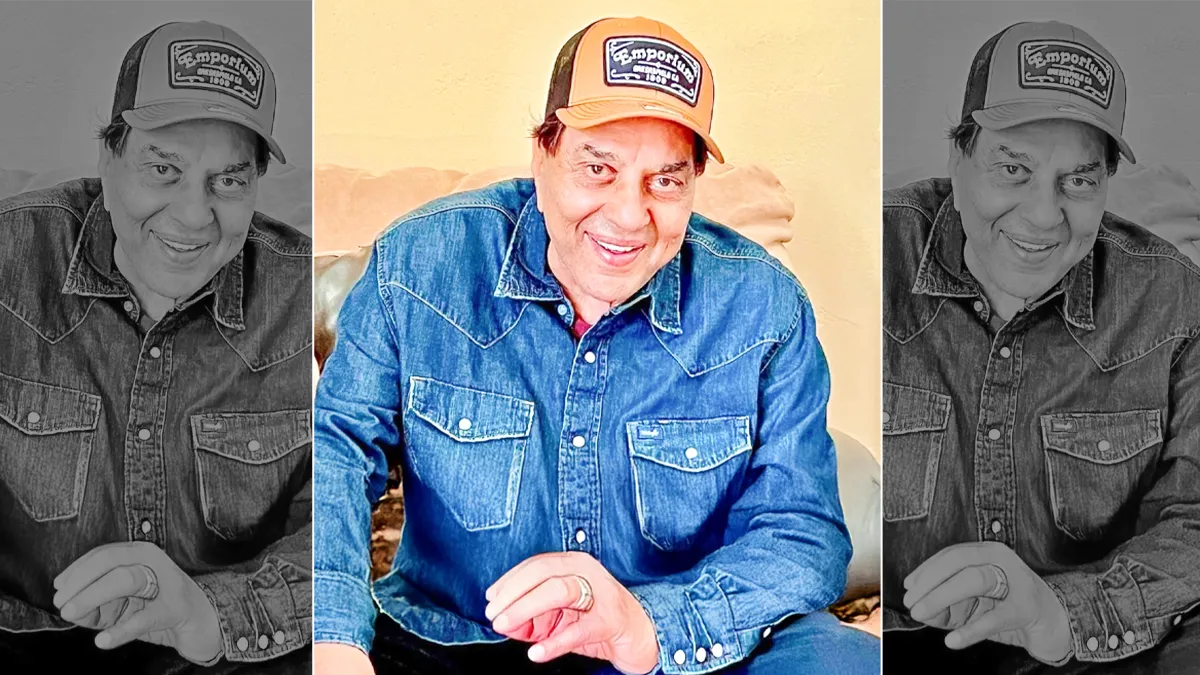
KATHMANDU: Legendary Bollywood actor Dharmendra, affectionately known as the “He-Man” of Indian cinema, has passed away at the age of 89.
The veteran actor had been unwell for the past several weeks and was recently discharged from the hospital after treatment.
His family has now reached Pawan Hans Aryaghat in Mumbai to perform his final rites.
Dharmendra had been under medical care after developing breathing complications. He was brought home two weeks ago following treatment at Breach Candy Hospital.
Despite this, his health reportedly deteriorated again, leading to his demise.
Wave of Grief Across Bollywood
Soon after the news broke, several leading figures from the Indian film industry headed toward Aryaghat to pay their last respects.
Among them were his wife Hema Malini, daughter Esha Deol, and prominent actors including Amitabh Bachchan and Aamir Khan.
Tributes have flooded social media, with fans and colleagues remembering Dharmendra’s immense contribution to Indian cinema over the past six decades.
Two Weeks of Rumour, Denial, and Confusion
Dharmendra’s passing comes after a period of widespread confusion, as rumours about his death had circulated just two weeks earlier:
-
False death reports had gone viral, prompting emotional reactions from fans and even some public figures.
-
His daughter Esha Deol had publicly dismissed those earlier rumours, stating that Dharmendra was “stable and recovering” at the time.
-
Family members, including Hema Malini and Sunny Deol’s team, had strongly criticised the spread of misinformation, calling it “insensitive and irresponsible.”
-
The film industry had also condemned the hoax, urging people to verify facts before sharing unconfirmed news.
The previous incident had shown how quickly misinformation can spread, especially regarding the health of beloved public figures. The family had urged restraint and privacy during those earlier days of speculation.
A Last Goodbye to a Cinema Giant
This time, however, the loss is real. Dharmendra leaves behind an extraordinary film legacy, a devoted fan base, and a deeply grieving film fraternity. His passing marks the end of an era in Indian cinema, closing the chapter on one of Bollywood’s most charismatic and celebrated stars.
Biography
Dharmendra: A Legend Whose Journey Defined Indian Cinema
Dharmendra, often hailed as the He-Man of Bollywood, remains one of the most influential and beloved figures in the history of Indian cinema. Over a career spanning more than six decades, he transformed himself from a small-town young man with big dreams into an enduring cultural icon whose roles, personality, and charisma shaped generations of film lovers.
Early Life and Struggles
Dharmendra Singh Deol was born on December 8, 1935, in Nasrali, Punjab, into a farming family. Growing up in a simple rural environment, he developed a fascination for films at a young age. As a teenager, he admired legendary actors of the black-and-white era and nurtured an aspiration to appear on the big screen.
His entry into films began after he won a talent contest organized by Filmfare in the late 1950s. Leaving behind his village life, he arrived in Mumbai with little more than determination and raw ambition.
Breakthrough in Bollywood
Dharmendra made his debut in 1960 with the film Dil Bhi Tera Hum Bhi Tere. Although the film did not become a major commercial success, critics noticed his screen presence and emotional intensity. Through the early 1960s, he secured several opportunities in romantic and socially themed films, gradually developing a reputation as a dependable actor.
His breakthrough came with films such as:
-
Anpadh (1962)
-
Bandini (1963)
-
Ayee Milan Ki Bela (1964)
By the mid-1960s, he was considered one of the most handsome leading men of his era, admired for both his sensitivity and strength.
The Rise of the “Action Hero”
In the 1970s, Dharmendra reinvented himself as one of Indian cinema’s first true action stars. Films like:
-
Sholay (1975)
-
Yaadon Ki Baaraat (1973)
-
Jugnu (1973)
-
Dharam Veer (1977)
cemented his image as a powerful, charismatic performer capable of balancing drama, comedy, romance, and action effortlessly.
His role as Veeru in Sholay remains one of the most iconic performances in Indian cinema history.
Partnership With Hema Malini
Dharmendra’s on-screen pairing with Hema Malini became legendary. Together, they delivered numerous hits and became one of the most celebrated duos of Bollywood’s golden era. Their chemistry translated both on-screen and off-screen, shaping a major chapter of Bollywood’s storytelling and star culture.
Versatility and Longevity
While best known for action and romantic roles, Dharmendra also earned praise for his comedic timing in films like:
-
Chupke Chupke (1975)
-
Naya Zamana (1971)
Over the years, he continued acting across generations, appearing in family productions such as the Yamla Pagla Deewana series with his sons Sunny Deol and Bobby Deol.
Political Career
Dharmendra entered politics in 2004 as a Member of Parliament from Bikaner. Although he maintained a lower public profile during his political tenure, his popularity among people remained strong.
Awards and Recognitions
Across his long and illustrious career, Dharmendra has been honoured with multiple awards, including:
-
Filmfare Lifetime Achievement Award
-
Padma Bhushan (India’s third-highest civilian award)
-
Numerous recognitions for contribution to Indian cinema
He is remembered not only for his films but also for his humility, warmth, and down-to-earth personality that endeared him to millions.
Legacy
Dharmendra’s legacy goes far beyond box-office success. He represents the quintessential star of Indian cinema—versatile, hardworking, and emotionally rooted. For many, he symbolizes the golden era of Bollywood, when storytelling was simple, heartfelt, and deeply connected to the audience.